Preparing for the Project
The next phase of my painting journey brings me to the T’au Devilfish, my first vehicle. With this done, only the commander remains to complete the combat patrol. I’m debating whether to finish him now or shift focus to my next army, especially since I’ve picked up the Thousand Sons combat patrol as well. Plenty of options to consider.
Time Investment
One challenge I hadn’t anticipated was just how time-consuming painting a vehicle would be. Between the main body, two engines, and two gun drones, I spent over 10/15 hours, without even adding highlights to the hard edges and finer details. At this stage, I don’t feel ready to tackle that level of precision, but experienced painters would have spent even longer refining every surface. I look forward to reaching that skill level.
Testing the Colour Scheme
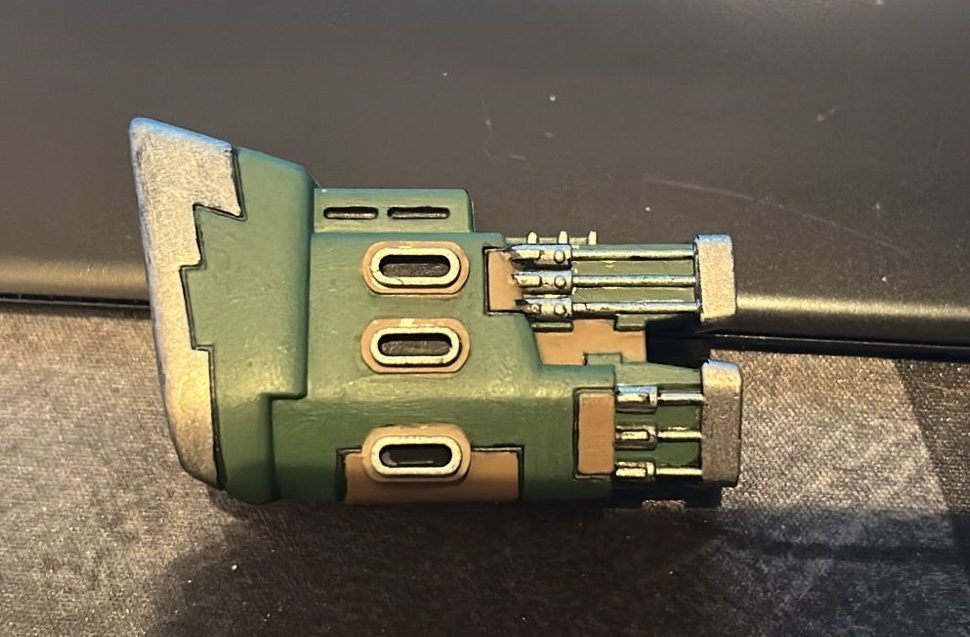
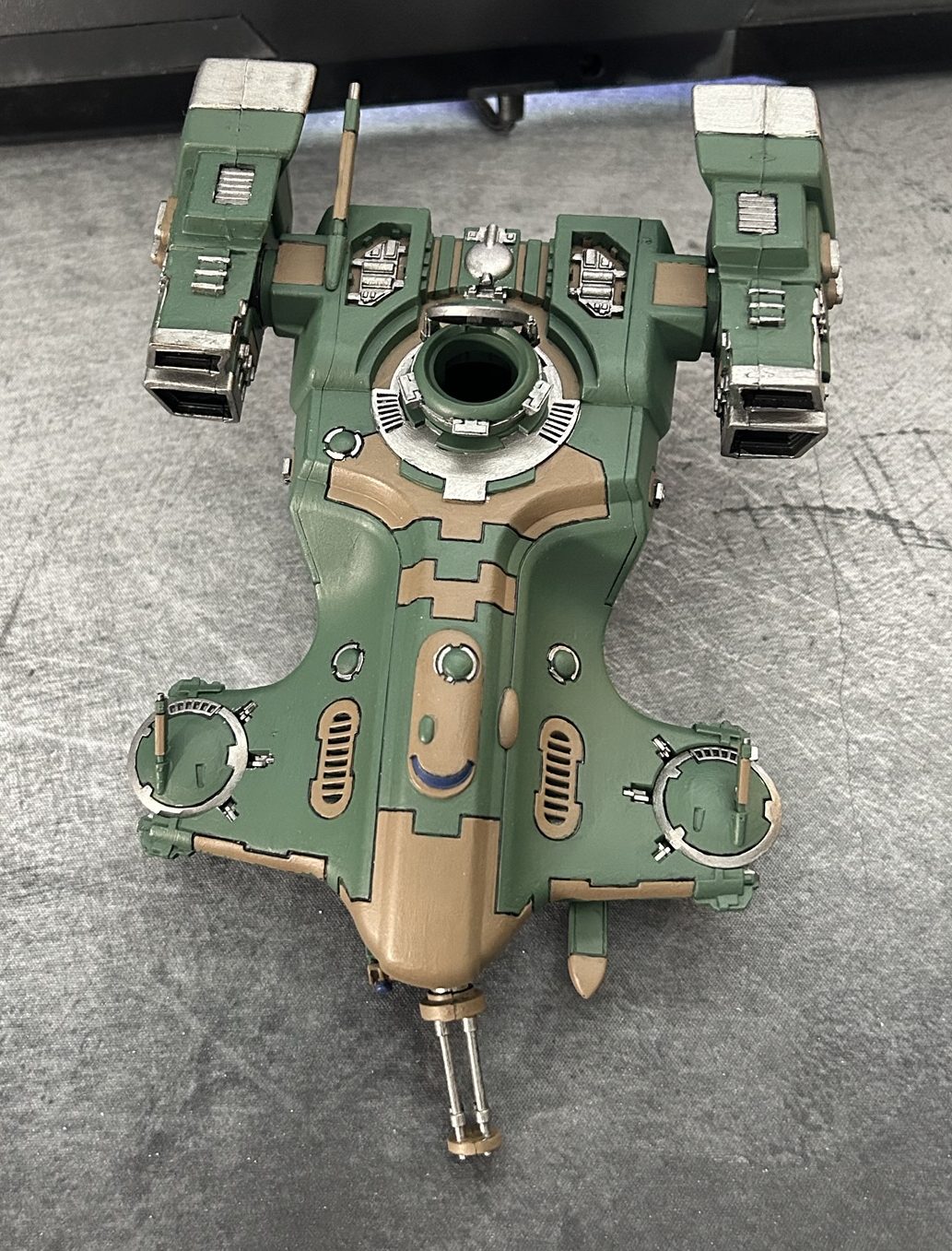
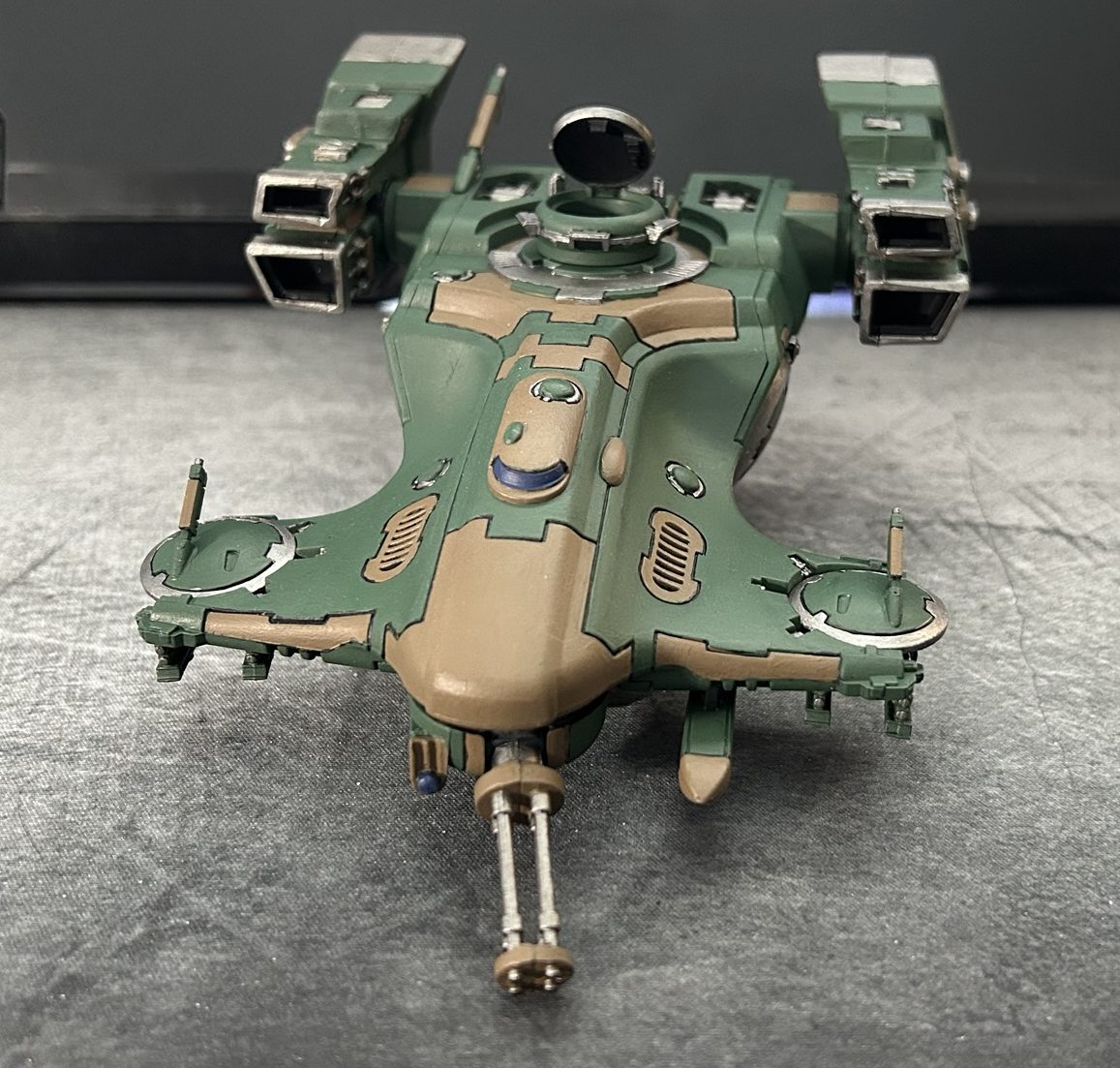
For this model, I chose brown as the secondary color to complement the green, with silver for the metal sections. The result? A surprisingly Boba Fett-inspired aesthetic, which turned out better than expected.
To test the color scheme, I painted one of the detachable engines first instead of starting with the main body. That way, if the scheme didn’t work, adjusting it would be much easier. Fortunately, planning out the sections didn’t take long, and I didn’t need to swap the green and brown, saving me time.
Painting the Engines
I started with the brown, since those areas were smaller, carefully picking out panels one at a time. The engines weren’t too troublesome to keep clean, tackling one side at a time. Two layers provided solid coverage over the undercoat, and the result was already looking sharp.
Moving onto the green, the larger surfaces made it difficult to judge how much paint to dilute and how quickly sections would dry. At first, I wasted a little paint as it dried faster than I could use it, but I started mixing smaller amounts each time, eventually overcompensating. Knowing how much paint to mix at once was a challenge throughout the Devilfish project, but it’s just one of many lessons to learn. Fortunately, the green sections didn’t cause too many issues with difficult details.
The silver areas, however, presented some challenges, particularly the small pipes at the front of the engines. I had to correct some green sections where visible brush strokes had overlapped onto smaller areas. Once I cleaned it up, I was really happy with the final look, so I decided to continue using this colour scheme for the rest of the model.
Painting the Main Body:
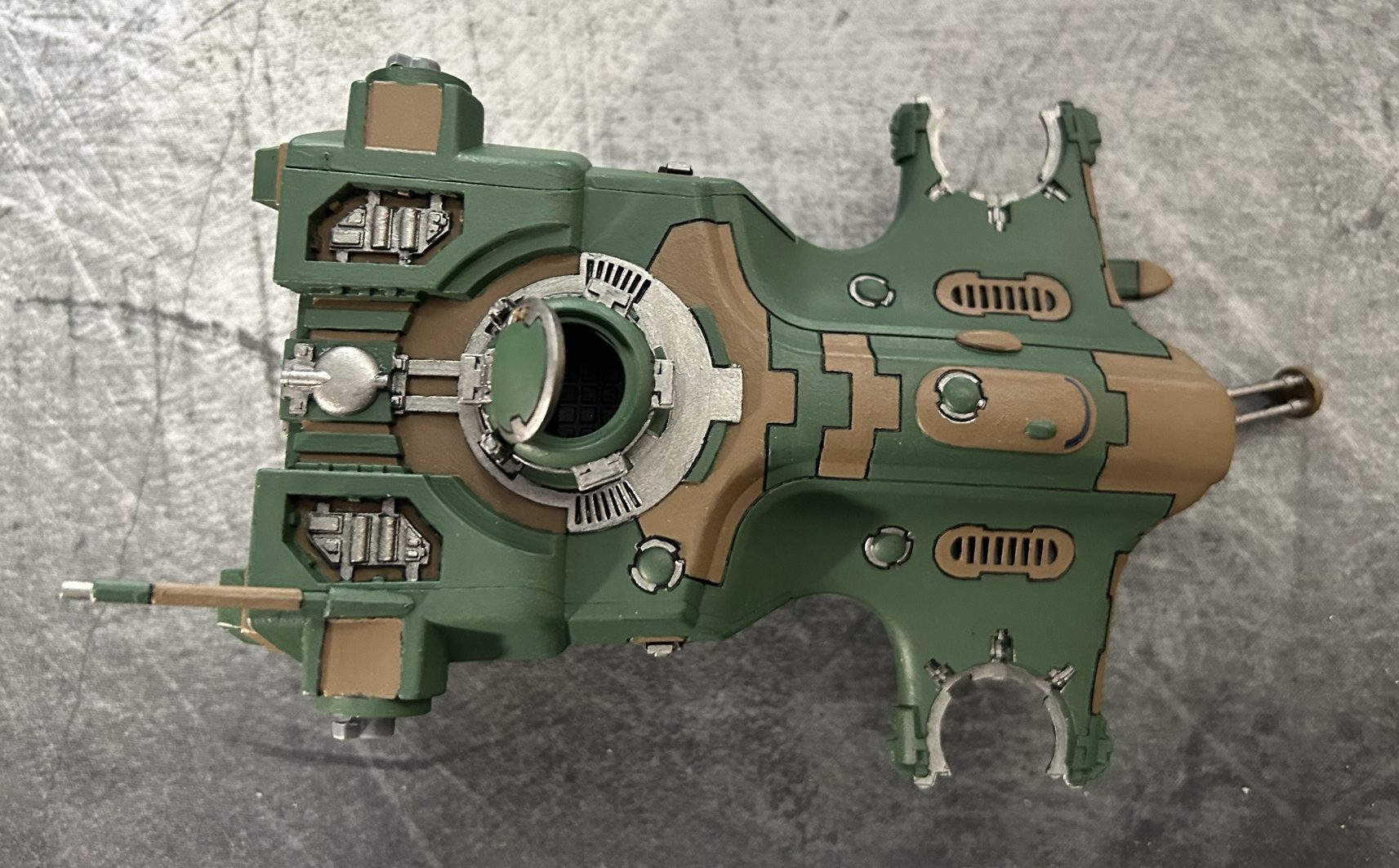
During this process, I made an unfortunate mistake, I broke the lid of the Devilfish. I had initially set it slightly open to show the interior, but I forgot about it while painting the underside, causing it to snap. Lesson learned: always be mindful of delicate parts when handling a model during painting!
Refining the Brown Areas
Satisfied with the colour scheme, I moved on to the main body. Starting with the brown, I carefully selected areas to highlight, smaller panels and grills, to make them stand out. This took some time, as I kept refining which sections I wanted to separate from the primary colour. After a while, I was happy with the finished areas. Unfortunately I forgot to take pictures of this after doing this section.
Applying the Main Colour
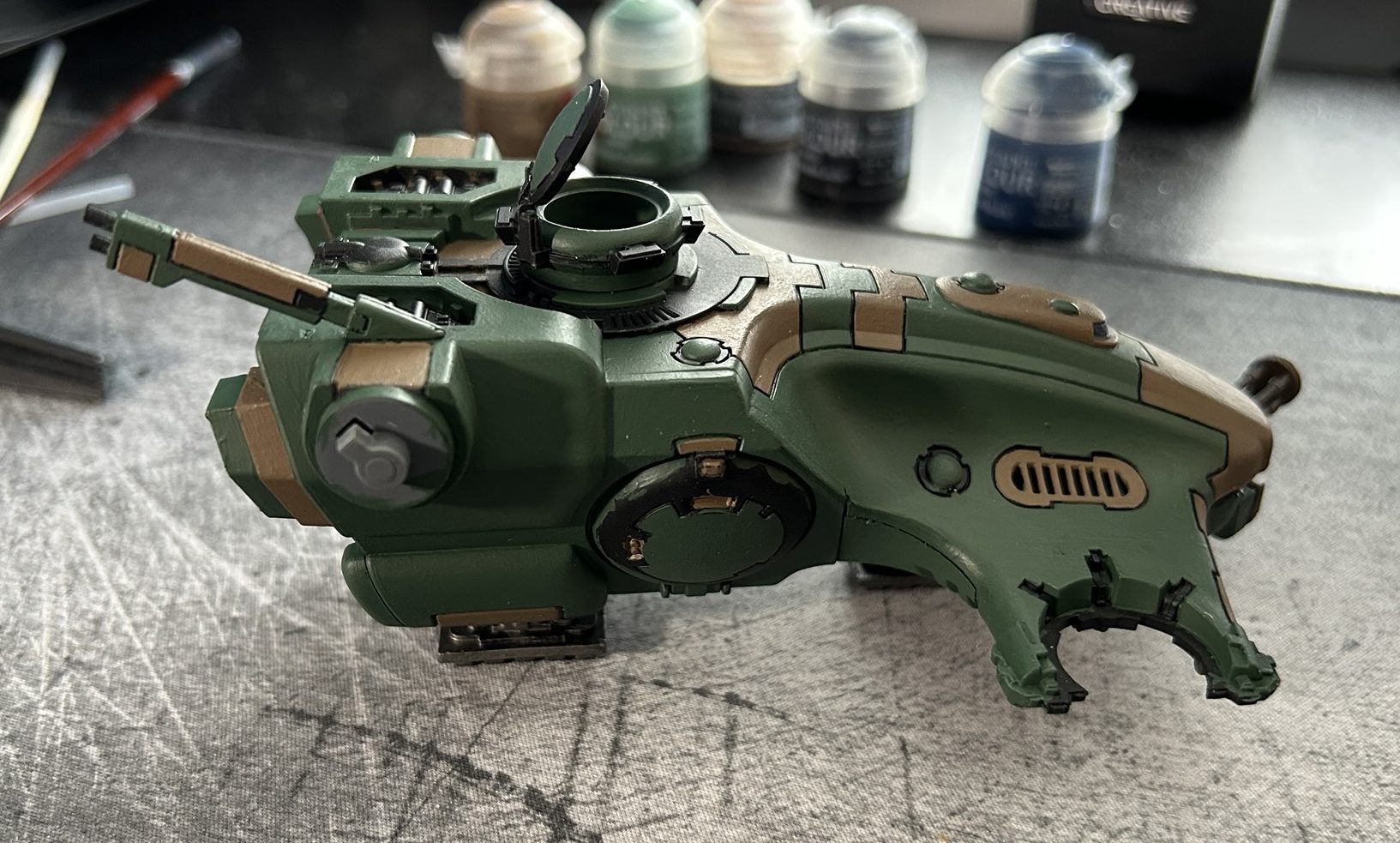
Next came the biggest task, the primary colour of the Devilfish’s body. Applying the green was far more time-consuming than I had expected. On average, each side took around 2/3 hours, depending on how much of the body was covered in brown sections. This became the most intensive painting project I’ve undertaken for any model so far.
As I progressed, I found myself making small mistakes due to fatigue, especially after extended painting sessions. Typically, I work in one-hour increments, but with the Devilfish, I ended up doing two to three hours in a single sitting. After finishing the green, I decided to hold off on touching up the brown until after applying the silver for the metal details, anticipating further corrections would be needed.
Adding the Silver Details
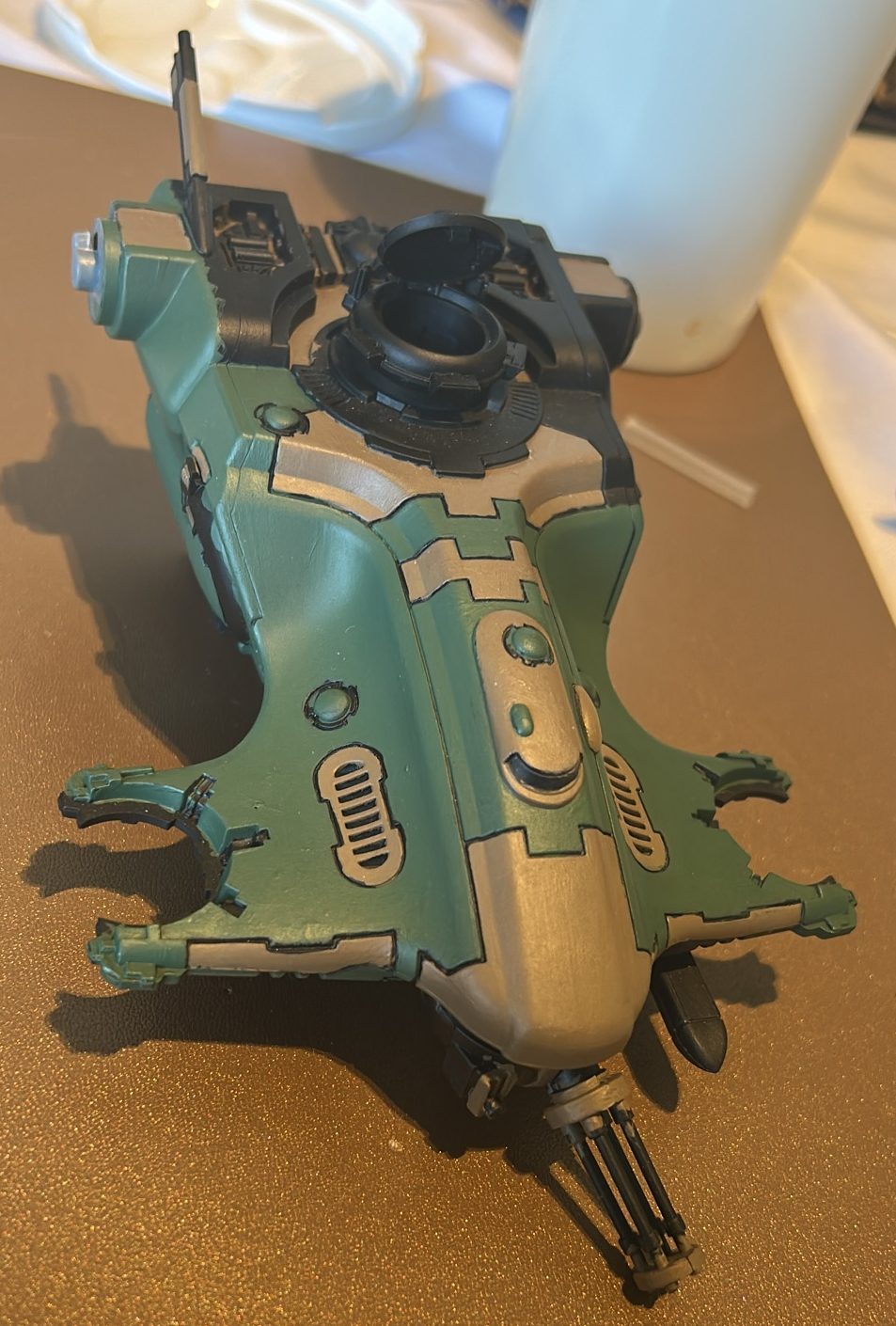
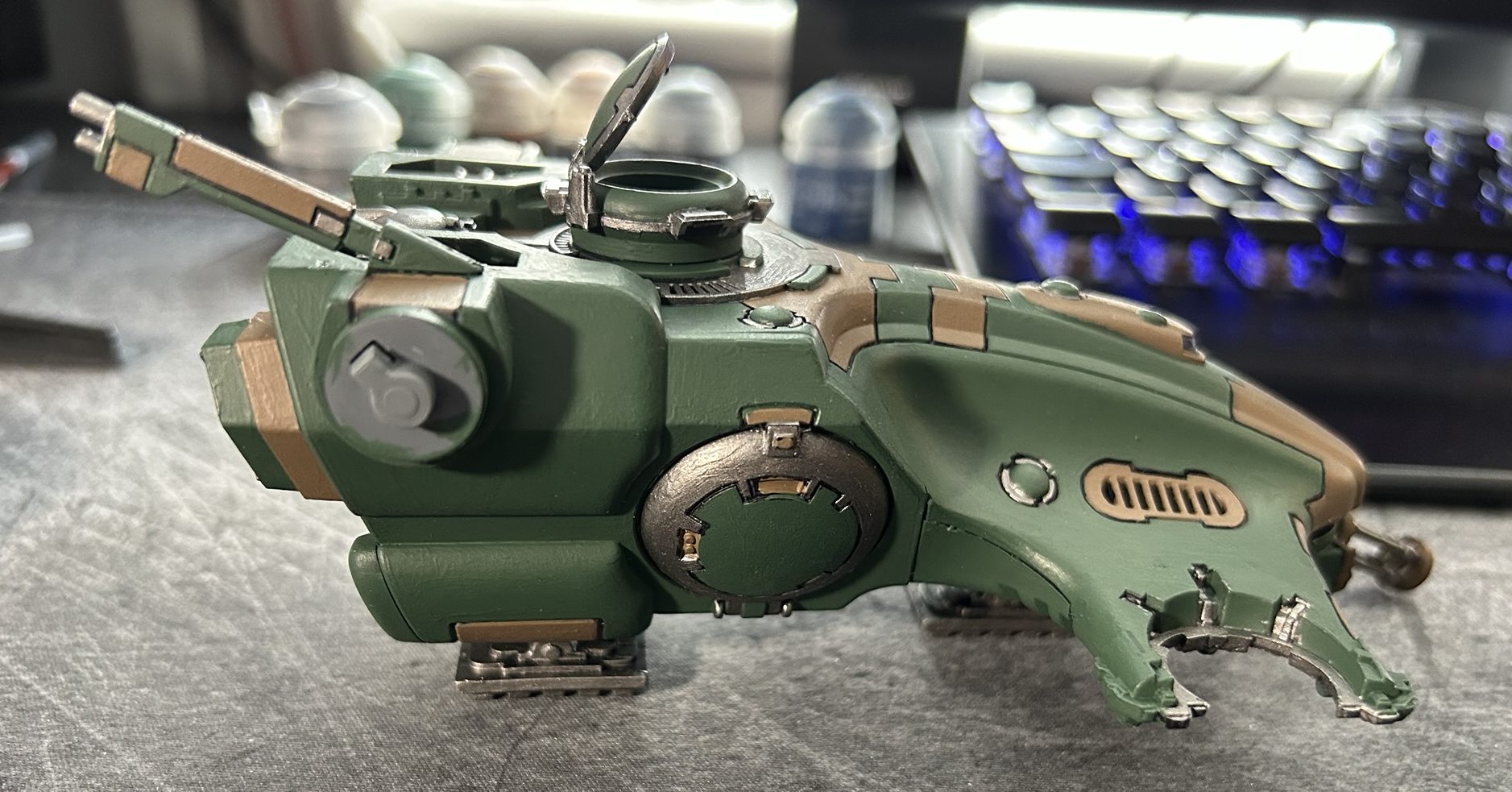
The silver accents needed careful application, primarily on the doors to distinguish the green and brown sections, as well as on the landing feet, the main gun, around the hatch, and a few smaller details on top of the model. This stage was much quicker compared to the other colours, with fewer mistakes.
Once I was satisfied with the silver areas, I went back and did final touch-ups, which didn’t take long. The model was coming together nicely, leaving only the gun turrets as the last step before completion.
Completing the Gun Turrets
The two remaining gun turrets didn’t take long to paint, following the same colour layout as the infantry drones. Keeping the sections uniform helped maintain a cohesive look across the model. With them finished, I assembled everything and took a moment to step back and look over the final piece. I was happy with the result, it felt like a solid effort for my first vehicle.

Final Thoughts
Painting the Devilfish has been a challenging yet rewarding experience, pushing me to refine my techniques and build patience with larger surfaces. The process of balancing colour choices, handling mistakes, and adjusting my painting sessions has taught me valuable lessons that will carry over to future projects.
While I initially hesitated to apply silver for the finer details, I’m pleased with how it helped define the different sections of the model. Even the touch-ups at the end felt more like a refining process rather than just correcting errors, proof that I’m becoming more confident in my approach.
What’s Next?
With the Devilfish complete, I now have a choice, do I finish painting the commander to complete the combat patrol, Tyranids or shift focus to my Thousand Sons army? There’s also the question of refining some of my techniques, particularly edge highlighting and colour blending, to take my painting skills to the next level.
Regardless of my next steps, this project has reinforced my appreciation for the craft and the continuous learning that comes with it. I look forward to tackling the next challenge, one brushstroke at a time.
Shoutout
If you enjoy my posts or simply appreciate well-painted models, one of my friends, who I regularly play with, has a TikTok dedicated to his miniature painting. Be sure to check him out at Resin Rogue 3D.
Until next time, stay sharp and keep gaming. Panda out.

Brad12345678 said,
June 6, 2025 @ 9:25 am
I’m shocked at how good you are at painitng
AChubbyPanda said,
June 6, 2025 @ 9:33 am
Thanks! Still got much to learn, but improving each time.