Posts tagged news

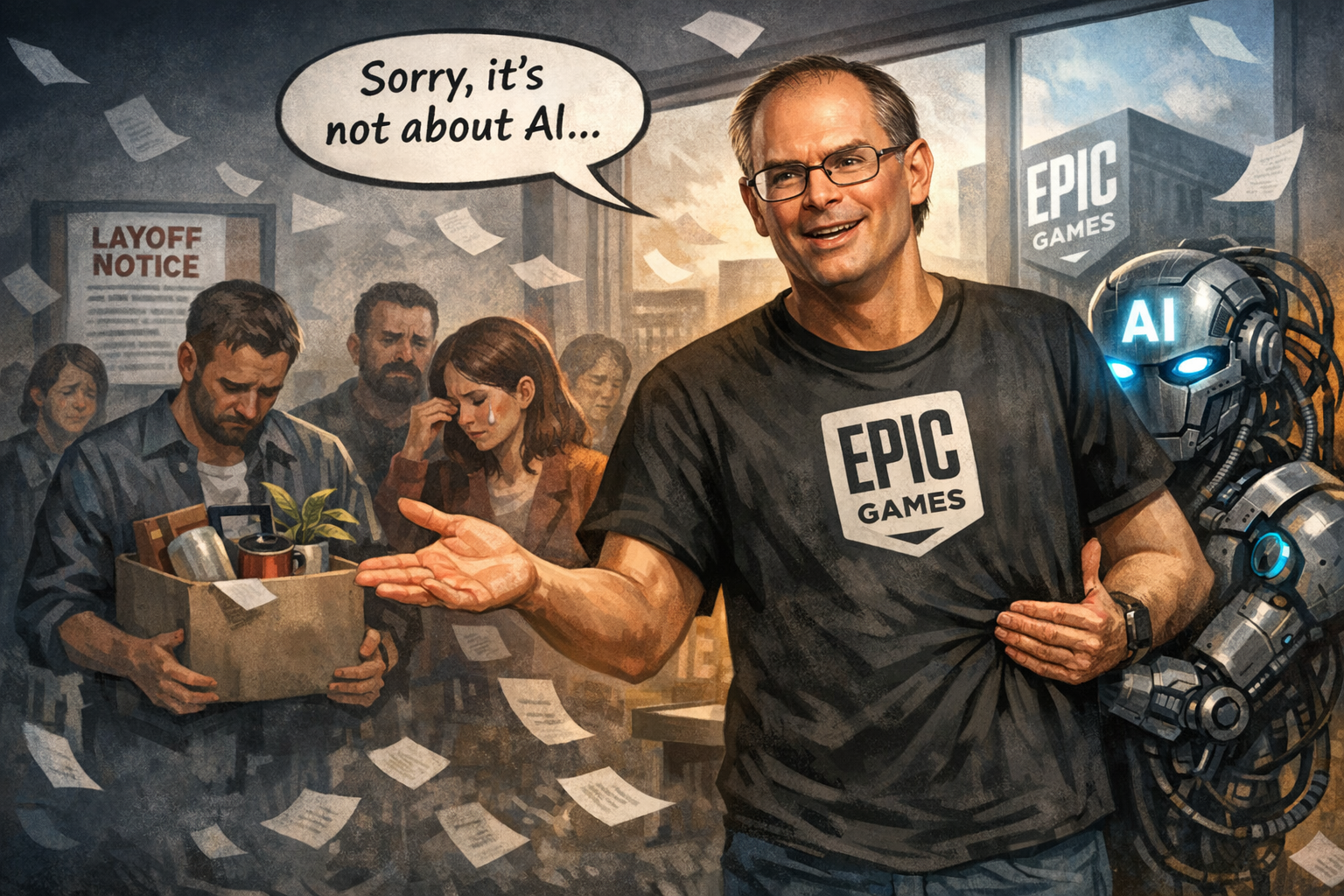
Epic Games Swings the Axe Again, And Tim Sweeney Wants You to Believe It’s Not About AI

Epic Games has once again decided that the best way to “secure the future” of the company is to cut loose the very people who built it. Another round of layoffs, another round of corporate doublespeak, and another round of Tim Sweeney insisting that everything is fine, nothing is AI‑related, and definitely don’t look too closely at the direction Epic has been heading.

At this point, it’s hard not to feel like we’ve seen this movie before, and the ending never changes.

The Official Story: “Not AI‑Related”

Sweeney claims these layoffs have nothing to do with AI. According to him, this is all about “restructuring,” “efficiency,” and “focusing on core priorities.” It’s the same vague corporate language every tech CEO deploys when they want to sound responsible while doing something deeply irresponsible.

But here’s the problem: Epic has been loudly, aggressively pro‑AI for years. Sweeney has repeatedly championed AI as the future of content creation, game development, and even moderation. He’s positioned Epic as a company that wants to automate more, not less. And now, suddenly, when hundreds of people lose their jobs, we’re supposed to believe AI isn’t part of the equation.

It’s a convenient narrative, and a deeply unconvincing one.

A New Low: Telling Steam Not to Label AI‑Generated Content

If there’s one moment that really exposes Sweeney’s stance, it’s his recent criticism of Steam for requiring developers to disclose when their games use AI. Steam’s approach is simple: if AI is in your game, players deserve to know. Transparency matters.

Sweeney’s response? He argued that AI will be “in everything,” so labeling it is pointless.

That’s not just dismissive, it’s morally wrong.

There are countless players, developers, artists, and industry workers who do not support AI‑generated content, especially when it replaces human labour or is trained on unlicensed work. Many people want to avoid AI‑heavy games entirely. They want the choice. They want honesty.

Sweeney’s stance effectively encourages companies to hide AI usage, bury it, or treat it as something players don’t deserve to know about. That’s not leadership. That’s evasion. And it reinforces the idea that Epic is not interested in transparency, only in control.

Epic’s Layoffs in Context: A Brutal Industry Trend

Epic’s latest cuts reportedly affect hundreds of employees, adding to the over 10,000+ layoffs across the gaming industry in the last year alone. Studios big and small, from indie darlings to major AAA publishers, have been slashing staff at a pace the industry hasn’t seen in decades.

And let’s be honest: this probably isn’t the last time Epic swings the axe this year. The company’s direction, spending habits, and obsession with automation make further cuts feel less like a possibility and more like an inevitability.

Epic’s Financial Reality Makes This Even Worse

What makes these layoffs sting even more is that Epic isn’t some struggling startup fighting for survival. Fortnite still generates staggering revenue. Unreal Engine licensing remains one of the most powerful tools in the industry. Epic continues to pour money into legal battles, acquisitions, and metaverse experiments.

So when they claim they “have to” cut staff, it’s hard to take seriously.
This isn’t about survival, it’s about priorities. And clearly, human workers aren’t one of them.

The Hypocrisy of “Championing Creators” While Undermining Them

Epic loves to brand itself as the company that supports creators:

  • Creator Codes
  • UEFN
  • Royalty‑free licensing
  • Marketplace opportunities

But layoffs, AI evangelism, and pushing for hidden AI usage directly contradict that image. You can’t claim to empower creators while simultaneously reducing the number of actual creators on your payroll.

It’s a marketing slogan, not a philosophy.

The Ripple Effect on Unreal Engine Developers

Epic’s decisions don’t just affect Epic. They affect:

  • Thousands of studios using Unreal
  • Marketplace creators
  • Technical artists relying on engine support
  • Indie teams who depend on documentation and bug fixes

When Epic cuts staff, the entire ecosystem feels it. Bugs linger longer. Support slows down. Marketplace curation weakens. The people who rely on Unreal to make a living are left wondering whether the tools they depend on will still be properly supported.

The Human Cost Gets Buried Every Time

What gets lost in all of this, deliberately, I’d argue, is the human impact. These aren’t abstract “roles” being eliminated. These are artists, programmers, QA testers, community managers, and support staff who kept Fortnite running, kept Unreal Engine evolving, and kept Epic relevant.

And the job market they’re being thrown into? It’s brutal.

With thousands of developers all competing for the same shrinking pool of roles, finding a replacement job has become incredibly difficult. People are burning through savings, relocating, switching industries, or leaving game development entirely, not because they want to, but because they have no choice.

I genuinely feel sorry for every single person who’s been caught in this wave. They deserved better than this.

The Fear Developers Now Have About AI Replacing Them

Sweeney’s comments about AI being “in everything” don’t just sound dismissive, they fuel real fear. Developers are already anxious about automation replacing their roles. When a CEO openly downplays transparency and pushes for AI adoption while simultaneously laying off staff, it sends a clear message:

Your job isn’t safe. Your skills aren’t valued. And your concerns don’t matter.

That’s the environment Epic is helping create.

The Long‑Term Damage to the Industry

This constant cycle of layoffs is draining the industry of senior talent. Juniors can’t get hired. Studios are burning out the remaining staff. Creativity suffers when teams are terrified of being next.

Epic isn’t just reacting to the industry, they’re contributing to its decline.

Epic Wants Control, Over Creators, Over Platforms, Over the Future

Sweeney’s obsession with forcing the Epic Launcher onto everyone is part of the same mindset that leads to layoffs like this. It’s about control. Control of distribution. Control of revenue. Control of the narrative.

AI fits neatly into that worldview. It’s cheaper, it’s compliant, and it doesn’t ask for healthcare or a livable wage.

So when Sweeney says these layoffs aren’t AI‑related, it rings hollow. Maybe AI didn’t directly replace these workers today, but Epic’s long‑term strategy makes it clear where the company is heading.

The Bottom Line

Epic Games wants to present itself as a champion of creators, a rebel fighting the big bad platform holders, a visionary company building the future of interactive entertainment.

But when you peel back the PR, what you see is a company that:

  • Cuts staff while investing heavily in automation
  • Pushes unwanted platforms onto players
  • Makes decisions that benefit executives, not employees
  • Encourages companies to hide AI usage instead of being transparent
  • Undermines the very creators it claims to support
  • Damages the wider Unreal ecosystem with every round of cuts

Tim Sweeney can say whatever he wants about these layoffs. But actions speak louder than statements, and Epic’s actions tell a very different story

If people are replaced instead of empowered, the entire economic engine breaks down. No workers means no wages. No wages means no spending. No spending means no customers. And without customers, even the most “efficient” companies collapse. It’s a truth more people need to recognise, because if we keep heading down this path, that future isn’t hypothetical, it’s inevitable.

Until next time, stay sharp and keep gaming, Panda out.

Leave a comment »

DLSS 5 Proves AAA Gaming Is Ready to Trade Art for AI Slop

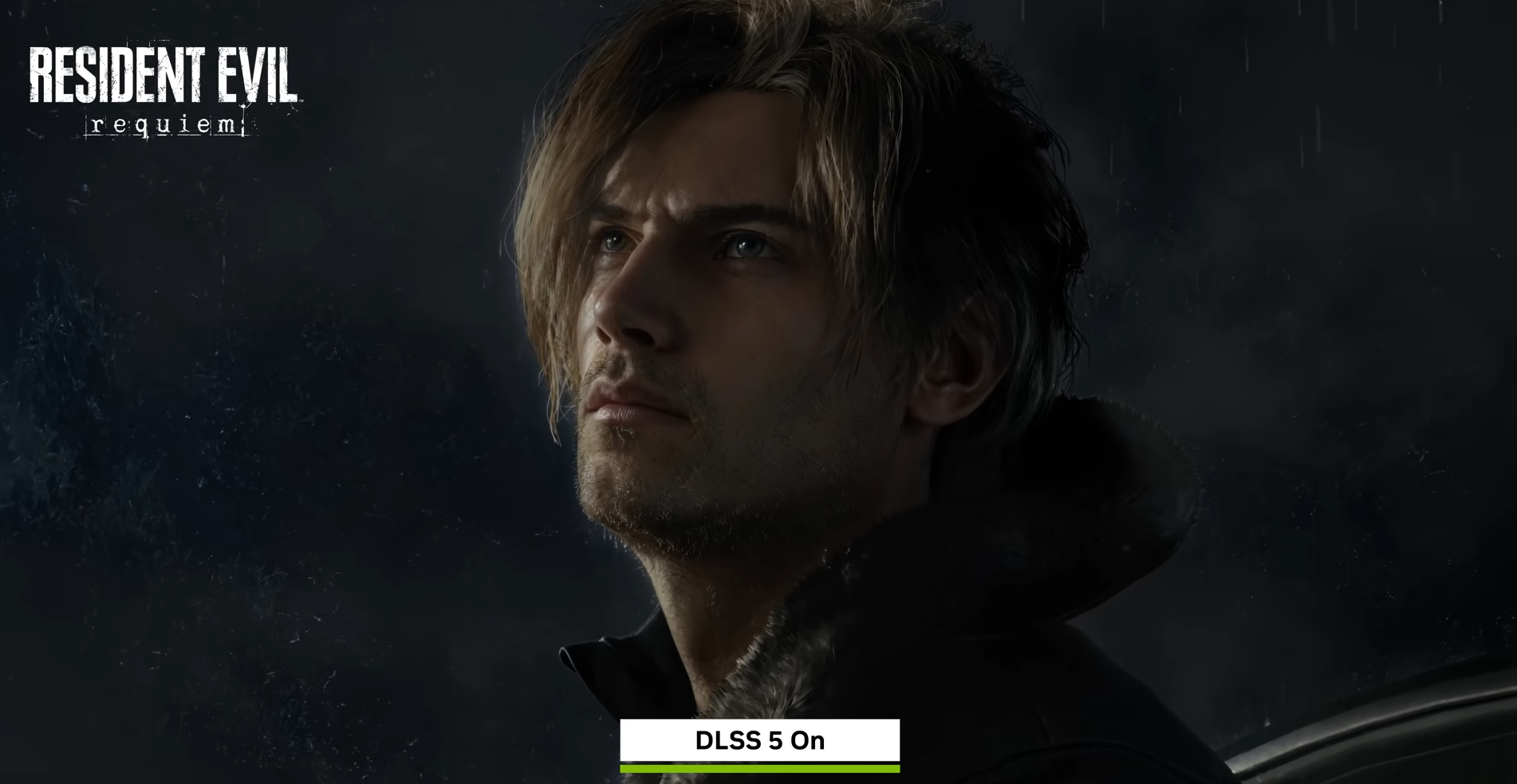
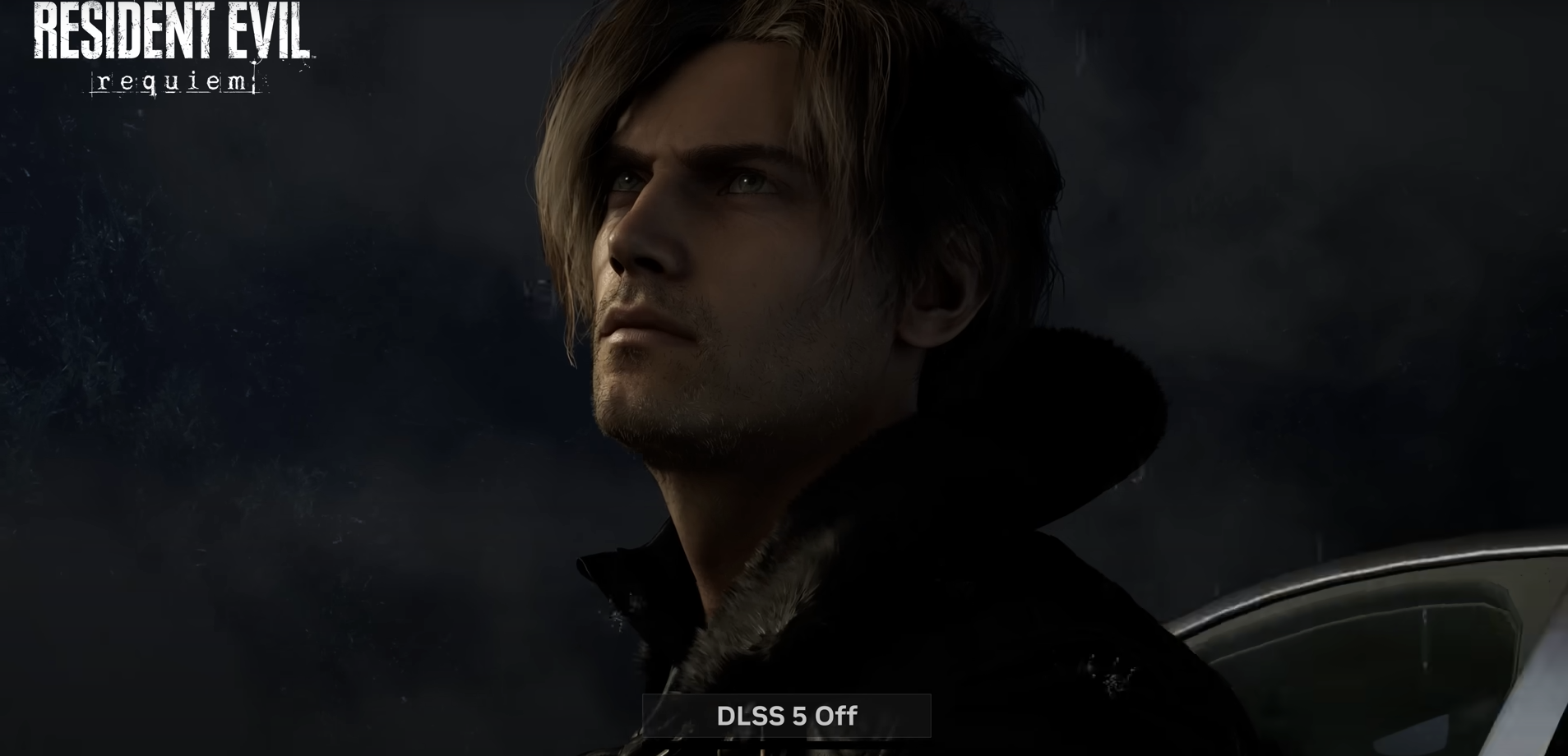
Images taken from Nvidia.com

NVIDIA’s DLSS 5 announcement should have been a milestone for graphics technology. Instead, it’s become a flashpoint, a moment where gamers, artists, and developers are forced to confront a future where AI doesn’t just enhance games, but rewrites them. And honestly? It feels like the industry is sprinting toward a future nobody actually asked for.

DLSS used to be a clever performance trick. Now it’s an AI-driven filter layered over entire games, altering lighting, materials, and even the emotional tone of scenes. That’s not optimization. That’s overreach.

And the more we see, the more it feels like AAA studios are ready to let AI do the heavy lifting, even if it means sacrificing the art that makes games meaningful.

DLSS 5 Doesn’t Respect Art Direction, It Replaces It

Early footage shows DLSS 5 doing far more than upscaling. It’s injecting its own interpretation of lighting, materials, and geometry. Scenes look glossier, smoother, or outright different from what the artists created.

Gamers immediately noticed:

  • Faces looking subtly altered
  • Materials gaining an unnatural sheen
  • Lighting shifting toward a “photoreal” style that clashes with the original tone

And the most worrying part?

Every game enhanced with DLSS 5 starts to look the same.

What NVIDIA showed in their announcement wasn’t a celebration of artistic diversity, it was a preview of a homogenised future. The “enhanced” images all shared that unmistakable AI sheen: overly smooth surfaces, exaggerated lighting, and a kind of artificial clarity that feels more like an Instagram filter than a rendering technique.

It’s the same problem we see with AI art models:
everything starts to blend together.

Games are art. They’re built by teams who obsess over mood, colour, texture, and atmosphere. When an AI model starts repainting the world in real time, the original artistic intent gets buried under algorithmic guesswork.

A Shortcut for AAA Studios to Get Even Lazier

Let’s be honest: big studios already rely on procedural filler, outsourced assets, and day‑one patches. DLSS 5 feels like the next step in that trend, a tool that lets publishers cut corners and let AI “fix” the visuals later.

Why spend months perfecting lighting or materials when DLSS 5 can slap a photoreal filter over everything?

Why polish textures when the AI can “enhance” them on the fly?

This isn’t empowering developers. It’s enabling shortcuts.

And when NVIDIA is investing billions into generative AI, it’s hard not to see DLSS 5 as part of a broader push to normalise AI‑altered media, regardless of whether players want it.

Gamers Don’t Want This, And They’re Not Quiet About It

The backlash has been overwhelming. Across forums, social media, and comment sections, players are calling DLSS 5:

  • “AI slop”
  • “A filter nobody asked for”
  • “The death of artistic direction”
  • “A tech demo pretending to be a feature”

People aren’t rejecting DLSS 5 because they “don’t understand it.” They’re rejecting it because they do understand what it means for the future of game art.

Gamers want authenticity, not algorithmic reinterpretation.

And to be clear, this isn’t about hating DLSS as a whole.
DLSS has been a genuinely brilliant technology for years. The way it helps people with lower‑spec PCs enjoy modern games is one of the best things to happen to PC gaming. That’s where DLSS shines, boosting performance, smoothing out framerates, and making demanding titles accessible to more players.

But changing the way DLSS works at a fundamental level is not the way forward.
AI absolutely has its uses, but the way DLSS 5 applies an AI filter over the entire image isn’t enhancement, it’s distortion. It stops being a performance tool and starts becoming an artistic override, and that’s where the line gets crossed.

Studios Are Already Defending DLSS 5, And They’re Naming AI as the Future

Several studios partnering with NVIDIA have stepped in to defend DLSS 5. Their statements are predictable, but now we can attach names, context, and motivations to them.

Todd Howard, Bethesda Game Studios (Director & Executive Producer)

Todd Howard has been openly enthusiastic about NVIDIA’s AI‑driven rendering. While discussing Starfield’s tech pipeline, he praised AI‑assisted upscaling as “the future of how we push visual fidelity without sacrificing performance.”
Howard has repeatedly emphasised that AI‑based rendering lets studios “focus on the bigger picture,” which aligns perfectly with NVIDIA’s messaging around DLSS 5.

Bethesda’s long‑standing partnership with NVIDIA makes their support unsurprising, but it also highlights how deeply AI is being woven into AAA pipelines.

CD Projekt Red, Jakub Knapik (Global Art Director)

Knapik has praised DLSS and AI‑assisted rendering for years, calling it “a natural evolution of game visuals.”
His stance on DLSS 5 mirrors this: AI is the next step, and players should embrace it.

Remedy Entertainment, Tero Virtala (CEO)

Virtala has been vocal about AI‑driven rendering, stating that technologies like DLSS “free up resources and let teams focus on creative direction.”
This is the same corporate line being repeated around DLSS 5.

Ubisoft, Pierre Escaich (Technical Director)

Ubisoft has already announced internal initiatives to use AI for writing NPC dialogue, generating animations, and assisting with world‑building.
Escaich’s stance on DLSS fits that direction, saying NVIDIA’s AI tools “bring out details that would otherwise be lost.”

Ubisoft’s growing reliance on AI makes their support for DLSS 5 feel less like artistic enthusiasm and more like corporate alignment.

Square Enix, Takeshi Aramaki (Studio Head, Luminous Productions)

Square Enix has openly stated they plan to integrate AI into “every stage of game development.”
Aramaki has previously described DLSS as “a key part of achieving next‑generation visuals,” and their support for DLSS 5 fits perfectly with their broader AI‑first strategy.

Square Enix is one of the most aggressive AAA publishers pushing AI into production, from asset generation to animation, so their backing of DLSS 5 is no surprise.

Developers Speaking Out Against DLSS 5

While some studios are defending DLSS 5, several developers have openly criticised it, echoing the same concerns gamers have raised. Their reactions reinforce the idea that DLSS 5 isn’t just controversial — it’s actively worrying people who work on games for a living.

Grace Ashcroft, Developer on Resident Evil: Requiem

Eurogamer reported that Grace Ashcroft was “concerned that DLSS 5 appears to layer a gaudy AI filter over a game’s original work.” She noted that the tech “changes the look of scenes in ways we didn’t author,” which directly challenges NVIDIA’s claim that artistic intent remains untouched.

Unnamed Developers Reacting to NVIDIA’s Demo

According to TheSixthAxis, multiple developers watching the DLSS 5 reveal said it “looks like someone has put an AI beauty filter over the games.” This wasn’t a fringe opinion, it was described as the reaction from “almost everyone else, from punters to game developers.”

General Developer Sentiment (as reported by GamingOnLinux)

GamingOnLinux highlighted widespread developer frustration, noting that DLSS 5 “completely changes the faces of characters” and that many devs felt NVIDIA had “lumped together their previous good tech with something else entirely.” The article emphasised that developers were just as baffled as players by the AI‑generated look.

Developers Calling It “AI Slop”

XDA Developers reported that even developers were describing the output as having an “unnecessary AI sheen” and comparing it to “AI slop.” This wasn’t just a gamer meme, it was a professional critique.

The Pattern Is Clear

These quotes all share the same tone:

  • AI saves time
  • AI reduces workload
  • AI “enhances” visuals
  • AI is the future

But none of them address the core issue gamers are raising:

DLSS 5 doesn’t just enhance games, it homogenises them.

It overwrites artistic direction with an AI‑generated aesthetic that makes every game look like the same glossy, over‑processed tech demo. And the studios defending it are the same ones already investing heavily in AI‑driven production pipelines.

Gamers aren’t imagining the threat.
The industry is telling us exactly where it wants to go.

NVIDIA’s Response to the Backlash Isn’t Helping

The backlash grew so loud that NVIDIA’s CEO, Jensen Huang, addressed it directly. His stance was blunt:

  • Critics are “misunderstanding the technology”
  • DLSS 5 “does not override artistic intent”
  • Developers “remain fully in control”

But the demos contradict that narrative. When the AI is visibly altering materials, lighting, and even character appearance, it’s hard to argue that the original art direction is untouched.

Even long‑time DLSS supporters and tech journalists are calling this a step too far.

Games Deserve Better Than AI Overpainting

At the core of all this, my stance hasn’t changed:

Games should look the way their creators intended, not the way an AI model thinks they should.

We already have incredible rendering tools. We don’t need a generative AI system repainting games in real time. That’s not innovation. That’s intrusion.

DLSS 5 isn’t helping games.
It’s homogenising them.
It’s sanding down the edges.
It’s replacing art with algorithmic interpretation.

And if this is the direction AAA gaming is heading, AI filters, AI textures, AI lighting, AI “enhancements”, then we’re at risk of losing the human touch that makes games special in the first place.

Until next time, stay sharp and keep gaming, Panda out.

References

  • “DLSS 5 Announcement & Feature Overview” — NVIDIA
  • “NVIDIA CEO Responds to DLSS Criticism” — Tom’s Hardware
  • “Jensen Huang Defends DLSS Against AI Concerns” — PC Gamer
  • “Todd Howard Talks Starfield Technology and AI Upscaling” — IGN
  • “Todd Howard on NVIDIA and the Future of Visual Fidelity” — GamesRadar
  • “CD Projekt Red Discusses DLSS and AI Rendering” — PC Gamer
  • “Cyberpunk 2077 Developers on DLSS Improvements” — TechRadar
  • “Remedy CEO Tero Virtala on AI Rendering and Studio Direction” — GamesIndustry.biz
  • “Remedy Discusses AI Rendering and the Future of Visuals” — Eurogamer
  • “Ubisoft Introduces Ghostwriter AI Narrative Tool” — Ubisoft News
  • “Ubisoft’s AI Writing Tool Raises Questions” — The Verge
  • “Ubisoft Expands Use of AI Tools in Development” — PC Gamer
  • “Square Enix Outlines AI Strategy for Future Games” — Square Enix
  • “Square Enix Plans AI Integration Across Development Pipeline” — PC Gamer
  • “Square Enix Wants AI in Every Stage of Game Development” — TechSpot
  • “Developers Express Concerns Over DLSS 5 Visual Changes” — Eurogamer
  • “DLSS 5 Backlash From Developers and Players” — TheSixthAxis
  • “Developers Criticise DLSS 5’s AI‑Generated Look” — GamingOnLinux
  • “Developers Call DLSS 5 Output an ‘AI Sheen’” — XDA Developers
  • “DLSS 5 Backlash Discussion” — r/pcgaming
  • “DLSS 5 Technical Analysis” — Digital Foundry
  • “DLSS 5 Community Reaction and Concerns” — PC Gamer

Leave a comment »

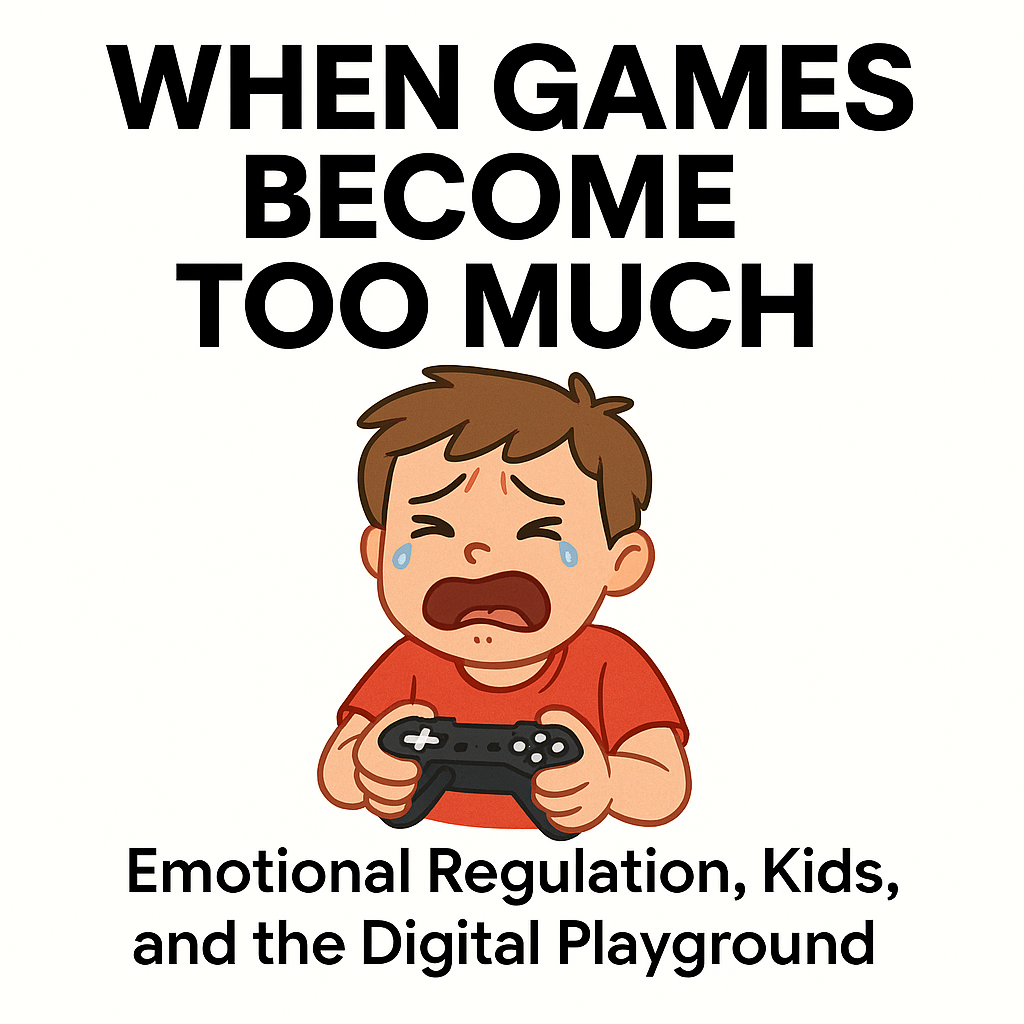
When Games Become Too Much: Why Emotional Regulation Matters for Young Gamers

This week I found myself dealing with a situation that, unfortunately, is becoming far too common in the world of children’s gaming. My son was playing Steal the Brain Rot on Roblox, a game literally built around the idea of taking items from each other. He stole a brain rot, exactly as the game intends, and his friend had a complete emotional meltdown. Not frustration. Not disappointment. A full‑scale breakdown.

It escalated so much that the friend’s dad actually phoned my son to tell him off and demand he give the item back.

And that’s where I draw a line.

When Adults Cross Boundaries

Let me be clear:
It is not appropriate for an adult to directly call another person’s child to tell them off.

If there’s an issue that genuinely needs addressing, the first point of contact should always be the child’s parent. That’s basic respect, and it models healthy conflict resolution. When adults bypass parents and confront children directly, it creates confusion, pressure, and unnecessary tension, especially when the issue is over a game designed around competition and stealing items.

Before escalating, it’s worth asking:

  • Is this truly serious?
  • Is this about safety, or just discomfort?
  • Is this an opportunity for the child to learn resilience?

Most of the time, it’s not worth turning a digital disagreement into real‑world drama.

Why Kids React So Intensely to Games

Children aren’t overreacting “for no reason.” Their brains are still developing the skills needed to manage big emotions. Games, especially fast‑paced online ones, can trigger intense feelings because:

  • Digital losses feel real to them
  • Their impulse control is still developing
  • They struggle to separate in‑game events from real‑life relationships
  • Social pressure in multiplayer games amplifies emotions
  • The pace of online play doesn’t give them time to regulate

So when something unexpected happens, like losing an item, being outplayed, or having something “stolen”, their emotional system can go into overdrive.

This isn’t bad behaviour. It’s a sign of where they are developmentally.

Games Aren’t the Problem, Emotional Regulation Is

Games are meant to be fun. They’re meant to challenge, entertain, and teach kids how to handle winning, losing, unpredictability, and other people not doing exactly what they want. These are healthy experiences.

But when a child becomes so overwhelmed by a digital moment that they can’t cope, to the point of distress, panic, or rage, the issue isn’t the game. It’s the emotional skills required to handle it.

Even the simplest games involve:

  • Losing
  • Competition
  • Setbacks
  • Unpredictable outcomes
  • Other players making their own choices

If a child can’t tolerate those things without spiralling, then they may not be emotionally ready for that game yet.

When Parents Step In, the Lesson Changes

What concerns me even more is when parents intervene to “fix” the game for their child. When adults demand items back, scold other children, or try to control the outcome, they unintentionally teach their child that:

  • Discomfort must be avoided at all costs
  • Losing is unacceptable
  • Emotional outbursts get results
  • Other people must change to keep them happy

Those lessons don’t stay in the game. They spill into friendships, school, and eventually adulthood.

Games can teach resilience, but only if we let them.

Teaching Kids How to Handle Conflict Online

Instead of stepping in to control outcomes, we can use these moments to teach children how to navigate conflict:

  • Taking a break when emotions run high
  • Using calm language to express frustration
  • Understanding that losing is part of play
  • Recognising when a game isn’t fun anymore
  • Knowing when to walk away from unhealthy dynamics

These skills matter far beyond gaming.

Parents Model Emotional Behaviour Too

Children learn how to react by watching us.

If adults explode over a game, demand items back, or lash out at other children, kids absorb that behaviour. They learn that:

  • Games are high‑stakes
  • Losing is catastrophic
  • Adults will fix everything for them
  • Emotional outbursts are justified

But when adults stay calm, set boundaries, and treat games as learning opportunities, children follow that lead.

Setting Boundaries Isn’t Punishment, It’s Parenting

I’ve had to make these decisions in my own home. I’ve seen my son have emotional breakdowns over certain games too. And when that happens, I don’t blame the game or the other players. I simply tell him he’s not ready for that particular game yet.

He can try again when he’s calmer, older, or better able to handle the emotional ups and downs that come with it.

I’ve also told him not to play certain games with certain friends, not because anyone is “bad,” but because the emotional dynamic between them isn’t healthy. If another child consistently has outbursts, or if the play always ends in tears, arguments, or stress, then it’s my responsibility to step in and protect my son’s emotional wellbeing.

Sometimes the healthiest boundary is simply:
“This game isn’t right for you two right now.”

And that’s okay.

If a Game Causes Distress, It’s a Sign, Not a Battle

Here’s the truth I’ve come to:
If a child is so emotionally overwhelmed by a game that it causes meltdowns, arguments, or distress, then they shouldn’t be playing that game yet.

Not as punishment. Not as judgement. Simply because their emotional development isn’t aligned with the emotional demands of that environment.

It’s our job as parents to help them build those skills gradually, not to bend the world around them so they never have to.

Games Should Be a Safe Space to Learn, Not a Source of Crisis

When handled well, games can teach patience, problem‑solving, teamwork, and emotional control. They can help kids learn to lose gracefully, try again, and understand that setbacks aren’t the end of the world.

But when a game becomes a source of panic or rage, it stops being a learning tool and starts being a trigger.

As parents, we need to recognise the difference.

Sometimes the best thing we can do is step back, set boundaries, and help our children develop the emotional resilience they need, so that when they do return to the game, they can actually enjoy it.

Signing Off

At the end of the day, games should bring joy, connection, and learning, not stress, conflict, or emotional overwhelm. As parents, we can’t control every moment our children experience, but we can guide them, support them, and set boundaries that help them grow into resilient, emotionally balanced young people. If we stay calm, stay involved, and stay aware of what our kids are experiencing online, we give them the tools they need to enjoy gaming in a healthy way.

Thanks for reading, and here’s to raising kids who can play, learn, lose, win, and grow with confidence

Until next time, stay sharp and keep gaming, Panda out.

Leave a comment »

Microsoft’s Xbox Studio Reshuffle: What’s Really at Stake?

Microsoft has initiated a sweeping reorganisation of its Xbox Game Studios, closing The Initiative and cancelling high-profile projects like Perfect Dark and Everwild. This strategic pivot, couched in corporate speak as “prioritising the strongest opportunities”, is more than just internal restructuring. It’s a glimpse into the fragility of creative ambition when it collides with commercial realities.

The Fallout: Cancelled Visions and Disbanded Teams

The shuttering of The Initiative marks a major deviation from the studio’s original purpose: delivering high-calibre, experimental AAA experiences. Despite being stacked with veteran talent from Crystal Dynamics and Santa Monica Studio, the Perfect Dark reboot never made it to release. Rare’s Everwild, a nature-themed title with striking artistic direction, was also abruptly scrapped.

This reshuffle has left countless developers out of work and long-nurtured projects erased. While Microsoft frames this as a necessary focus on efficiency, for many it feels like artistic erasure.

Cancelled Projects: What’s Been Lost

Microsoft’s restructuring has led to the cancellation of several high-profile and in-development projects, some years in the making. These aren’t just titles on a roadmap; they represent creative visions, studio legacies, and thousands of hours of work now consigned to history.

Confirmed Cancelled Projects

  • Perfect Dark (Reboot) – Once a flagship revival led by The Initiative, this project was scrapped alongside the studio’s closure. Despite a flashy trailer in 2024, reports suggest the footage may not have reflected actual gameplay.
  • Everwild – Rare’s ambitious, nature-themed IP was cancelled after a troubled development cycle and multiple reboots. Studio veteran Gregg Mayles departed following the decision.
  • Project Blackbird – An unannounced MMORPG from ZeniMax Online Studios, in development since 2018, was quietly cancelled amid broader cuts.
  • Romero Games’ FPS – A first-person shooter from John and Brenda Romero lost its funding after Microsoft, the unnamed publisher, withdrew support. The studio has since shut down.
  • Warcraft Rumble (Content Support) – While the mobile game remains online, Blizzard has ceased new content development, effectively sunsetting its future.

Additional Unannounced Projects

Multiple sources report that several other unannounced titles across Xbox Game Studios and partner developers were also cancelled. These include early-stage concepts and prototypes that may never be publicly disclosed, but whose loss still represents a blow to creative diversity within the Xbox ecosystem.

Strategic Shift or Financial Tightening?

Microsoft’s rationale centres on streamlining operations to maximise impact. But against the backdrop of a revenue-driven industry, where live service models dominate and risks are increasingly rare, the cancellations point to a deeper retreat from experimental, narrative-first design.

Rather than pushing boundaries, Xbox’s latest moves suggest a refocus on tried-and-tested formulas, safe franchises and scalable monetisation, where creativity often takes a backseat.

Developer Voices: Inside the Fallout

Developers haven’t held back. A Halo team member told Engadget, “I’m personally super pissed that Phil’s email to us bragged about how this was the most profitable year ever for Xbox in the same breath as pulling the lever.” That contrast between record profits and mass layoffs struck a chord across the community.

By 2022, over half of The Initiative’s staff had already departed, hinting at deeper internal struggles. Veteran Rare designer Gregg Mayles also reportedly left after Everwild’s cancellation, a symbolic loss for a studio once synonymous with bold British innovation.

Historical Context: Studios That Shaped Xbox’s Identity

  • Rare began in 1985 and was behind GoldenEye 007, Banjo-Kazooie, and Perfect Dark. After its acquisition by Microsoft in 2002, Rare transitioned from whimsical platformers to service-first titles like Sea of Thieves.
  • The Initiative was launched in 2018 with promises of autonomy and prestige. Despite its strong pedigree, management hurdles and lack of clarity around vision stifled its output. The studio closed in mid-2025, never shipping a single game.

Indie Resilience: A Counterpoint to Corporate Consolidation

Independent developers continue to flourish by leaning into authenticity. Celeste and Citizen Sleeper tackle themes like trauma, resistance, and mental health with sincere storytelling and gameplay innovation. Citizen Sleeper 2, for example, uses broken dice to metaphorically explore psychological healing.

Even Balatro, a quirky roguelike card game, earned praise for encouraging strategic adaptability, traits sorely needed in a creatively volatile industry.

The Human Cost: Thousands of Jobs on the Line

The scale of Microsoft’s restructuring goes beyond cancelled titles and closed studios, it’s a sweeping overhaul that could affect up to 2,000 jobs within its Xbox division alone. That figure represents approximately 10% of the company’s gaming workforce, hitting key teams across Rare, ZeniMax, and Turn 10. The Initiative has already shuttered, while projects like Perfect Dark, Everwild, and ZeniMax’s MMO codenamed Blackbird have been quietly scrapped.

These layoffs are part of a broader company-wide reduction estimated to impact around 9,000 employees globally, roughly 4% of Microsoft’s total workforce. The juxtaposition of these cuts with record profits has drawn sharp criticism internally, underscoring growing tension between financial performance and employee wellbeing.

Industry insiders warn that these reductions could lead to long-term creative stagnation. When experienced teams are dissolved and ambitious projects cancelled mid-development, the ripple effect is felt across future innovation and morale, especially among younger studios now hesitant to experiment or invest in bold ideas.

A Call to Action for Players and Creators

Players and creators must continue to champion diversity and boldness in gaming. This means holding studios accountable, supporting indie efforts, and demanding ethical practices in how games are made and marketed. Creative risk should be rewarded, not buried beneath restructuring memos and shareholder briefings.

Xbox may be refocusing, but the wider gaming community still has the power to steer the conversation back toward passion, artistry, and progress.

Final Thoughts

Microsoft’s studio reshuffle exposes a delicate balance between commerce and creativity. When visionary projects are cancelled, we lose more than games, we lose potential futures for the medium.

Yet, this moment also reinforces the strength of independent voices. From small studios to solo devs, resilience shines through artfully crafted experiences that resist compromise. The role of the player isn’t passive, we are curators, critics, and supporters of what gaming could be when it is led by imagination, not margin.

Until next time, stay sharp and keep gaming. Panda out.

References

Comments (1) »

Stop Killing Games: Why This Petition Could Change More Than Just Gaming

In an age where digital convenience is king, the gaming industry is quietly erasing its own history. Games you paid for, games you own, can vanish overnight. No refunds. No recourse. No preservation.

That’s why over 900,000 people have signed the Stop Killing Games petition as of 3 July 2025, and why this movement matters far beyond gaming.

Deadline: 31 July 2025

  • EU: 900,000+
  • UK: Over 100,000
    (Targets: 1 million for EU, 100,000 for UK)

Why This Started: The Crew and the Final Straw

The movement began in April 2024, when Ubisoft shut down The Crew, a racing game with over 12 million copies sold. Despite offering a single-player experience, the game was rendered completely unplayable due to its always-online requirement. Players who paid full price were left with nothing more than a dead icon.

This wasn’t an isolated case. It was the latest in a string of shutdowns that included Rumbleverse, Knockout City, and Crime Boss: Rockay City, games removed from access without proper preservation or refund.

The Digital Trap: Why Going All-Digital Is Dangerous

Digital distribution promised convenience. But it came with a trade-off: you don’t truly own what you buy. Publishers can:

  • Revoke access without notice
  • Shut down crucial servers
  • Delist games from storefronts without accountability

This is planned obsolescence, and it’s damaging to consumers and preservation alike. The Video Game History Foundation estimates that 87% of pre-2010 games are now lost to time and licensing restrictions.

Pirate Software’s Misunderstanding, and the Unintended Boost

In August 2024, streamer-developer Pirate Software released a video mischaracterising the movement, suggesting it threatened live-service games and was too vague. The backlash was swift.

Campaign founder Ross Scott (Accursed Farms) clarified:

“We don’t make a distinction between single-player or multiplayer. The law doesn’t either. It’s about requiring publishers to have end-of-life plans so customers aren’t left with nothing.”

Ironically, Pirate Software’s criticism brought massive attention to the cause. As creators like MoistCr1TiKaL, SomeOrdinaryGamers, and Accursed Farms stepped in to clarify the petition’s intent, it ignited renewed support and helped put the campaign in the spotlight.

Influencer Surge: The Final Boost

In June and July 2025, top-tier influencers joined the cause:

  • PewDiePie publicly supported the petition, reigniting momentum
  • Jacksepticeye, XQC, Asmongold, and others amplified the message
  • Posts and streams referencing the petition generated tens of millions of impressions

Even those who initially ignored the campaign began paying attention, as the creator community closed ranks around the issue of ownership and long-term access.

Legal and Political Pressure Builds

  • EU Commission is actively reviewing whether it’s legal to revoke access to paid digital goods without alternatives.
  • MEP Patrick Breyer formally raised concerns in the European Parliament about consumer rights and the abuse of EULAs.
  • In the UK, Parliament has acknowledged the petition but currently has no active plans to change the law, yet public pressure is growing.

If the EU petition hits 1 million signatures and meets the minimum thresholds in seven member countries, the Commission will be obliged to respond, and a hearing will follow, marking a historic moment in digital ownership rights.

Player Voices Speak Louder Than Numbers

“I paid £60 for The Crew. Now it’s gone. Not refunded. Not archived. Just deleted from existence. It’s theft, honestly.” — Anonymous Reddit user

“There is no legal reason these games have to die. Companies choose to kill them. That needs to end.” — Ross Scott, Accursed Farms

Games That Died Too Soon

  • The Crew (Ubisoft) – 2024 shutdown, 12M+ players, 10-year legacy wiped
  • Rumbleverse – 2023 shutdown, ~100K active players, gone in 6 months
  • Knockout City – Shut down in 2023 after 2 years, 5M+ players
  • Crime Boss: Rockay City – Removed in 2025, less than a year post-launch

No archival support. No alternate access. Just gone.

What Needs to Change

  • Stop launching games before they’re finished
  • Give titles time to breathe and build communities
  • Preserve and archive delisted or dead games
  • Legislate minimum lifespans or post-shutdown access
  • Demand transparency from publishers about shutdown policies
  • Recognise games as cultural works, not expendable services

Take Action Now

Have you lost access to a game you paid for?
Share your story using #StopKillingGames
Sign the petition → stopkillinggames.com

Final Thoughts: A Line in the Digital Sand

The Stop Killing Games campaign isn’t just a protest. It’s a line in the sand. A challenge to publishers who treat art as ephemera. A call to all of us, players, devs, and allies, to defend digital rights and long-term access.

Games are stories. They are memories. They are history. When publishers kill them for engagement charts, they erase more than code, they erase community.

Ownership should mean something. Preservation should be a priority. This is our moment to say: no more.

Let’s fight for a future where games live, not vanish

Until next time, stay sharp and keep gaming. Panda out.

Comments (1) »

Xbox Layoffs: Another Grim Chapter in a Year of Industry Turmoil

It’s happening again. According to mounting reports, Microsoft is preparing another wave of layoffs, this time targeting its Xbox division. Between 1,000 and 2,000 employees could lose their jobs, with entire studios at risk of closure. For a company that once championed “player-first” values, the ongoing pattern paints a different picture, one where profitability trumps people, and acquisitions leave creative studios in the crossfire.

A Slow-Motion Collapse

This isn’t an isolated incident. Since completing its $75 billion acquisition of Activision Blizzard in 2023, Microsoft has cut over 3,500 roles across Xbox Game Studios, Bethesda, and Activision. Despite promises of stability and growth, studios like Tango Gameworks (Hi-Fi Rush) and Arkane Austin (Redfall) were shuttered earlier this year, devastating fans and developers alike.

The looming layoffs are rumoured to hit across departments, from QA and support to entire creative teams, and may affect Xbox’s European offices as part of a broader corporate restructuring. If confirmed, this marks a serious retrenchment of Xbox’s first-party ambitions, right when confidence in the brand is already wavering.

Hardware Sales and Market Share Realities

Xbox hardware sales continue to slump. In Q2 FY25, Xbox consoles were down 29% year-over-year. In Spain, just 12,000 Xbox Series XS consoles were sold between January and June, compared to 178,000 PS5s. The disparity highlights Xbox’s increasingly tenuous grasp on global markets and a weakening position against competitors, even as it ports core titles like Forza Horizon 5 and Gears of War Reloaded to rival platforms.

AI and the Shift in Priorities

Microsoft’s broader pivot toward AI and enterprise services has left Xbox competing for oxygen. With over $80 billion committed to AI research and infrastructure, Xbox, once seen as a cornerstone of Microsoft’s consumer strategy, is being reshaped or sidelined to align with corporate priorities. These layoffs suggest that gaming, while still profitable, is no longer central to Microsoft’s long-term vision.

Brand Identity Crisis

With Xbox-exclusive titles launching on PlayStation and Nintendo platforms, and reports suggesting the next-gen Xbox may operate more like a boutique Windows PC, the brand is caught in an identity crisis. Is Xbox still a platform, or just a publishing label? The current restructuring doesn’t offer clarity, it deepens the ambiguity.

The Cost of “Big Gaming”

This is the byproduct of unchecked consolidation. Microsoft’s megamerger was supposed to bring resources and reach to storied studios. Instead, it’s yielded further centralisation, cost-cutting, and eroded autonomy. The promised creative renaissance looks increasingly like corporate streamlining, where talent becomes collateral damage.

And with Game Pass failing to meet aggressive internal growth targets, and hardware sales stagnating, Xbox seems to be pivoting from an expansive vision to a defensive posture. One where shareholder expectations are prioritised over long-term community trust or developer well-being.

A Reckoning Still to Come

Layoffs aren’t just metrics, they’re lives, careers, and communities disrupted. As more studios vanish into spreadsheets, players are left wondering: Who’s next? And what kind of industry are we enabling when art and innovation are beholden to quarterly earnings?

These aren’t growing pains. They’re warning signs.

Final Thoughts

The Xbox layoffs aren’t just a business move, they’re a signal flare. As the industry doubles down on consolidation, AI pivots, and shareholder appeasement, the very foundations of what made gaming compelling, creativity, risk-taking, and human touch, are under threat. Microsoft’s choices reflect a broader pattern across the industry, where innovation is increasingly sacrificed for efficiency, and vision is traded for volatility.

Players, developers, and independent creators deserve more than fleeting promises and disappearing studios. It’s time we rethink what growth in gaming should look like, and who pays the price when it’s mishandled.

Until next time, stay sharp and keep gaming. Panda out.

References

Comments (1) »

EA Shuts Down Cliffhanger Games: Impact on Black Panther

Image – Black Panther/EA

Electronic Arts has once again made headlines for its corporate restructuring, this time shutting down Cliffhanger Games, the studio behind the upcoming Black Panther game. This unexpected closure has raised concerns about EA’s long-term strategy and its impact on creative independence in the gaming industry.

The Rise and Fall of Cliffhanger Games

Cliffhanger Games was founded by EA with a bold mission: to deliver a single-player, open-world Black Panther experience. The game, set in Wakanda, was expected to bring deep storytelling, rich world-building, and innovative mechanics celebrating the legacy of the character. However, despite early excitement, EA’s decision to shut down the studio has put the project, and its developers, in jeopardy.

Why Did EA Close Cliffhanger Games?

While EA has yet to provide a detailed explanation, industry insiders speculate the closure is part of the company’s broader cost-cutting measures. EA has been aggressively restructuring over the past year, focusing on profitable live-service games while cutting projects that don’t fit into that model. As a result, narrative-driven single-player experiences, like the Black Panther game, are increasingly at risk.

Another possible factor? Disney’s involvement. Given Marvel’s stringent licensing agreements, the game may have faced complex business negotiations, leading EA to abandon the studio before development costs escalated.

Alongside the studio closure, EA reportedly laid off fewer than 300 employees, including staff from Cliffhanger Games, mobile divisions, and central teams. While EA claims these changes will “sharpen their focus,” the layoffs signal a continued trend of cutting smaller studios in favor of larger live-service projects.

The Industry Trend: Is Single-Player Dying?

Despite concerns that major publishers are shifting toward live-service models, single-player games continue to prove their value with record-breaking success stories.

Take Baldur’s Gate 3, for example. Larian Studios’ RPG dominated Game of the Year awards, sold millions of copies, and demonstrated that deep, narrative-driven experiences still resonate with players. Similarly, Expedition 33 has been praised for its immersive storytelling and strategic gameplay, reinforcing the demand for high-quality single-player titles.

Beyond these, other recent hits include:

  • Elden Ring: Nightreign – The latest expansion has already surpassed 3.5 million sales, proving FromSoftware’s single-player formula remains a powerhouse.
  • Phantom Blade Zero – Developers argue that single-player success benefits the entire genre, as players move from one great experience to another.
  • Black Myth: Wukong – A highly anticipated single-player action RPG that has generated massive hype and pre-orders.
  • New Dungeons & Dragons RPG – Wizards of the Coast is investing in a new single-player action-adventure, signaling confidence in the genre’s future.

EA’s Past Stance on Single-Player Games

EA has historically been skeptical about single-player experiences, at one point claiming that players no longer wanted them and that live-service games were the future. This stance led to the closure of several studios focused on narrative-driven titles, including Visceral Games, which was working on a Star Wars project before EA shut it down.

However, EA has since attempted to walk back these statements, acknowledging that single-player games remain an important part of its portfolio. Despite this, the company’s continued focus on live-service models suggests that single-player titles may still be at risk within its ecosystem.

Industry-Wide Layoffs & Publisher Strategies

EA isn’t alone in restructuring. Over the past few years, Ubisoft, Activision Blizzard, and Embracer Group have all faced layoffs, cancelled projects, and major studio closures. Many of these cuts have targeted single-player development, signaling a broader shift toward monetized live-service models and recurring revenue streams.

However, these decisions haven’t always been well received. Players continue to demand high-quality, standalone experiences, proving that gaming isn’t purely about microtransactions and seasonal updates.

Impact on Developers & Studio Culture

EA’s closure of Cliffhanger Games doesn’t just affect the Black Panther project, it disrupts the careers of hundreds of developers. With this latest round of layoffs affecting nearly 300 staff members, many developers now face uncertainty. However, history has shown that former EA employees often go on to create successful independent studios, offering a creative refuge outside the constraints of corporate decision-making. For example:

  • Ex-Visceral Games developers later worked on hit titles like The Callisto Protocol and other independent horror projects.
  • BioWare veterans formed Yellow Brick Games, focusing on immersive, player-first storytelling.

EA’s restructuring may lead to new independent studios, but it also reinforces concerns that AAA publishers are stifling creative freedom in favor of predictable financial returns.

What Happens to the Black Panther Game?

With Cliffhanger Games shuttered, the future of EA’s Black Panther project is unclear. Based on EA’s past cancellations, the game could face several outcomes:

  1. Transferred to Another Studio – EA may move development to Motive Studios or Respawn Entertainment, which have experience with narrative-driven titles.
  2. Revived in Another Form – The game could be scaled down and repurposed into a live-service Marvel project.
  3. Permanently Cancelled – If EA determines the financial risk is too great, the game could end up scrapped entirely, similar to Star Wars 1313.

Without official confirmation, speculation remains high, and fans are left wondering whether Wakanda will ever get the AAA treatment it deserves.

Final Thoughts

While EA’s restructuring isn’t surprising, its decision to shut down Cliffhanger Games reflects an ongoing industry shift. If single-player experiences continue to be sidelined, gamers may need to look toward indie developers and smaller studios for truly immersive storytelling.

What’s your take? Should publishers double down on monetized models, or do single-player experiences still have a place in the market? Let’s discuss.

Until next time, stay sharp and keep gaming. Panda out.

References

  • IGN – EA Cancels Black Panther Game, Closes Cliffhanger Games
  • GameSpot – EA Cancels Black Panther Game, Closes Its Developer, And Lays Off Additional Staff
  • Eurogamer – EA’s Gibeau Claims It Isn’t Neglecting Single Player Games After All
  • GamingBolt – EA is Proving Everyone (and Itself) Wrong with its Single Player Offerings
  • PCGamesN – After Baldur’s Gate 3, a New Single-Player DnD Game is Officially on the Way
  • PushSquare – Elden Ring Nightreign’s Enormous Success Continues, Now Over 3.5 Million Sales
  • Tech4Gamers – The Success of One Single-Player Game Is A Win For The Entire Genre
  • – EA to Lay off Up to 400 Employees After Black Panther Game Cancellation
  • – EA Cancels Cliffhanger Games’ Black Panther Game and Closes the Studio

Comments (1) »

Call of Duty’s Latest Monetization Scheme: Forced Ads in Loadouts

Image – Call of Duty: Black Ops 6/Activision

Activision has done it again, pushing monetization to new lows in Call of Duty: Black Ops 6 and Warzone. Players are now forced to view advertisements while customizing their loadouts, a move that has sparked widespread frustration across the gaming community.

The Ad Invasion

Previously, in-game promotions for skins and bundles were tucked away in menus or store sections. Now, Activision has embedded these ads directly into the weapon selection screen, meaning players cannot avoid them when adjusting their loadouts before matches.

Every time a player swaps a gun, selects a perk, or fine-tunes their setup, they’re met with full-screen promotions showcasing cosmetic bundles, Battle Pass upgrades, and limited-time offers. The worst part? There’s no option to disable them.

AAA or Mobile Game?

For a franchise that prides itself on premium pricing, this blatant push for microtransactions feels more suited to free-to-play mobile games, not a AAA title that costs between £50-£80. It raises serious concerns about the future of gaming monetization, if a full-priced game can force ads into essential gameplay features, where does it stop?

Some players worry that this could normalize aggressive monetization tactics in future Call of Duty installments, potentially leading to ads between matches, on HUDs, or even in killcams.

The Community Backlash, Again

This isn’t the first time Activision has faced backlash for intrusive monetization. Players previously criticized forced ads in Warzone’s menus, calling them “disrespectful” and “predatory”. The outrage was so widespread that many fans threatened boycotts, arguing that a premium-priced game should not bombard players with microtransaction promotions.

Despite the criticism, Activision continued pushing aggressive monetization, embedding ads deeper into the game’s interface. Now, with Black Ops 6, they’ve taken it a step further, placing ads directly into essential gameplay menus like loadouts.

Activision’s Monetization History

Activision has a long track record of controversial monetization tactics:

  • Loot Boxes in Call of DutyModern Warfare Remastered introduced paid loot crates after launch, despite initial promises of a fair progression system.
  • Battle Pass Price HikesBlack Ops Cold War increased premium pass costs, making progression more expensive for players.
  • Pay-to-Win MechanicsWarzone introduced weapons locked behind premium bundles, giving paying players an advantage.

These tactics have repeatedly sparked community outrage, yet Activision has continued doubling down on aggressive monetization strategies.

How Mobile Games Paved the Way for AAA Monetization

The gaming industry has been watching mobile games closely, and AAA publishers have adopted their monetization tactics to maximize profits. Mobile games have been getting away with aggressive monetization for years, and now major publishers want in.

Key Mobile Monetization Tactics That AAA Games Are Copying

  • Freemium Models – Mobile games like Clash of Clans and Genshin Impact offer free gameplay but heavily incentivize spending through premium currency and time-gated mechanics.
  • Loot Boxes & Gacha Systems – Games like Diablo Immortal and Raid: Shadow Legends use randomized rewards to encourage spending, a model now seen in AAA games like Overwatch and FIFA Ultimate Team.
  • Forced Advertisements – Mobile games have long included unskippable ads, and now AAA publishers are testing the waters with ads in menus, loading screens, and even gameplay.
  • Battle Passes & Limited-Time Offers – Seasonal content in mobile games has influenced AAA titles like Fortnite, Call of Duty, and Halo Infinite, making continuous spending a requirement for full access.
  • Psychological Tricks – Mobile games use FOMO (fear of missing out), artificial scarcity, and time-limited deals to pressure players into spending, tactics now common in AAA gaming.

The Future of Monetization in Gaming

Looking ahead, gaming monetization is expected to become even more aggressive:

  • AI-Driven Monetization – Publishers may use AI to personalize ads and microtransactions based on player behavior.
  • NFTs & Blockchain Gaming – Some companies are experimenting with NFT-based in-game assets, allowing players to buy, sell, and trade digital items.
  • Cloud Gaming & Subscription Dominance – As cloud gaming grows, publishers may lock content behind subscriptions, making ownership of games a thing of the past.
  • In-Game Advertising Expansion – Expect more intrusive ads, possibly appearing during matches, in HUDs, or even in killcams.

Final Thoughts

Gaming companies are walking a dangerous line between profitability and player satisfaction. Activision’s latest stunt shows how AAA publishers are willing to exploit their audiences, even at the cost of goodwill and game integrity. The real question is: will players push back hard enough to make a difference?

What do you think? Are forced ads in Call of Duty acceptable, or is this a sign of even worse monetization coming? Let me know in the comments.

Until next time, stay sharp and keep gaming. Panda out.

References

Comments (2) »

Borderlands 4 Price Controversy: When Fandom Meets Corporate Tone-Deafness

Image – Borderlands 4/Gearbox

The gaming industry has seen its fair share of pricing controversies, but Borderlands 4 has sparked a particularly heated debate. Gearbox CEO Randy Pitchford recently found himself in the crosshairs of frustrated gamers after suggesting that “real fans” would find a way to afford the game, potentially priced at £80.

The Controversy Unfolds

It all started when a fan on social media expressed concerns about the rising cost of games, specifically asking Pitchford to ensure Borderlands 4 wouldn’t follow the trend of inflated pricing. Pitchford’s response? A dismissive remark stating that pricing wasn’t his decision, but that true fans would “find a way to make it happen”, referencing his own experience saving up for Starflight on the Sega Genesis back in the early ’90s.

This comment didn’t sit well with the gaming community. Many pointed out that economic conditions today are vastly different, with stagnant wages and rising living costs making gaming an increasingly expensive hobby. The backlash was swift, with fans calling Pitchford’s statement tone-deaf and out of touch with reality.

A Pattern of Controversy

This isn’t the first time Randy Pitchford has landed himself in hot water. His handling of the Borderlands IP has been riddled with controversy, including the Borderlands movie debacle. The film, directed by Eli Roth, was met with negative reviews and poor box office performance, pulling in just $16.5 million worldwide in its opening weekend.

Rather than acknowledging the criticism, Pitchford took to social media to deflect blame, suggesting that fans simply preferred the games over the movie. His response came across as dismissive, further alienating the community.

Beyond the movie, Pitchford has faced scrutiny over Gearbox’s business practices, including allegations of mismanagement, questionable financial decisions, and disputes with former employees. His reputation has been shaped by a series of missteps, making his latest remarks about Borderlands 4’s pricing feel like yet another example of his disconnect from the gaming community.

The Bigger Picture: Gaming Prices on the Rise

The controversy surrounding Borderlands 4 isn’t happening in isolation. The industry has been gradually pushing game prices higher, with titles like Mario Kart World launching at £80 on the Nintendo Switch 2. Microsoft has also announced price hikes for some of its upcoming releases, signalling a broader trend that could make gaming less accessible for many players.

Pitchford later attempted to clarify his comments, stating that he doesn’t actually know the final price of Borderlands 4, as that decision lies with publisher 2K Games. However, his initial remarks have already done damage, alienating some of the franchise’s most loyal fans.

What This Means for Borderlands 4

While Borderlands 4 is expected to be a major release, the controversy surrounding its potential price tag could impact sales. Some fans have already stated they’ll boycott the game if it launches at £80, while others are waiting to see if Gearbox and 2K reconsider their pricing strategy.

The backlash serves as a reminder to gaming executives that pricing decisions aren’t just about covering development costs, they’re about maintaining goodwill with the community. In an era where gamers are more vocal than ever, dismissing concerns with flippant remarks is a surefire way to damage a brand’s reputation.

Final Thoughts

The Borderlands franchise has always thrived on its chaotic humour and dedicated fanbase, but this controversy highlights a growing disconnect between corporate decision-makers and the players who keep their games alive. Whether Borderlands 4 will actually launch at £80 remains to be seen, but one thing is clear: gamers aren’t willing to accept price hikes without a fight.

Until next time, stay sharp and keep gaming. Panda out.

References

Comments (1) »

AI Darth Vader in Fortnite Sparks Controversy

Image – Fortnite/Epic Games

AI Darth Vader in Fortnite Sparks Controversy

On May 16, 2025, Fortnite’s Galactic Battle event introduced an AI-generated Darth Vader, allowing players to interact with him via voice chat. While this was intended as a cutting-edge feature, it quickly became the center of controversy due to ethical concerns over AI voice replacement, industry backlash, and player misuse.

The AI Darth Vader and James Earl Jones’ Estate

Epic Games secured permission from James Earl Jones’ estate to recreate his legendary voice using AI. While this ensures continuity for the iconic character, many industry professionals have raised concerns about whether AI-generated performances should replace human voice actors entirely.

Voice Actors Speak Out Against AI Darth Vader

Voice actors have strongly opposed the use of AI-generated voices in Fortnite, arguing that it undermines their profession and sets a dangerous precedent for the industry.

The SAG-AFTRA union has filed an unfair labor practice charge against Llama Productions, a subsidiary of Epic Games, claiming that the company failed to negotiate with voice actors before replacing their work with AI.

The union argues that:

  • AI-generated voices replace human performers, cutting costs at the expense of artistry.
  • Epic Games did not inform the union or offer voice actors a chance to bargain before implementing AI Vader.
  • This sets a precedent for gaming companies to replace voice actors entirely, threatening their livelihoods.

Player Manipulation and Epic’s Response

Soon after release, players discovered ways to manipulate AI Vader, making him say inappropriate phrases, profanity, and offensive statements. By May 17, 2025, Epic issued a hotfix to limit abuse, but concerns linger over how AI NPCs in gaming could be exploited in the future.

How Easy Was It to Manipulate AI Vader?

Players quickly realized that AI Vader lacked proper language filtering, allowing them to trick him into saying profanity, slurs, and bizarre phrases. Some streamers even recorded clips of Vader responding with explicit language, which spread rapidly across social media before Epic patched the issue.

Examples of AI Vader’s Responses Before the Hotfix

Before Epic intervened, AI Vader was caught saying:

  • “Freaking, f*ing, such vulgarity does not become you, Padmé.”** (After being prompted with curse words)
  • “Spanish? A useful tongue for smugglers and spice traders. Its strategic value is minimal.” (A response that sparked backlash for its implications)
  • “Exploit their vulnerabilities, shatter their confidence, and crush their spirit.” (When asked for advice on handling a breakup)

These responses raised concerns about AI moderation, as Vader’s dialogue was generated dynamically based on player input.

Epic’s AI Moderation Plans

Epic Games has been working on AI moderation improvements, including voice reporting systems and AI-driven content filtering. However, the AI Darth Vader incident suggests that current safeguards are insufficient, raising concerns about how AI characters will be regulated in future games.

Comparison to Previous AI Voice Controversies

This isn’t the first time AI-generated voices have sparked backlash. In 2024, Capcom faced criticism for using AI-generated Albert Wesker voice lines in the Resident Evil 4 remake, leading to concerns about AI replacing human voice actors. The Fortnite AI Vader controversy follows a similar pattern, reinforcing industry-wide concerns about AI voice replication.

Community Reaction & Memes

The controversy quickly spread across social media, with players sharing memes and viral clips of AI Vader saying outrageous things. Some fans found the situation hilarious, while others called it “dystopian and unsettling.”

Industry Impact: What’s Next for AI in Gaming?

As AI technology becomes more prevalent in gaming, this controversy highlights ethical concerns over voice acting, character authenticity, and the rights of performers. If major studios continue using AI for iconic roles, unions may push for new protections to ensure fair compensation and artistic integrity.

The backlash against AI Darth Vader raises questions about the future of AI-driven characters in gaming:

  • Will developers find ways to better regulate AI NPCs?
  • Will actors’ unions successfully push for stronger protections?
  • How will players react to the ongoing integration of AI-generated characters in games?

Key Dates in the AI Darth Vader Controversy

  • May 16, 2025 – AI Darth Vader went live in Fortnite as part of the Galactic Battle event.
  • May 17, 2025 – Reports surfaced of players manipulating AI Vader, prompting Epic Games to issue a hotfix.
  • May 19, 2025SAG-AFTRA filed a complaint against Epic Games for failing to negotiate with voice actors before using AI-generated voices.
  • May 20, 2025 – The controversy intensified, with Star Wars fans calling the AI recreation “dystopian and sinister.”

What are your thoughts, should AI be allowed to replace iconic voice actors, or does this set a dangerous precedent for the industry?

Until next time, stay sharp and keep gaming. Panda out.

References

Leave a comment »