Posts tagged artificial-intelligence

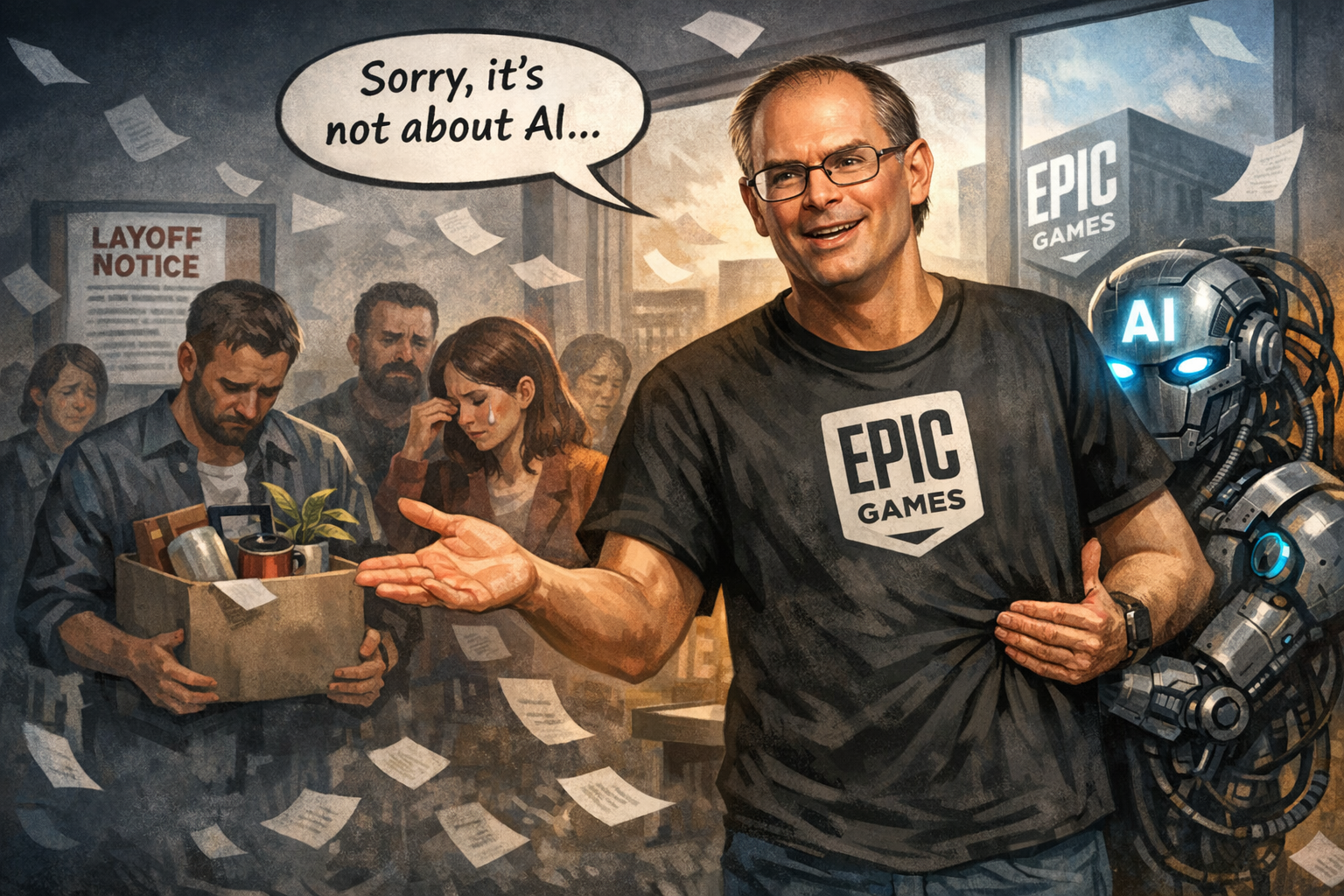
Epic Games Swings the Axe Again, And Tim Sweeney Wants You to Believe It’s Not About AI

Epic Games has once again decided that the best way to “secure the future” of the company is to cut loose the very people who built it. Another round of layoffs, another round of corporate doublespeak, and another round of Tim Sweeney insisting that everything is fine, nothing is AI‑related, and definitely don’t look too closely at the direction Epic has been heading.

At this point, it’s hard not to feel like we’ve seen this movie before, and the ending never changes.

The Official Story: “Not AI‑Related”

Sweeney claims these layoffs have nothing to do with AI. According to him, this is all about “restructuring,” “efficiency,” and “focusing on core priorities.” It’s the same vague corporate language every tech CEO deploys when they want to sound responsible while doing something deeply irresponsible.

But here’s the problem: Epic has been loudly, aggressively pro‑AI for years. Sweeney has repeatedly championed AI as the future of content creation, game development, and even moderation. He’s positioned Epic as a company that wants to automate more, not less. And now, suddenly, when hundreds of people lose their jobs, we’re supposed to believe AI isn’t part of the equation.

It’s a convenient narrative, and a deeply unconvincing one.

A New Low: Telling Steam Not to Label AI‑Generated Content

If there’s one moment that really exposes Sweeney’s stance, it’s his recent criticism of Steam for requiring developers to disclose when their games use AI. Steam’s approach is simple: if AI is in your game, players deserve to know. Transparency matters.

Sweeney’s response? He argued that AI will be “in everything,” so labeling it is pointless.

That’s not just dismissive, it’s morally wrong.

There are countless players, developers, artists, and industry workers who do not support AI‑generated content, especially when it replaces human labour or is trained on unlicensed work. Many people want to avoid AI‑heavy games entirely. They want the choice. They want honesty.

Sweeney’s stance effectively encourages companies to hide AI usage, bury it, or treat it as something players don’t deserve to know about. That’s not leadership. That’s evasion. And it reinforces the idea that Epic is not interested in transparency, only in control.

Epic’s Layoffs in Context: A Brutal Industry Trend

Epic’s latest cuts reportedly affect hundreds of employees, adding to the over 10,000+ layoffs across the gaming industry in the last year alone. Studios big and small, from indie darlings to major AAA publishers, have been slashing staff at a pace the industry hasn’t seen in decades.

And let’s be honest: this probably isn’t the last time Epic swings the axe this year. The company’s direction, spending habits, and obsession with automation make further cuts feel less like a possibility and more like an inevitability.

Epic’s Financial Reality Makes This Even Worse

What makes these layoffs sting even more is that Epic isn’t some struggling startup fighting for survival. Fortnite still generates staggering revenue. Unreal Engine licensing remains one of the most powerful tools in the industry. Epic continues to pour money into legal battles, acquisitions, and metaverse experiments.

So when they claim they “have to” cut staff, it’s hard to take seriously.
This isn’t about survival, it’s about priorities. And clearly, human workers aren’t one of them.

The Hypocrisy of “Championing Creators” While Undermining Them

Epic loves to brand itself as the company that supports creators:

  • Creator Codes
  • UEFN
  • Royalty‑free licensing
  • Marketplace opportunities

But layoffs, AI evangelism, and pushing for hidden AI usage directly contradict that image. You can’t claim to empower creators while simultaneously reducing the number of actual creators on your payroll.

It’s a marketing slogan, not a philosophy.

The Ripple Effect on Unreal Engine Developers

Epic’s decisions don’t just affect Epic. They affect:

  • Thousands of studios using Unreal
  • Marketplace creators
  • Technical artists relying on engine support
  • Indie teams who depend on documentation and bug fixes

When Epic cuts staff, the entire ecosystem feels it. Bugs linger longer. Support slows down. Marketplace curation weakens. The people who rely on Unreal to make a living are left wondering whether the tools they depend on will still be properly supported.

The Human Cost Gets Buried Every Time

What gets lost in all of this, deliberately, I’d argue, is the human impact. These aren’t abstract “roles” being eliminated. These are artists, programmers, QA testers, community managers, and support staff who kept Fortnite running, kept Unreal Engine evolving, and kept Epic relevant.

And the job market they’re being thrown into? It’s brutal.

With thousands of developers all competing for the same shrinking pool of roles, finding a replacement job has become incredibly difficult. People are burning through savings, relocating, switching industries, or leaving game development entirely, not because they want to, but because they have no choice.

I genuinely feel sorry for every single person who’s been caught in this wave. They deserved better than this.

The Fear Developers Now Have About AI Replacing Them

Sweeney’s comments about AI being “in everything” don’t just sound dismissive, they fuel real fear. Developers are already anxious about automation replacing their roles. When a CEO openly downplays transparency and pushes for AI adoption while simultaneously laying off staff, it sends a clear message:

Your job isn’t safe. Your skills aren’t valued. And your concerns don’t matter.

That’s the environment Epic is helping create.

The Long‑Term Damage to the Industry

This constant cycle of layoffs is draining the industry of senior talent. Juniors can’t get hired. Studios are burning out the remaining staff. Creativity suffers when teams are terrified of being next.

Epic isn’t just reacting to the industry, they’re contributing to its decline.

Epic Wants Control, Over Creators, Over Platforms, Over the Future

Sweeney’s obsession with forcing the Epic Launcher onto everyone is part of the same mindset that leads to layoffs like this. It’s about control. Control of distribution. Control of revenue. Control of the narrative.

AI fits neatly into that worldview. It’s cheaper, it’s compliant, and it doesn’t ask for healthcare or a livable wage.

So when Sweeney says these layoffs aren’t AI‑related, it rings hollow. Maybe AI didn’t directly replace these workers today, but Epic’s long‑term strategy makes it clear where the company is heading.

The Bottom Line

Epic Games wants to present itself as a champion of creators, a rebel fighting the big bad platform holders, a visionary company building the future of interactive entertainment.

But when you peel back the PR, what you see is a company that:

  • Cuts staff while investing heavily in automation
  • Pushes unwanted platforms onto players
  • Makes decisions that benefit executives, not employees
  • Encourages companies to hide AI usage instead of being transparent
  • Undermines the very creators it claims to support
  • Damages the wider Unreal ecosystem with every round of cuts

Tim Sweeney can say whatever he wants about these layoffs. But actions speak louder than statements, and Epic’s actions tell a very different story

If people are replaced instead of empowered, the entire economic engine breaks down. No workers means no wages. No wages means no spending. No spending means no customers. And without customers, even the most “efficient” companies collapse. It’s a truth more people need to recognise, because if we keep heading down this path, that future isn’t hypothetical, it’s inevitable.

Until next time, stay sharp and keep gaming, Panda out.
Leave a comment »

DLSS 5 Proves AAA Gaming Is Ready to Trade Art for AI Slop

Images taken from Nvidia.com

NVIDIA’s DLSS 5 announcement should have been a milestone for graphics technology. Instead, it’s become a flashpoint, a moment where gamers, artists, and developers are forced to confront a future where AI doesn’t just enhance games, but rewrites them. And honestly? It feels like the industry is sprinting toward a future nobody actually asked for.

DLSS used to be a clever performance trick. Now it’s an AI-driven filter layered over entire games, altering lighting, materials, and even the emotional tone of scenes. That’s not optimization. That’s overreach.

And the more we see, the more it feels like AAA studios are ready to let AI do the heavy lifting, even if it means sacrificing the art that makes games meaningful.

DLSS 5 Doesn’t Respect Art Direction, It Replaces It

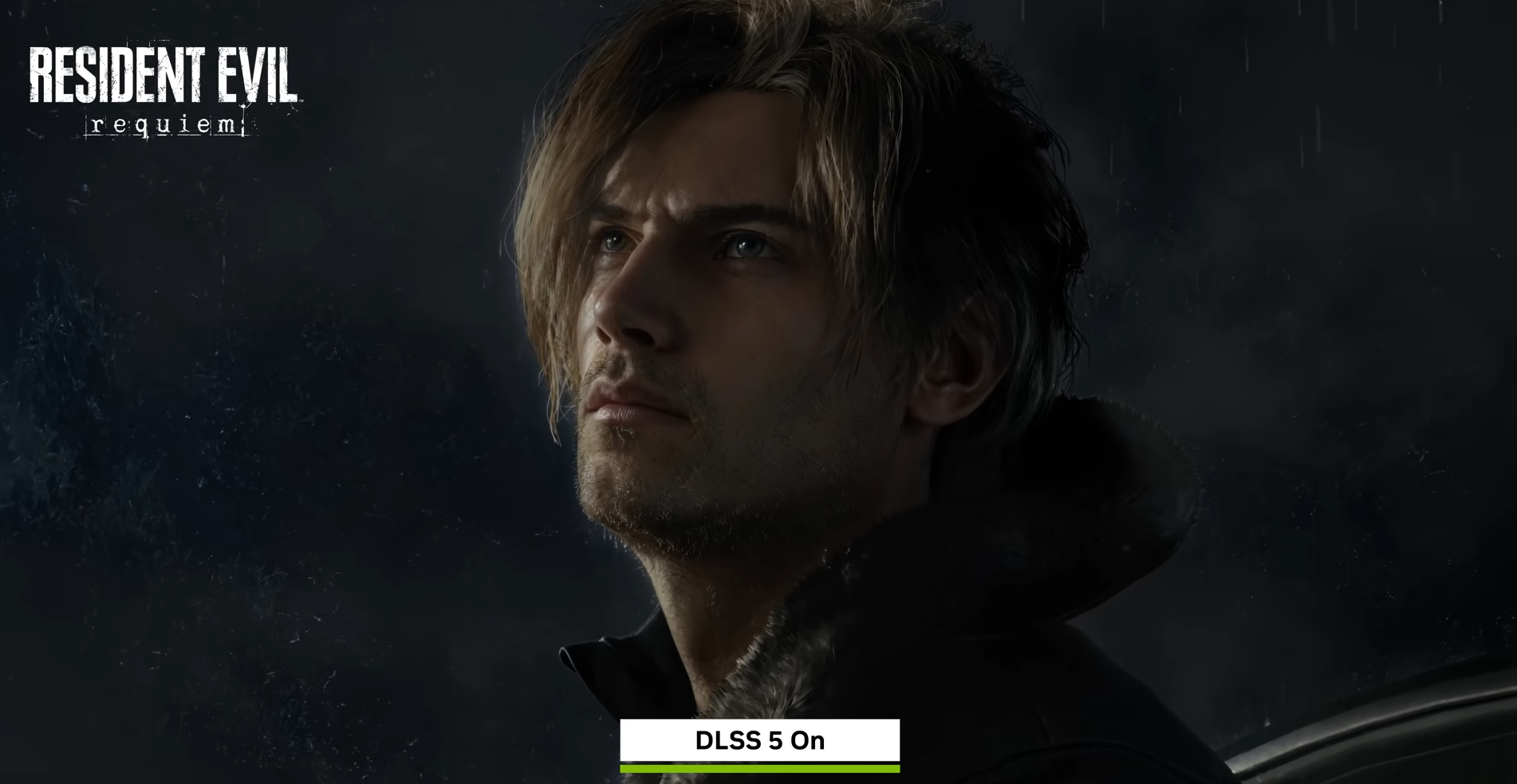
Early footage shows DLSS 5 doing far more than upscaling. It’s injecting its own interpretation of lighting, materials, and geometry. Scenes look glossier, smoother, or outright different from what the artists created.

Gamers immediately noticed:

  • Faces looking subtly altered
  • Materials gaining an unnatural sheen
  • Lighting shifting toward a “photoreal” style that clashes with the original tone

And the most worrying part?

Every game enhanced with DLSS 5 starts to look the same.

What NVIDIA showed in their announcement wasn’t a celebration of artistic diversity, it was a preview of a homogenised future. The “enhanced” images all shared that unmistakable AI sheen: overly smooth surfaces, exaggerated lighting, and a kind of artificial clarity that feels more like an Instagram filter than a rendering technique.

It’s the same problem we see with AI art models:
everything starts to blend together.

Games are art. They’re built by teams who obsess over mood, colour, texture, and atmosphere. When an AI model starts repainting the world in real time, the original artistic intent gets buried under algorithmic guesswork.

A Shortcut for AAA Studios to Get Even Lazier

Let’s be honest: big studios already rely on procedural filler, outsourced assets, and day‑one patches. DLSS 5 feels like the next step in that trend, a tool that lets publishers cut corners and let AI “fix” the visuals later.

Why spend months perfecting lighting or materials when DLSS 5 can slap a photoreal filter over everything?

Why polish textures when the AI can “enhance” them on the fly?

This isn’t empowering developers. It’s enabling shortcuts.

And when NVIDIA is investing billions into generative AI, it’s hard not to see DLSS 5 as part of a broader push to normalise AI‑altered media, regardless of whether players want it.

Gamers Don’t Want This, And They’re Not Quiet About It

The backlash has been overwhelming. Across forums, social media, and comment sections, players are calling DLSS 5:

  • “AI slop”
  • “A filter nobody asked for”
  • “The death of artistic direction”
  • “A tech demo pretending to be a feature”

People aren’t rejecting DLSS 5 because they “don’t understand it.” They’re rejecting it because they do understand what it means for the future of game art.

Gamers want authenticity, not algorithmic reinterpretation.

And to be clear, this isn’t about hating DLSS as a whole.
DLSS has been a genuinely brilliant technology for years. The way it helps people with lower‑spec PCs enjoy modern games is one of the best things to happen to PC gaming. That’s where DLSS shines, boosting performance, smoothing out framerates, and making demanding titles accessible to more players.

But changing the way DLSS works at a fundamental level is not the way forward.
AI absolutely has its uses, but the way DLSS 5 applies an AI filter over the entire image isn’t enhancement, it’s distortion. It stops being a performance tool and starts becoming an artistic override, and that’s where the line gets crossed.

Studios Are Already Defending DLSS 5, And They’re Naming AI as the Future

Several studios partnering with NVIDIA have stepped in to defend DLSS 5. Their statements are predictable, but now we can attach names, context, and motivations to them.

Todd Howard, Bethesda Game Studios (Director & Executive Producer)

Todd Howard has been openly enthusiastic about NVIDIA’s AI‑driven rendering. While discussing Starfield’s tech pipeline, he praised AI‑assisted upscaling as “the future of how we push visual fidelity without sacrificing performance.”
Howard has repeatedly emphasised that AI‑based rendering lets studios “focus on the bigger picture,” which aligns perfectly with NVIDIA’s messaging around DLSS 5.

Bethesda’s long‑standing partnership with NVIDIA makes their support unsurprising, but it also highlights how deeply AI is being woven into AAA pipelines.

CD Projekt Red, Jakub Knapik (Global Art Director)

Knapik has praised DLSS and AI‑assisted rendering for years, calling it “a natural evolution of game visuals.”
His stance on DLSS 5 mirrors this: AI is the next step, and players should embrace it.

Remedy Entertainment, Tero Virtala (CEO)

Virtala has been vocal about AI‑driven rendering, stating that technologies like DLSS “free up resources and let teams focus on creative direction.”
This is the same corporate line being repeated around DLSS 5.

Ubisoft, Pierre Escaich (Technical Director)

Ubisoft has already announced internal initiatives to use AI for writing NPC dialogue, generating animations, and assisting with world‑building.
Escaich’s stance on DLSS fits that direction, saying NVIDIA’s AI tools “bring out details that would otherwise be lost.”

Ubisoft’s growing reliance on AI makes their support for DLSS 5 feel less like artistic enthusiasm and more like corporate alignment.

Square Enix, Takeshi Aramaki (Studio Head, Luminous Productions)

Square Enix has openly stated they plan to integrate AI into “every stage of game development.”
Aramaki has previously described DLSS as “a key part of achieving next‑generation visuals,” and their support for DLSS 5 fits perfectly with their broader AI‑first strategy.

Square Enix is one of the most aggressive AAA publishers pushing AI into production, from asset generation to animation, so their backing of DLSS 5 is no surprise.

Developers Speaking Out Against DLSS 5

While some studios are defending DLSS 5, several developers have openly criticised it, echoing the same concerns gamers have raised. Their reactions reinforce the idea that DLSS 5 isn’t just controversial — it’s actively worrying people who work on games for a living.

Grace Ashcroft, Developer on Resident Evil: Requiem

Eurogamer reported that Grace Ashcroft was “concerned that DLSS 5 appears to layer a gaudy AI filter over a game’s original work.” She noted that the tech “changes the look of scenes in ways we didn’t author,” which directly challenges NVIDIA’s claim that artistic intent remains untouched.

Unnamed Developers Reacting to NVIDIA’s Demo

According to TheSixthAxis, multiple developers watching the DLSS 5 reveal said it “looks like someone has put an AI beauty filter over the games.” This wasn’t a fringe opinion, it was described as the reaction from “almost everyone else, from punters to game developers.”

General Developer Sentiment (as reported by GamingOnLinux)

GamingOnLinux highlighted widespread developer frustration, noting that DLSS 5 “completely changes the faces of characters” and that many devs felt NVIDIA had “lumped together their previous good tech with something else entirely.” The article emphasised that developers were just as baffled as players by the AI‑generated look.

Developers Calling It “AI Slop”

XDA Developers reported that even developers were describing the output as having an “unnecessary AI sheen” and comparing it to “AI slop.” This wasn’t just a gamer meme, it was a professional critique.

The Pattern Is Clear

These quotes all share the same tone:

  • AI saves time
  • AI reduces workload
  • AI “enhances” visuals
  • AI is the future

But none of them address the core issue gamers are raising:

DLSS 5 doesn’t just enhance games, it homogenises them.

It overwrites artistic direction with an AI‑generated aesthetic that makes every game look like the same glossy, over‑processed tech demo. And the studios defending it are the same ones already investing heavily in AI‑driven production pipelines.

Gamers aren’t imagining the threat.
The industry is telling us exactly where it wants to go.

NVIDIA’s Response to the Backlash Isn’t Helping

The backlash grew so loud that NVIDIA’s CEO, Jensen Huang, addressed it directly. His stance was blunt:

  • Critics are “misunderstanding the technology”
  • DLSS 5 “does not override artistic intent”
  • Developers “remain fully in control”

But the demos contradict that narrative. When the AI is visibly altering materials, lighting, and even character appearance, it’s hard to argue that the original art direction is untouched.

Even long‑time DLSS supporters and tech journalists are calling this a step too far.

Games Deserve Better Than AI Overpainting

At the core of all this, my stance hasn’t changed:

Games should look the way their creators intended, not the way an AI model thinks they should.

We already have incredible rendering tools. We don’t need a generative AI system repainting games in real time. That’s not innovation. That’s intrusion.

DLSS 5 isn’t helping games.
It’s homogenising them.
It’s sanding down the edges.
It’s replacing art with algorithmic interpretation.

And if this is the direction AAA gaming is heading, AI filters, AI textures, AI lighting, AI “enhancements”, then we’re at risk of losing the human touch that makes games special in the first place.

Until next time, stay sharp and keep gaming, Panda out.

References

  • “DLSS 5 Announcement & Feature Overview” — NVIDIA
  • “NVIDIA CEO Responds to DLSS Criticism” — Tom’s Hardware
  • “Jensen Huang Defends DLSS Against AI Concerns” — PC Gamer
  • “Todd Howard Talks Starfield Technology and AI Upscaling” — IGN
  • “Todd Howard on NVIDIA and the Future of Visual Fidelity” — GamesRadar
  • “CD Projekt Red Discusses DLSS and AI Rendering” — PC Gamer
  • “Cyberpunk 2077 Developers on DLSS Improvements” — TechRadar
  • “Remedy CEO Tero Virtala on AI Rendering and Studio Direction” — GamesIndustry.biz
  • “Remedy Discusses AI Rendering and the Future of Visuals” — Eurogamer
  • “Ubisoft Introduces Ghostwriter AI Narrative Tool” — Ubisoft News
  • “Ubisoft’s AI Writing Tool Raises Questions” — The Verge
  • “Ubisoft Expands Use of AI Tools in Development” — PC Gamer
  • “Square Enix Outlines AI Strategy for Future Games” — Square Enix
  • “Square Enix Plans AI Integration Across Development Pipeline” — PC Gamer
  • “Square Enix Wants AI in Every Stage of Game Development” — TechSpot
  • “Developers Express Concerns Over DLSS 5 Visual Changes” — Eurogamer
  • “DLSS 5 Backlash From Developers and Players” — TheSixthAxis
  • “Developers Criticise DLSS 5’s AI‑Generated Look” — GamingOnLinux
  • “Developers Call DLSS 5 Output an ‘AI Sheen’” — XDA Developers
  • “DLSS 5 Backlash Discussion” — r/pcgaming
  • “DLSS 5 Technical Analysis” — Digital Foundry
  • “DLSS 5 Community Reaction and Concerns” — PC Gamer

Leave a comment »

PlaySafe ID: The Future of Trust, Fair Play, and Data Privacy in Online Gaming?

Image – PlaySafeID

The gaming industry has long struggled with issues of cheating, toxicity, and fair play. From aim bots in shooters to account boosting in RPGs, bad actors disrupt the balance and enjoyment for honest players. Now, a new initiative called PlaySafe ID aims to tackle these issues with a verified, anonymous digital ID system, raising key questions about how gaming identities could evolve and whether players can trust the system’s privacy promises.

How PlaySafe ID Works & Its Impact on Players

PlaySafe ID recently secured $1.12M in pre-seed funding, backed by Early Game Ventures, Hartmann Capital, and Overwolf. The platform’s goal is to provide a trust layer for online gaming, ensuring players are real and haven’t been caught cheating or engaging in harmful behavior.

Its standout feature is Zero-Knowledge Proof technology, which lets players verify their identity without exposing personal details. This means players can prove they’re legitimate without handing over sensitive information, tackling both security risks and privacy concerns.

Verification Process

PlaySafe ID uses Zero-Knowledge Proof technology to verify players without exposing personal details. Here’s how the process works:

For Adults (18+)

  1. Create an account on PlaySafe ID.
  2. Upload a valid photo ID (passport, driver’s license, etc.).
  3. Take a selfie for identity confirmation.
  4. Verification is handled by Veriff, a trusted identity verification provider used by platforms like Epic Games and Roblox.
  5. Once verified, PlaySafe ID generates a random, anonymous ID that can be used across supported games.

For Younger Players (Under 18)

  1. A parent or guardian must create an account and verify themselves first.
  2. The parent then adds the child as an under-18 user.
  3. The child takes a simple age estimation selfie, which is reviewed by Veriff.
  4. If successful, PlaySafe ID generates a unique anonymous ID for the child.
  5. This ID ensures they only interact with verified players who have never been flagged for inappropriate behavior.

Additional Benefits of PlaySafe ID

Beyond banning cheaters, PlaySafe ID offers other potential benefits:

  • Cross-Game Trust System: Players with a verified PlaySafe ID can build a trust score, helping developers identify legitimate players and reduce false bans.
  • Improved Matchmaking: Games using PlaySafe ID can prioritize verified players, leading to fairer matches with fewer cheaters.
  • Stronger Community Moderation: Toxic behavior, such as harassment or cheating, can result in cross-game penalties, discouraging repeat offenders.
  • Developer-Friendly Integration: PlaySafe ID provides an API for game studios, making it easier to implement anti-cheat and player verification without needing to build their own system.

Ban System: One Game or All Games?

If a player is caught cheating, their PlaySafe ID is blacklisted across all supported games. This means they won’t be able to simply create a new account and rejoin another game using PlaySafe ID. The goal is to eliminate repeat offenders from multiplayer ecosystems.

What Happens If a Ban Was a Mistake?

PlaySafe ID has an appeals process to handle false bans. Here’s how it works:

  1. Players can submit an appeal through their PlaySafe ID account.
  2. PlaySafe ID reviews the ban type:
    • Logic-based bans (e.g., detected cheat software) are not overturned.
    • Heuristic-based bans (e.g., unusual movement patterns) are reviewed manually.
  3. Trust Score Consideration: Players with a high trust score (long gaming history, multiple linked accounts) are more likely to have their ban overturned.
  4. Final Decision: If the appeal is successful, the player’s ID is reinstated, but they may be placed on a watchlist to prevent future false flags.

Industry Reception & Developer Adoption

PlaySafe ID is currently in integration talks with several major gaming platforms. Early Game Ventures, which led the funding round, believes PlaySafe ID could become a default identity layer in gaming, similar to Steam or Xbox Live profiles.

However, widespread adoption depends on developer buy-in. If major publishers hesitate, PlaySafe ID could struggle to gain traction.

Costs & Accessibility

PlaySafe ID is free for players, but developers must pay to integrate it into their games. This could lead to some studios skipping adoption due to budget constraints.

Potential Exploits & Security Risks

While PlaySafe ID aims to prevent cheating, hackers could attempt to spoof verification or bypass bans using stolen credentials or identity fraud. The platform will need continuous security updates to stay ahead of potential exploits.

Comparison to AI Cheat Detection Systems

Some games are developing AI-powered cheat detection systems that analyze player behavior to flag suspicious activity. PlaySafe ID differs by focusing on identity verification, rather than detecting in-game cheating patterns.

Future Expansion Beyond Gaming

PlaySafe ID’s game-agnostic identity system could expand beyond gaming to social media or virtual spaces. Some investors believe it could become a universal digital trust layer, similar to online authentication systems like Google or Apple ID.

Privacy Concerns & Historical Data Breaches

PlaySafe ID claims that it does not store personal identification data, relying on Zero-Knowledge Proof technology for verification. However, skepticism is warranted. Companies have made similar promises in the past, only for data leaks or policy changes to reveal otherwise.

Past Cases of Companies Misleading Users About Data Storage

History has shown that companies don’t always honor their privacy commitments. Here are some notable cases:

  • Yahoo Data Breach (2013-2016): Yahoo exposed three billion user accounts in a massive data breach but only admitted to it three years later.
  • Facebook & Cambridge Analytica (2018): Facebook allowed Cambridge Analytica to harvest data from millions of users without proper consent, leading to a major scandal.
  • Uber Cover-Up (2016): Uber suffered a data breach affecting 57 million users but paid hackers to keep it quiet instead of informing users.
  • Google+ Shutdown (2018): Google+ was shut down after it was revealed that third-party developers had access to private user data, which Google initially withheld from the public.

These cases highlight why gamers should remain cautious when companies promise not to store personal data. While PlaySafe ID’s privacy-first approach is promising, independent verification and transparency will be key to ensuring it truly protects users.

Final Thoughts

PlaySafe ID presents an intriguing vision for safer, fairer gaming. Its privacy-first approach is a step beyond traditional anti-cheat solutions, but its adoption will determine whether it’s a game-changer or just another attempt at reforming digital trust.

What do you think? Would you want PlaySafe ID in your favorite games?

Until next time, stay sharp and keep gaming. Panda out.

Yes! Here’s the fully updated reference list, ensuring all sources are accurate and properly formatted:

References

  • PlaySafe ID Industry ReceptionVentureBeat
  • PlaySafe ID Official Privacy StatementPlaySafe ID
  • Verification Process & Veriff AuthenticationVeriff
  • AI Cheat Detection ComparisonModl.ai
  • Yahoo Data Breach (2013-2016)Reuters
  • Facebook & Cambridge Analytica Scandal (2018)The Guardian
  • Uber Cover-Up of Data Breach (2016)BBC News
  • Google+ Shutdown Due to Privacy Issues (2018)TechCrunch

Comments (1) »

AI Darth Vader in Fortnite Sparks Controversy

Image – Fortnite/Epic Games

AI Darth Vader in Fortnite Sparks Controversy

On May 16, 2025, Fortnite’s Galactic Battle event introduced an AI-generated Darth Vader, allowing players to interact with him via voice chat. While this was intended as a cutting-edge feature, it quickly became the center of controversy due to ethical concerns over AI voice replacement, industry backlash, and player misuse.

The AI Darth Vader and James Earl Jones’ Estate

Epic Games secured permission from James Earl Jones’ estate to recreate his legendary voice using AI. While this ensures continuity for the iconic character, many industry professionals have raised concerns about whether AI-generated performances should replace human voice actors entirely.

Voice Actors Speak Out Against AI Darth Vader

Voice actors have strongly opposed the use of AI-generated voices in Fortnite, arguing that it undermines their profession and sets a dangerous precedent for the industry.

The SAG-AFTRA union has filed an unfair labor practice charge against Llama Productions, a subsidiary of Epic Games, claiming that the company failed to negotiate with voice actors before replacing their work with AI.

The union argues that:

  • AI-generated voices replace human performers, cutting costs at the expense of artistry.
  • Epic Games did not inform the union or offer voice actors a chance to bargain before implementing AI Vader.
  • This sets a precedent for gaming companies to replace voice actors entirely, threatening their livelihoods.

Player Manipulation and Epic’s Response

Soon after release, players discovered ways to manipulate AI Vader, making him say inappropriate phrases, profanity, and offensive statements. By May 17, 2025, Epic issued a hotfix to limit abuse, but concerns linger over how AI NPCs in gaming could be exploited in the future.

How Easy Was It to Manipulate AI Vader?

Players quickly realized that AI Vader lacked proper language filtering, allowing them to trick him into saying profanity, slurs, and bizarre phrases. Some streamers even recorded clips of Vader responding with explicit language, which spread rapidly across social media before Epic patched the issue.

Examples of AI Vader’s Responses Before the Hotfix

Before Epic intervened, AI Vader was caught saying:

  • “Freaking, f*ing, such vulgarity does not become you, Padmé.”** (After being prompted with curse words)
  • “Spanish? A useful tongue for smugglers and spice traders. Its strategic value is minimal.” (A response that sparked backlash for its implications)
  • “Exploit their vulnerabilities, shatter their confidence, and crush their spirit.” (When asked for advice on handling a breakup)

These responses raised concerns about AI moderation, as Vader’s dialogue was generated dynamically based on player input.

Epic’s AI Moderation Plans

Epic Games has been working on AI moderation improvements, including voice reporting systems and AI-driven content filtering. However, the AI Darth Vader incident suggests that current safeguards are insufficient, raising concerns about how AI characters will be regulated in future games.

Comparison to Previous AI Voice Controversies

This isn’t the first time AI-generated voices have sparked backlash. In 2024, Capcom faced criticism for using AI-generated Albert Wesker voice lines in the Resident Evil 4 remake, leading to concerns about AI replacing human voice actors. The Fortnite AI Vader controversy follows a similar pattern, reinforcing industry-wide concerns about AI voice replication.

Community Reaction & Memes

The controversy quickly spread across social media, with players sharing memes and viral clips of AI Vader saying outrageous things. Some fans found the situation hilarious, while others called it “dystopian and unsettling.”

Industry Impact: What’s Next for AI in Gaming?

As AI technology becomes more prevalent in gaming, this controversy highlights ethical concerns over voice acting, character authenticity, and the rights of performers. If major studios continue using AI for iconic roles, unions may push for new protections to ensure fair compensation and artistic integrity.

The backlash against AI Darth Vader raises questions about the future of AI-driven characters in gaming:

  • Will developers find ways to better regulate AI NPCs?
  • Will actors’ unions successfully push for stronger protections?
  • How will players react to the ongoing integration of AI-generated characters in games?

Key Dates in the AI Darth Vader Controversy

  • May 16, 2025 – AI Darth Vader went live in Fortnite as part of the Galactic Battle event.
  • May 17, 2025 – Reports surfaced of players manipulating AI Vader, prompting Epic Games to issue a hotfix.
  • May 19, 2025SAG-AFTRA filed a complaint against Epic Games for failing to negotiate with voice actors before using AI-generated voices.
  • May 20, 2025 – The controversy intensified, with Star Wars fans calling the AI recreation “dystopian and sinister.”

What are your thoughts, should AI be allowed to replace iconic voice actors, or does this set a dangerous precedent for the industry?

Until next time, stay sharp and keep gaming. Panda out.

References

Leave a comment »