Archive for Industry Talk

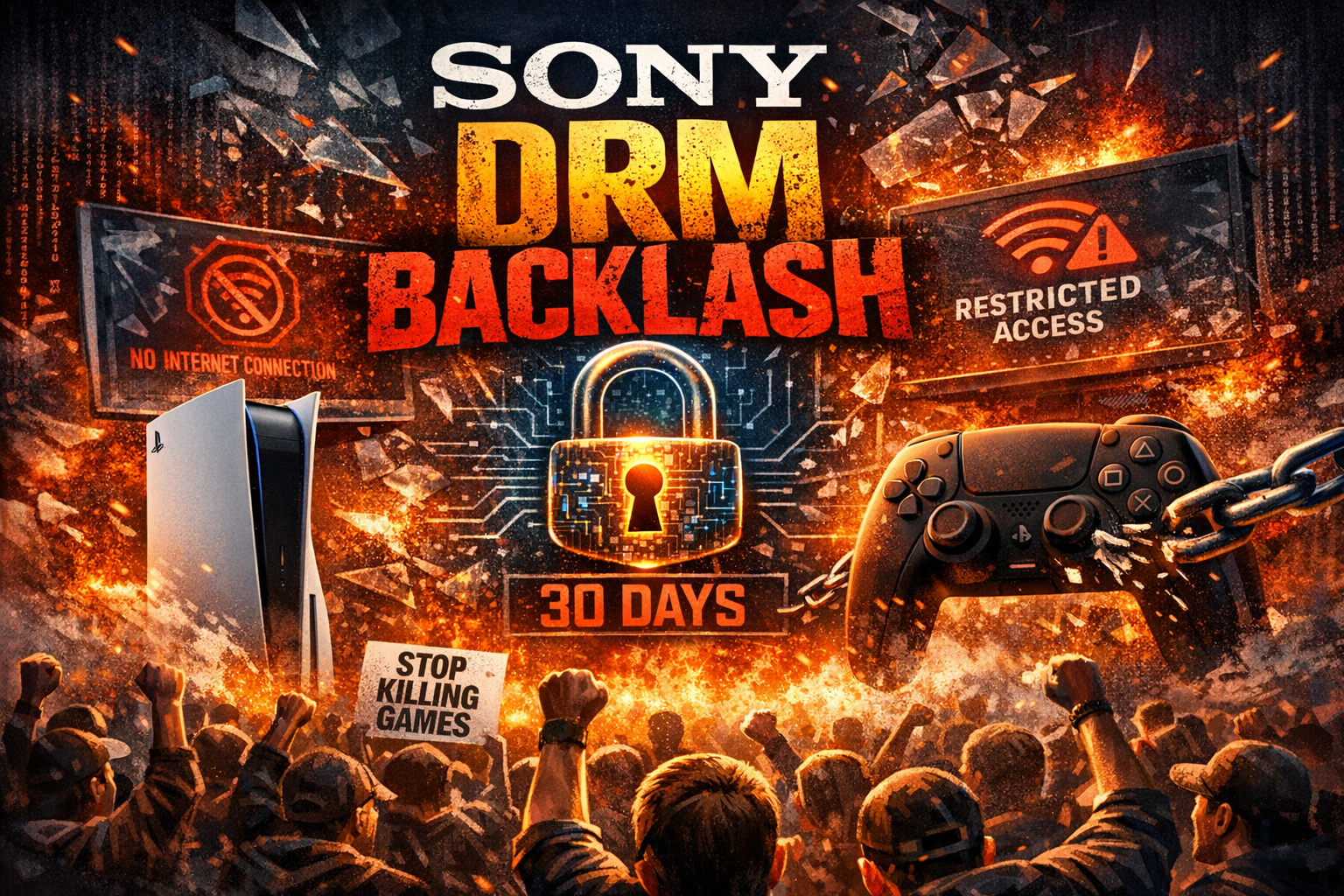
Sony Has Lost It: A 30 Day DRM Lock in the Middle of the Stop Killing Games Movement

In a move that feels almost surreal, Sony has introduced one of the most aggressive DRM restrictions the console industry has seen in years. At the exact moment when the Stop Killing Games movement is gaining traction across Europe, and when Ubisoft has just backed down under public and political pressure, Sony has decided to go in the opposite direction.

Reports from VGC, GameSpot, VideoCardz, Item4Gamer, and Tech4Gamers all confirm the same thing. Any new digital PlayStation game purchased after March 2026 now requires an online check in every 30 days. If your console stays offline longer than that, the game will not launch until you reconnect.

This is not a rumour. This is not a glitch. Sony’s own support channels have confirmed it.

And the timing could not be worse.

What Sony Has Actually Done

According to multiple sources, the new DRM system works like this:

  • All digital games purchased after March 2026 now have a 30 day “validity” timer
  • If the console does not connect to PSN within that period, the license expires temporarily
  • The game becomes unplayable until the console reconnects
  • Primary console settings do not bypass the restriction
  • Older digital purchases are unaffected

VGC reports that the timer is visible on PS4 under “Valid Period (Start End)” and “Remaining Time”, while PS5 tracks the timer invisibly in the background.

GameSpot confirms that this affects all new purchases and that Sony’s automated support bot describes the change as intentional.

Tech4Gamers goes further, stating that Sony support has explicitly confirmed the DRM is part of a new update, not a bug.

This is a mandatory monthly online check in for games you own.

Why This Is Blowing Up

The gaming community is furious, and for good reason. This is the exact scenario the Stop Killing Games movement has been warning about. Publishers taking away access to games people paid for, not because servers shut down, but because of DRM policies.

And Sony has done this right after:

  • Ubisoft backed down and added offline modes to The Crew 2
  • The EU heard the Stop Killing Games petition
  • Public pressure around digital ownership reached an all time high

Instead of listening, Sony has doubled down on control.

A Pattern of Anti Consumer Decisions

When you look at the bigger picture, this is not just one bad decision from Sony. It is part of a growing pattern that feels completely anti consumer. We have seen multiple price rises across PlayStation services this year, from PS Plus subscription increases to higher prices on digital games and accessories. Now, on top of that, Sony has introduced a DRM system that restricts access to games people have already paid for.

It is hard to see how any of this benefits players. Every change seems to take something away, or make something more expensive, or add another layer of control. And the timing could not be worse. With Stop Killing Games pushing for better consumer rights and the EU openly discussing digital preservation, Sony has chosen this moment to tighten restrictions instead of loosening them.

I think Sony will find themselves losing players and customers because of this. Gamers are easy to anger and hard to win back, and we have long memories. Once trust is broken, it does not return quickly. Moves like this do not just frustrate people in the moment, they stay with them for years. If Sony keeps going down this path, they risk pushing loyal players away and damaging the reputation they have built over decades.

Sony’s Quiet ToS Change Makes This Even Worse

As if the DRM situation was not bad enough, Sony recently updated their Terms of Service with a new arbitration clause. This clause prevents players from joining class action lawsuits unless they send a physical opt out letter through the post. This mirrors the controversial move Nintendo made last year, which received massive backlash from players and consumer rights groups.

The timing of this change is impossible to ignore. Sony has introduced a new DRM system that restricts access to purchased games, and at the same time they have made it harder for players to take legal action if something goes wrong. It sends a clear message about where their priorities are, and it is not with the consumer.

My Thoughts

I find it crazy that Sony would do something like this in the light of Stop Killing Games talking with the EU. If anything, this strengthens Stop Killing Games’ stance and shows exactly how much control companies have over people’s digital purchases. This is the kind of behaviour that has pushed people to fight back in the first place, because it proves that access to the games you buy can be restricted at any moment, for reasons that have nothing to do with preservation or consumer rights.

Sony’s new 30 day DRM system does not improve ownership, it does not protect access, and it does not help players in any way. Instead, it introduces a new barrier that punishes anyone who wants to stay offline for more than a month, even when the game is fully installed on their console. Nothing about this aligns with the direction the industry is being pushed toward, especially now that the EU is openly discussing digital preservation and long term access.

So as far as I can see, this move has nothing to do with the EU, and everything to do with Sony tightening control at the worst possible moment. Ubisoft just backed down and added offline modes because of public pressure, yet Sony has chosen this exact time to make digital ownership worse. It feels completely out of touch with what players want, and it highlights why movements like Stop Killing Games exist in the first place.

What Happens Next

This situation has already reignited the debate around digital ownership. If Sony continues down this path, it will only strengthen the argument for regulation. The industry is being pushed toward consumer protection, preservation, and long term access. Sony’s decision shows why that push is necessary.

Sony is risking long term brand damage. Gamers do not forget anti consumer decisions, and they do not forgive them easily. Trust is slow to build and fast to lose, and Sony is burning through it at a worrying pace. If they continue down this road, they may find themselves losing players to competitors who are willing to respect ownership and preserve access.

This is not the end of the conversation. It is the beginning of a much bigger fight over what it means to own a digital game in 2026.

Until next time, stay sharp and keep gaming, Panda out.

References

  • VGC – Video Games Chronicle, 2026. PlayStation has seemingly added a 30 day DRM check to all newly purchased digital PS4 and PS5 games.
  • GameSpot, 2026. PlayStation Users Report New Online License Checks For Digital Games.
  • VideoCardz, 2026. Sony reportedly tests 30 day online license checks for new PlayStation purchases.
  • Item4Gamer, 2026. PlayStation New DRM Restriction, What the 30 Day Limit Means.
  • Tech4Gamers, 2026. PlayStation Confirms New DRM, Digital Games Will Vanish If Players Do Not Log In For 30 Days.
Leave a comment »

Ubisoft Backs Down: How Stop Killing Games Forced The Crew 2 to Go Offline

For the first time in years, players have seen a major publisher reverse course on an always‑online game, and it did not happen because Ubisoft suddenly became generous. It happened because the Stop Killing Games movement applied sustained pressure, gathered nearly 1.3 million signatures, and took the fight all the way to the European Parliament.

Now, Ubisoft has quietly rolled out a major update to The Crew 2, adding a hybrid offline mode that preserves the game long after servers eventually shut down. Multiple sources confirm this was not Ubisoft’s original plan, and the timing is no coincidence.

This is the movement’s biggest victory yet.

Why This Matters

For years, Ubisoft insisted that The Crew series required online connectivity for everything, even single‑player. When the original Crew was shut down, players lost access permanently. No offline mode, no fallback, no preservation.

But this time, things changed, and the reason is clear.

The EU Pressure That Forced Ubisoft’s Hand

The Stop Killing Games movement was formally heard in the EU Parliament after collecting almost 1.3 million signatures. The initiative demanded that publishers keep games playable even after support ends.

Shortly after this meeting, Ubisoft announced a new Hybrid Mode for The Crew 2 and The Crew Motorfest, allowing:

  • Full offline play
  • Offline saving of vehicle designs
  • Offline storage of player and vehicle statistics
  • Switching between online and offline without restarting

This is a complete reversal of Ubisoft’s previous stance.

Stop Killing Games Confirms the Reason

Ross Scott, the creator of the movement, stated that Ubisoft acted because of Stop Killing Games pressure, not goodwill. He claims an internal Ubisoft source confirmed the company feared the European Citizens’ Initiative might succeed and force legal consequences.

iXBT.games reports the same: Ubisoft expanded offline functionality because of pressure from the ECI, which had reached the European Parliament and threatened their previous policies.

Mundo Gamer Community echoes this, noting Ubisoft acted out of strategic fear, not voluntary preservation.

GamesRadar+ also quotes the SKG lead directly:

“This is due to pressure from Stop Killing Games early on.”

The evidence is overwhelming.

A Turning Point for Game Preservation

This victory is more than a patch. It is a precedent.

  • Ubisoft avoided another Crew 1 disaster
  • The movement proved that organised pressure works
  • Publishers now know the EU is watching
  • Offline modes are no longer “impossible”

HappyGamer calls it a “massive W” for the community, noting that Ubisoft is not known for backing down on online requirements, yet they did here.

My Thoughts

From my perspective, it feels like Ubisoft made this move to demonstrate that they can fix these issues on their own terms, without being forced into it by regulation. If the EU eventually introduces laws around game preservation, those rules would likely be far stricter than anything a publisher would choose to implement voluntarily. By adding offline and hybrid modes now, Ubisoft can point to this as proof that they are capable of addressing player concerns without government intervention. It comes across as a strategic move, a way to stay ahead of potential legislation by showing that they are willing to act before being compelled to do so.

What Happens Next

This win shows that:

  • Publishers can preserve games
  • Offline modes can be added
  • Pressure does work
  • The EU is paying attention

The Stop Killing Games movement is gaining momentum, and Ubisoft’s reversal proves that even the biggest companies will change when the threat of regulation becomes real.

This is not the end. It is the beginning of a new phase in the fight for digital ownership.

Until next time, stay sharp and keep gaming, Panda out.

References

  • Mein-MMO.de, 2026. Gamers are putting heavy pressure on the EU, now Ubisoft is bringing a dead game back.
  • iXBT.games, 2026. Ubisoft Backed Down: Stop Killing Games Achieved a Major Victory.
  • Mundo Gamer Community, 2026. Ubisoft strengthens offline mode of The Crew 2 under pressure.
  • HappyGamer, 2026. The Crew 2 Gets Offline Mode as Stop Killing Games Wins Big.
  • GamesRadar+, 2025. As Ubisoft makes The Crew 2 playable offline, Stop Killing Games lead takes a moment to celebrate.

Leave a comment »

The Stop Killing Games Movement: Why It Matters, and How the EU Is Responding

Over the past year, players have watched a worrying trend accelerate across the games industry: online‑only titles being shut down permanently, single‑player games rendered unplayable due to server checks, and purchased content disappearing without warning. High‑profile shutdowns, including games that were only a year or two old, pushed many players to a breaking point.

But the moment that truly ignited the movement was Ubisoft’s decision to shut down The Crew (2014). Despite being a paid game with an active community, Ubisoft delisted it from all storefronts and later shut down the servers, rendering the entire game, including single‑player, completely unplayable. No offline mode, no preservation patch, no way for owners to access what they paid for. For many players, this was the moment that proved the industry had crossed a line, and it became the rallying cry that propelled the Stop Killing Games movement into the public spotlight.

What began as a grassroots pushback has now reached the desks of EU officials, and for the first time, a major governing body is openly examining whether consumer protection laws need to evolve to keep up with the modern games industry.

This isn’t just noise anymore. It’s becoming policy discussion.

But where does the movement stand today? And what is the EU actually saying in response?

Let’s break it down.

What the Movement Is Fighting Against

The Stop Killing Games movement argues that the industry has shifted into a dangerous pattern:

  • Games being shut down after only a year or two
  • Online‑only DRM making single‑player titles unplayable
  • Delisted games disappearing forever
  • Purchased content being removed
  • Live‑service titles being abandoned with no fallback mode
  • No legal requirement for publishers to keep games functional

The core message is simple:

If you buy a game, you should be able to play it, even if the servers go offline.

This resonates with players because it’s rooted in fairness. But it also raises complex legal and technical questions.

The Movement’s Most Powerful Arguments, And Why They Hit Hard

One of the reasons the Stop Killing Games movement gained so much traction is because it highlights something most players never stop to think about: video games are the only major entertainment medium where a company can legally take away something you paid for.

The movement uses several strong comparisons to make this point clear:

1. Books don’t disappear from your shelf

If you buy a book, physical or digital, the publisher cannot:

  • revoke it
  • delete it
  • make it unreadable
  • shut it down

Once you’ve bought it, it’s yours.

2. Films don’t stop working after a few years

If you buy a Blu‑ray or a digital film, the studio cannot:

  • disable playback
  • remove scenes
  • shut down the servers required to watch it

Even streaming services don’t delete films you’ve purchased.

3. Music doesn’t become unplayable because a server goes offline

If you buy an album, the label can’t:

  • revoke your license
  • remove tracks
  • make the file stop working

Music preservation is legally protected.

4. Even software industries have fallback protections

Professional software often includes:

  • offline modes
  • perpetual licenses
  • compatibility patches

Games, by contrast, can be rendered useless overnight.

Why Games Are Treated Differently, And Why That’s a Problem

The movement argues that games are the only digital product where:

  • a company can shut down a server
  • and instantly destroy the product you paid for
  • with no legal obligation to provide a fallback

This is the core injustice the movement highlights.

And it’s exactly this comparison that caught the attention of EU officials.

The EU Has Officially Acknowledged the Issue

The movement gained enough traction that the European Commission was formally petitioned, and they responded.

Thierry Breton, EU Internal Market Commissioner, stated:

“Consumers must have access to the digital content they have purchased. If a game is no longer supported, companies must ensure that users can continue to enjoy what they paid for.”

This is one of the strongest statements yet from a major regulator. It aligns almost perfectly with the movement’s goals.

But the EU’s stance isn’t entirely one‑sided.

The EU’s Position: Supportive, But Cautious

The European Commission has made it clear they are examining the issue, not legislating it, at least not yet.

In their official response:

“The Commission is aware of concerns regarding the preservation of digital games and the discontinuation of online services. We are examining whether current consumer protection rules adequately address these situations.”

This is supportive, but measured. They’re acknowledging the problem, not promising sweeping regulation.

Why the caution?

Because the EU has to balance:

  • consumer rights
  • developer freedom
  • technical feasibility
  • preservation laws
  • cross‑border digital markets

They can’t simply force publishers to keep servers online forever. But they can explore requirements like:

  • offline modes
  • patches to keep games functional
  • legal preservation exemptions
  • clearer consumer rights for digital goods

And that’s exactly what they’re doing.

What EU Parliament Members Are Saying

Several MEPs have spoken publicly about digital goods and consumer rights, not always directly about games, but in ways that apply perfectly to this issue.

MEP Kim van Sparrentak (Greens/EFA):

“We cannot allow companies to sell digital products that can be taken away at any moment. This undermines consumer trust.”

MEP Brando Benifei (S&D):

“If a product is sold, it must remain usable. This principle must apply to digital products just as it does to physical ones.”

IMCO Committee (Internal Market):

“When consumers buy a product, they expect it to remain functional. Digital goods should not simply disappear.”

These statements show a clear trend: The EU is leaning toward the movement’s side, at least philosophically.

But again, philosophy isn’t legislation.

Is There Any Pushback Against the Movement?

Here’s the balanced view.

1. The EU has not criticised the movement directly.

There are no public EU statements against Stop Killing Games.

2. The pushback is structural, not ideological.

The EU’s concerns are about:

  • how to enforce preservation
  • who pays for it
  • whether offline modes are technically possible
  • how to regulate global publishers
  • avoiding over‑regulation of creative industries

3. Publishers themselves have been mostly silent.

They haven’t publicly opposed the movement, but their actions (shutting down games, delisting titles, using online DRM) speak louder than words.

So the “opposition” isn’t vocal. It’s practical.

Where Things Stand Today

Here’s the honest, factual picture:

The Movement

  • Loud
  • Organised
  • Growing
  • Clear in its demands
  • Supported by players and preservationists

The EU

  • Acknowledges the issue
  • Has responded officially
  • Is reviewing consumer protection laws
  • Has expressed support for the underlying principles
  • Has not drafted legislation yet
  • Is cautious about feasibility and scope

Publishers

  • Not publicly engaging
  • Continuing business as usual
  • Likely waiting to see if regulation becomes real

This is not a fight with two equal sides. It’s a movement pushing hard, and a regulator cautiously listening.

Why This Matters for the Future of Games

If the EU eventually regulates this area, even lightly, it could reshape the industry:

  • Games may be required to include offline modes
  • Publishers may need to provide “sunset patches”
  • Delisted games may need preservation pathways
  • Consumers may gain stronger digital rights
  • Subscription services may face new rules
  • DRM practices may be restricted

And because global publishers rarely build region‑specific versions, EU rules often become global standards.

This is why the movement is focusing so heavily on the EU. It’s the one body with the power to force industry‑wide change.

Final Thoughts

The Stop Killing Games movement has done something rare: It has pushed a major governing body to publicly acknowledge a problem the industry has ignored for years.

The EU isn’t promising sweeping reform, not yet. But they’re listening, they’re reviewing, and they’re quoting principles that align strongly with the movement’s goals.

The balance right now looks like this:

  • The movement is loud and clear.
  • The EU is cautiously supportive.
  • Publishers are silent but watching.

Whether this becomes real legislation or remains a political conversation depends on what happens next, but for the first time, players aren’t shouting into the void.

They’re being heard.

Until next time, stay sharp and keep gaming, Panda out.

References

  • Hore, J., 2024. Stop Killing Games Receives Support From Politicians in European Parliament Hearing. Gaming News.
  • European Commission, 2024. Stop Destroying Videogames — European Citizens’ Initiative (ECI) Registration & Objectives.
  • Peq42, 2024. Stop Killing Games MASSIVE W with New Legislation and EU Hearings. Peq42 Gaming Blog.
  • Mankar, S., 2024. Stop Killing Games Reaches European Parliament: Everything That Was Said at the Brussels Hearing. Gaming Amigos.
  • Reynolds, O., 2024. “It Will Have A Chilling Effect On Game Design” — EU Group Responds to Stop Killing Games. Nintendo Life.
  • Ubisoft, 2024. The Crew (2014) Server Shutdown and Delisting Announcement. Ubisoft Support Communications.

Leave a comment »

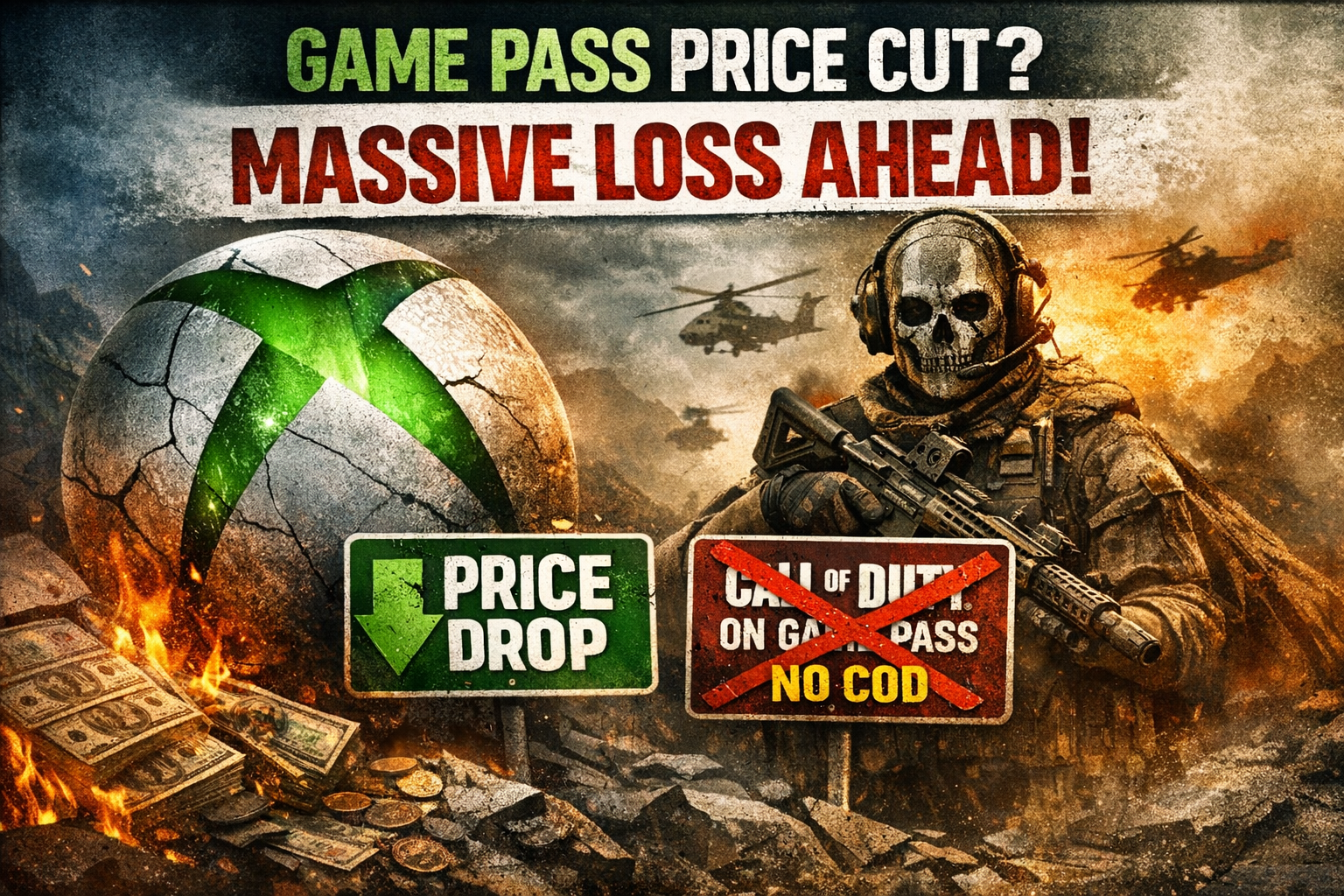
Xbox’s Game Pass Price Cut Is a Massive Loss Disguised as a Win

Xbox has announced several major changes to Game Pass all at once, a price reduction, new subscription tiers, and the confirmation that future Call of Duty titles will no longer launch Day One on Game Pass. Even though these announcements were delivered together, the overall message is clear: this is a massive loss cleverly disguised as a win.

The price cut looks good on the surface. But the value cut underneath it is far bigger.

The Price Drop Is Welcome, But It Doesn’t Balance the Loss

Cheaper Game Pass is always going to sound positive. Nobody is going to complain about paying less.

But when that “win” is paired with the removal of Day One Call of Duty releases, the entire value proposition collapses for a huge portion of the audience. Call of Duty has been one of the biggest reasons people stay subscribed, especially after Microsoft acquired Activision Blizzard.

Removing Day One access isn’t a minor tweak. It’s a fundamental shift in what Game Pass offers.

And speaking personally, I didn’t agree with the last Game Pass price increase at all, it pushed me to cancel my subscription entirely. If that rise was already too much, this new change makes the service even harder to justify.

COD‑Only Players Will Cancel in Massive Numbers

A huge part of the Call of Duty community plays only Call of Duty. They don’t browse the Game Pass library. They don’t jump between genres. They don’t care about monthly rotations.

They buy COD. They play COD. That’s their entire gaming loop.

With future Call of Duty titles no longer included on Day One, those players now have no reason to keep paying for Game Pass. Why would they pay a subscription and pay full price for Call of Duty when all they’re going to do is play Call of Duty?

This is where the real damage hits:

  • Game Pass loses a massive chunk of recurring subscribers
  • Engagement drops
  • The service becomes less appealing overall

Even with the price cut, the value for COD‑only players is effectively gone.

Not Everyone Plays COD, But Xbox Still Loses Potential Players

It’s true that many Game Pass users don’t play Call of Duty at all, and for them, this change won’t affect their daily experience.

But there’s another group Xbox is now losing:

Players who would have tried Call of Duty simply because it was included in Game Pass.

These aren’t hardcore COD fans. They’re the curious players, the ones who wouldn’t buy COD outright, but absolutely would play it if it were included at no extra cost.

By removing Day One access:

  • Xbox loses those “try it because it’s included” players
  • COD loses potential new fans
  • Engagement drops across both the game and the platform

Game Pass used to grow COD’s audience. Now it won’t.

The Loss of Xbox Exclusives Devalues Game Pass Even Further

Another major factor that can’t be ignored is the complete collapse of Xbox exclusivity. With Xbox now releasing its first‑party titles on PlayStation, Switch, and PC, the platform no longer has the unique selling point it once did.

And when exclusives disappear:

  • Game Pass loses its identity
  • The Xbox ecosystem loses its purpose
  • There’s no “must‑own” reason to stay subscribed
  • The value of the subscription becomes even harder to justify

Game Pass was originally built on the promise of exclusive Xbox titles launching Day One. Now those exclusives don’t exist, and the biggest third‑party draw, Call of Duty, is no longer Day One either.

The service is losing value from every direction.

The Activision Blizzard Purchase Forced This Shift

We always knew that buying Activision Blizzard would force a major shift in how Game Pass operates. A $69 billion acquisition doesn’t come without consequences.

And in many ways, this move proves it.

The purchase has put Xbox in a position where every possible direction creates financial problems:

  • If COD goes on Game Pass Day One → Microsoft loses billions in guaranteed sales
  • If COD stays off Game Pass Day One → Game Pass loses subscribers
  • If Game Pass prices rise → more cancellations
  • If Game Pass prices fall → revenue drops further
  • If exclusives go multiplatform → Game Pass loses its unique value

There is no winning path here, only different types of losses.

This isn’t an exaggeration. It’s the financial reality of absorbing a franchise as big as Call of Duty into a subscription model that can’t sustain it.

Expect Call of Duty Prices to Rise

With Game Pass no longer cannibalising COD sales, Microsoft has every incentive to push players back into buying the game outright. And once that becomes the norm again, price increases become easier to justify.

The pattern is predictable:

  • COD isn’t included in Game Pass
  • COD players must buy the game
  • COD becomes a premium product again
  • Prices rise to “offset” subscription losses

This isn’t speculation, it’s the logical financial outcome.

Game Pass Could Rise in Price Again Later

Even though Game Pass is cheaper today, that doesn’t mean it will stay that way.

If COD‑only players cancel, and they will, Xbox loses a huge amount of predictable monthly revenue. To make up for that, Microsoft may eventually raise Game Pass prices again or restructure tiers to recapture the lost income.

The announcements weren’t suspicious, but they were strategic. Xbox packaged the good and the bad together, but the long‑term consequences remain unchanged.

This Hurts Xbox More Than It Helps

When you look at the full picture, the direction becomes obvious:

  • Game Pass loses one of its biggest annual draws
  • COD players cancel their subscriptions
  • Xbox loses recurring revenue
  • COD becomes more expensive
  • Game Pass may eventually become more expensive again
  • Xbox loses potential COD players who would have tried it through Game Pass
  • Xbox exclusives no longer exist, removing another pillar of value
  • The Activision Blizzard purchase forces Xbox into a no‑win financial position
  • Even existing subscribers like me have already cancelled due to previous price hikes

This isn’t a strengthening move. It’s a defensive one. And it weakens the ecosystem.

Final Thoughts

Even though all the announcements were made at the same time, the outcome is still the same: this is a massive loss disguised as a win. Removing Day One Call of Duty access guts the value of Game Pass for millions of players, and the long‑term impact could be severe. Xbox may have lowered the price today, but the real cost will show up over the next year in cancellations, lost potential players, the collapse of exclusivity, revenue gaps, and inevitable pricing adjustments.

This move doesn’t build the Xbox ecosystem. It undermines it. And players will feel the effects first.

Until next time, stay sharp and keep gaming, Panda out.

Leave a comment »

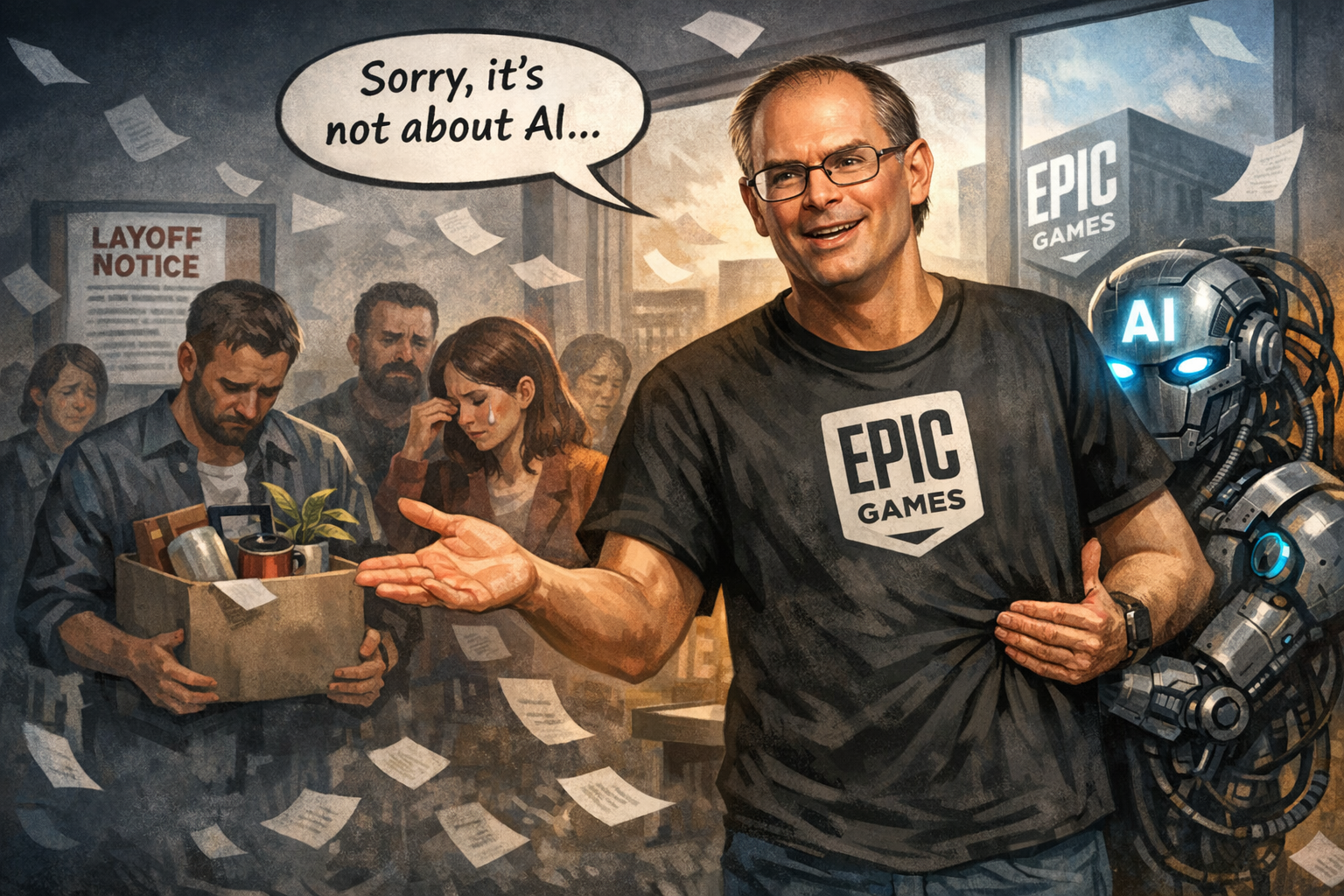
Epic Games Swings the Axe Again, And Tim Sweeney Wants You to Believe It’s Not About AI

Epic Games has once again decided that the best way to “secure the future” of the company is to cut loose the very people who built it. Another round of layoffs, another round of corporate doublespeak, and another round of Tim Sweeney insisting that everything is fine, nothing is AI‑related, and definitely don’t look too closely at the direction Epic has been heading.

At this point, it’s hard not to feel like we’ve seen this movie before, and the ending never changes.

The Official Story: “Not AI‑Related”

Sweeney claims these layoffs have nothing to do with AI. According to him, this is all about “restructuring,” “efficiency,” and “focusing on core priorities.” It’s the same vague corporate language every tech CEO deploys when they want to sound responsible while doing something deeply irresponsible.

But here’s the problem: Epic has been loudly, aggressively pro‑AI for years. Sweeney has repeatedly championed AI as the future of content creation, game development, and even moderation. He’s positioned Epic as a company that wants to automate more, not less. And now, suddenly, when hundreds of people lose their jobs, we’re supposed to believe AI isn’t part of the equation.

It’s a convenient narrative, and a deeply unconvincing one.

A New Low: Telling Steam Not to Label AI‑Generated Content

If there’s one moment that really exposes Sweeney’s stance, it’s his recent criticism of Steam for requiring developers to disclose when their games use AI. Steam’s approach is simple: if AI is in your game, players deserve to know. Transparency matters.

Sweeney’s response? He argued that AI will be “in everything,” so labeling it is pointless.

That’s not just dismissive, it’s morally wrong.

There are countless players, developers, artists, and industry workers who do not support AI‑generated content, especially when it replaces human labour or is trained on unlicensed work. Many people want to avoid AI‑heavy games entirely. They want the choice. They want honesty.

Sweeney’s stance effectively encourages companies to hide AI usage, bury it, or treat it as something players don’t deserve to know about. That’s not leadership. That’s evasion. And it reinforces the idea that Epic is not interested in transparency, only in control.

Epic’s Layoffs in Context: A Brutal Industry Trend

Epic’s latest cuts reportedly affect hundreds of employees, adding to the over 10,000+ layoffs across the gaming industry in the last year alone. Studios big and small, from indie darlings to major AAA publishers, have been slashing staff at a pace the industry hasn’t seen in decades.

And let’s be honest: this probably isn’t the last time Epic swings the axe this year. The company’s direction, spending habits, and obsession with automation make further cuts feel less like a possibility and more like an inevitability.

Epic’s Financial Reality Makes This Even Worse

What makes these layoffs sting even more is that Epic isn’t some struggling startup fighting for survival. Fortnite still generates staggering revenue. Unreal Engine licensing remains one of the most powerful tools in the industry. Epic continues to pour money into legal battles, acquisitions, and metaverse experiments.

So when they claim they “have to” cut staff, it’s hard to take seriously.
This isn’t about survival, it’s about priorities. And clearly, human workers aren’t one of them.

The Hypocrisy of “Championing Creators” While Undermining Them

Epic loves to brand itself as the company that supports creators:

  • Creator Codes
  • UEFN
  • Royalty‑free licensing
  • Marketplace opportunities

But layoffs, AI evangelism, and pushing for hidden AI usage directly contradict that image. You can’t claim to empower creators while simultaneously reducing the number of actual creators on your payroll.

It’s a marketing slogan, not a philosophy.

The Ripple Effect on Unreal Engine Developers

Epic’s decisions don’t just affect Epic. They affect:

  • Thousands of studios using Unreal
  • Marketplace creators
  • Technical artists relying on engine support
  • Indie teams who depend on documentation and bug fixes

When Epic cuts staff, the entire ecosystem feels it. Bugs linger longer. Support slows down. Marketplace curation weakens. The people who rely on Unreal to make a living are left wondering whether the tools they depend on will still be properly supported.

The Human Cost Gets Buried Every Time

What gets lost in all of this, deliberately, I’d argue, is the human impact. These aren’t abstract “roles” being eliminated. These are artists, programmers, QA testers, community managers, and support staff who kept Fortnite running, kept Unreal Engine evolving, and kept Epic relevant.

And the job market they’re being thrown into? It’s brutal.

With thousands of developers all competing for the same shrinking pool of roles, finding a replacement job has become incredibly difficult. People are burning through savings, relocating, switching industries, or leaving game development entirely, not because they want to, but because they have no choice.

I genuinely feel sorry for every single person who’s been caught in this wave. They deserved better than this.

The Fear Developers Now Have About AI Replacing Them

Sweeney’s comments about AI being “in everything” don’t just sound dismissive, they fuel real fear. Developers are already anxious about automation replacing their roles. When a CEO openly downplays transparency and pushes for AI adoption while simultaneously laying off staff, it sends a clear message:

Your job isn’t safe. Your skills aren’t valued. And your concerns don’t matter.

That’s the environment Epic is helping create.

The Long‑Term Damage to the Industry

This constant cycle of layoffs is draining the industry of senior talent. Juniors can’t get hired. Studios are burning out the remaining staff. Creativity suffers when teams are terrified of being next.

Epic isn’t just reacting to the industry, they’re contributing to its decline.

Epic Wants Control, Over Creators, Over Platforms, Over the Future

Sweeney’s obsession with forcing the Epic Launcher onto everyone is part of the same mindset that leads to layoffs like this. It’s about control. Control of distribution. Control of revenue. Control of the narrative.

AI fits neatly into that worldview. It’s cheaper, it’s compliant, and it doesn’t ask for healthcare or a livable wage.

So when Sweeney says these layoffs aren’t AI‑related, it rings hollow. Maybe AI didn’t directly replace these workers today, but Epic’s long‑term strategy makes it clear where the company is heading.

The Bottom Line

Epic Games wants to present itself as a champion of creators, a rebel fighting the big bad platform holders, a visionary company building the future of interactive entertainment.

But when you peel back the PR, what you see is a company that:

  • Cuts staff while investing heavily in automation
  • Pushes unwanted platforms onto players
  • Makes decisions that benefit executives, not employees
  • Encourages companies to hide AI usage instead of being transparent
  • Undermines the very creators it claims to support
  • Damages the wider Unreal ecosystem with every round of cuts

Tim Sweeney can say whatever he wants about these layoffs. But actions speak louder than statements, and Epic’s actions tell a very different story

If people are replaced instead of empowered, the entire economic engine breaks down. No workers means no wages. No wages means no spending. No spending means no customers. And without customers, even the most “efficient” companies collapse. It’s a truth more people need to recognise, because if we keep heading down this path, that future isn’t hypothetical, it’s inevitable.

Until next time, stay sharp and keep gaming, Panda out.

Leave a comment »

DLSS 5 Proves AAA Gaming Is Ready to Trade Art for AI Slop

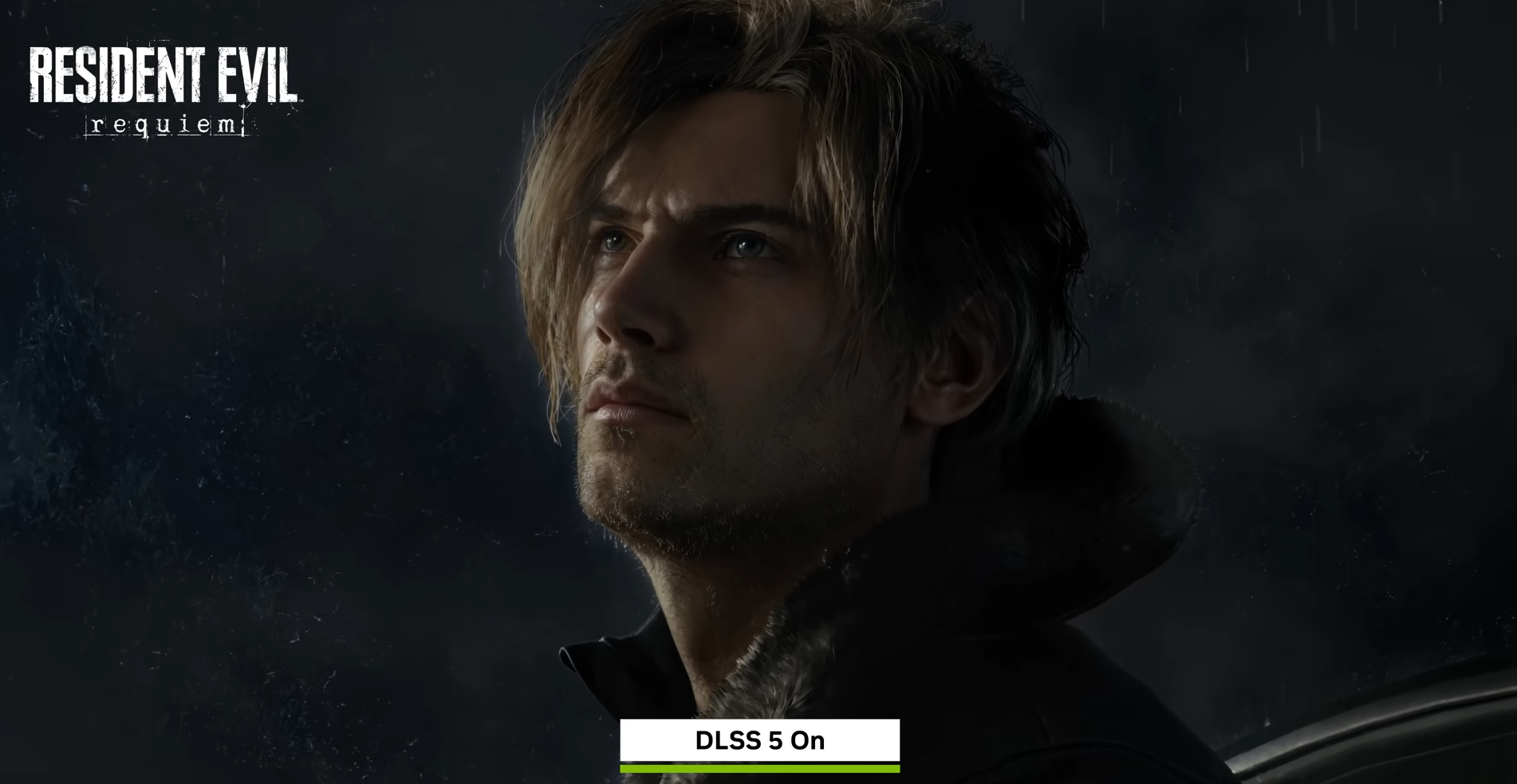
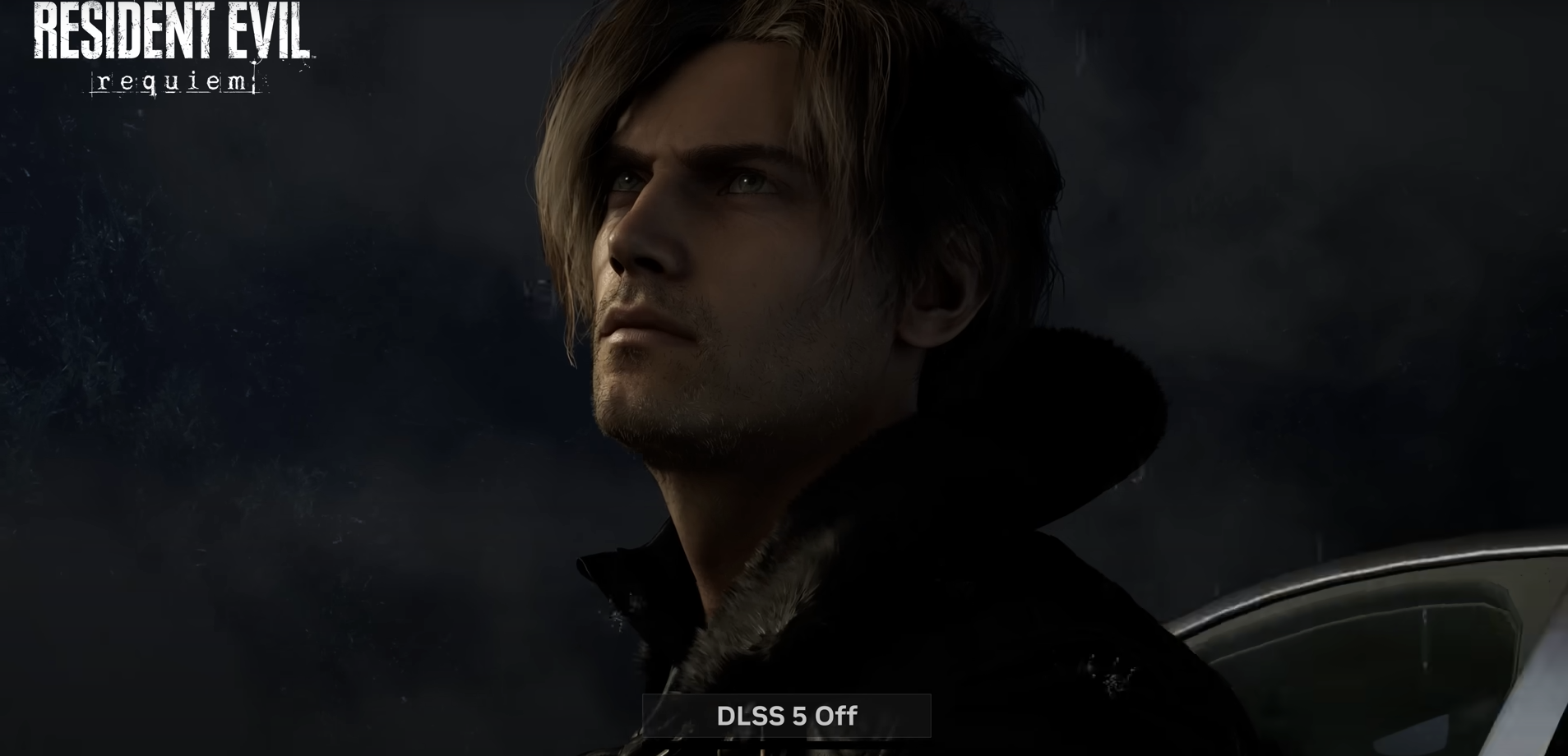
Images taken from Nvidia.com

NVIDIA’s DLSS 5 announcement should have been a milestone for graphics technology. Instead, it’s become a flashpoint, a moment where gamers, artists, and developers are forced to confront a future where AI doesn’t just enhance games, but rewrites them. And honestly? It feels like the industry is sprinting toward a future nobody actually asked for.

DLSS used to be a clever performance trick. Now it’s an AI-driven filter layered over entire games, altering lighting, materials, and even the emotional tone of scenes. That’s not optimization. That’s overreach.

And the more we see, the more it feels like AAA studios are ready to let AI do the heavy lifting, even if it means sacrificing the art that makes games meaningful.

DLSS 5 Doesn’t Respect Art Direction, It Replaces It

Early footage shows DLSS 5 doing far more than upscaling. It’s injecting its own interpretation of lighting, materials, and geometry. Scenes look glossier, smoother, or outright different from what the artists created.

Gamers immediately noticed:

  • Faces looking subtly altered
  • Materials gaining an unnatural sheen
  • Lighting shifting toward a “photoreal” style that clashes with the original tone

And the most worrying part?

Every game enhanced with DLSS 5 starts to look the same.

What NVIDIA showed in their announcement wasn’t a celebration of artistic diversity, it was a preview of a homogenised future. The “enhanced” images all shared that unmistakable AI sheen: overly smooth surfaces, exaggerated lighting, and a kind of artificial clarity that feels more like an Instagram filter than a rendering technique.

It’s the same problem we see with AI art models:
everything starts to blend together.

Games are art. They’re built by teams who obsess over mood, colour, texture, and atmosphere. When an AI model starts repainting the world in real time, the original artistic intent gets buried under algorithmic guesswork.

A Shortcut for AAA Studios to Get Even Lazier

Let’s be honest: big studios already rely on procedural filler, outsourced assets, and day‑one patches. DLSS 5 feels like the next step in that trend, a tool that lets publishers cut corners and let AI “fix” the visuals later.

Why spend months perfecting lighting or materials when DLSS 5 can slap a photoreal filter over everything?

Why polish textures when the AI can “enhance” them on the fly?

This isn’t empowering developers. It’s enabling shortcuts.

And when NVIDIA is investing billions into generative AI, it’s hard not to see DLSS 5 as part of a broader push to normalise AI‑altered media, regardless of whether players want it.

Gamers Don’t Want This, And They’re Not Quiet About It

The backlash has been overwhelming. Across forums, social media, and comment sections, players are calling DLSS 5:

  • “AI slop”
  • “A filter nobody asked for”
  • “The death of artistic direction”
  • “A tech demo pretending to be a feature”

People aren’t rejecting DLSS 5 because they “don’t understand it.” They’re rejecting it because they do understand what it means for the future of game art.

Gamers want authenticity, not algorithmic reinterpretation.

And to be clear, this isn’t about hating DLSS as a whole.
DLSS has been a genuinely brilliant technology for years. The way it helps people with lower‑spec PCs enjoy modern games is one of the best things to happen to PC gaming. That’s where DLSS shines, boosting performance, smoothing out framerates, and making demanding titles accessible to more players.

But changing the way DLSS works at a fundamental level is not the way forward.
AI absolutely has its uses, but the way DLSS 5 applies an AI filter over the entire image isn’t enhancement, it’s distortion. It stops being a performance tool and starts becoming an artistic override, and that’s where the line gets crossed.

Studios Are Already Defending DLSS 5, And They’re Naming AI as the Future

Several studios partnering with NVIDIA have stepped in to defend DLSS 5. Their statements are predictable, but now we can attach names, context, and motivations to them.

Todd Howard, Bethesda Game Studios (Director & Executive Producer)

Todd Howard has been openly enthusiastic about NVIDIA’s AI‑driven rendering. While discussing Starfield’s tech pipeline, he praised AI‑assisted upscaling as “the future of how we push visual fidelity without sacrificing performance.”
Howard has repeatedly emphasised that AI‑based rendering lets studios “focus on the bigger picture,” which aligns perfectly with NVIDIA’s messaging around DLSS 5.

Bethesda’s long‑standing partnership with NVIDIA makes their support unsurprising, but it also highlights how deeply AI is being woven into AAA pipelines.

CD Projekt Red, Jakub Knapik (Global Art Director)

Knapik has praised DLSS and AI‑assisted rendering for years, calling it “a natural evolution of game visuals.”
His stance on DLSS 5 mirrors this: AI is the next step, and players should embrace it.

Remedy Entertainment, Tero Virtala (CEO)

Virtala has been vocal about AI‑driven rendering, stating that technologies like DLSS “free up resources and let teams focus on creative direction.”
This is the same corporate line being repeated around DLSS 5.

Ubisoft, Pierre Escaich (Technical Director)

Ubisoft has already announced internal initiatives to use AI for writing NPC dialogue, generating animations, and assisting with world‑building.
Escaich’s stance on DLSS fits that direction, saying NVIDIA’s AI tools “bring out details that would otherwise be lost.”

Ubisoft’s growing reliance on AI makes their support for DLSS 5 feel less like artistic enthusiasm and more like corporate alignment.

Square Enix, Takeshi Aramaki (Studio Head, Luminous Productions)

Square Enix has openly stated they plan to integrate AI into “every stage of game development.”
Aramaki has previously described DLSS as “a key part of achieving next‑generation visuals,” and their support for DLSS 5 fits perfectly with their broader AI‑first strategy.

Square Enix is one of the most aggressive AAA publishers pushing AI into production, from asset generation to animation, so their backing of DLSS 5 is no surprise.

Developers Speaking Out Against DLSS 5

While some studios are defending DLSS 5, several developers have openly criticised it, echoing the same concerns gamers have raised. Their reactions reinforce the idea that DLSS 5 isn’t just controversial — it’s actively worrying people who work on games for a living.

Grace Ashcroft, Developer on Resident Evil: Requiem

Eurogamer reported that Grace Ashcroft was “concerned that DLSS 5 appears to layer a gaudy AI filter over a game’s original work.” She noted that the tech “changes the look of scenes in ways we didn’t author,” which directly challenges NVIDIA’s claim that artistic intent remains untouched.

Unnamed Developers Reacting to NVIDIA’s Demo

According to TheSixthAxis, multiple developers watching the DLSS 5 reveal said it “looks like someone has put an AI beauty filter over the games.” This wasn’t a fringe opinion, it was described as the reaction from “almost everyone else, from punters to game developers.”

General Developer Sentiment (as reported by GamingOnLinux)

GamingOnLinux highlighted widespread developer frustration, noting that DLSS 5 “completely changes the faces of characters” and that many devs felt NVIDIA had “lumped together their previous good tech with something else entirely.” The article emphasised that developers were just as baffled as players by the AI‑generated look.

Developers Calling It “AI Slop”

XDA Developers reported that even developers were describing the output as having an “unnecessary AI sheen” and comparing it to “AI slop.” This wasn’t just a gamer meme, it was a professional critique.

The Pattern Is Clear

These quotes all share the same tone:

  • AI saves time
  • AI reduces workload
  • AI “enhances” visuals
  • AI is the future

But none of them address the core issue gamers are raising:

DLSS 5 doesn’t just enhance games, it homogenises them.

It overwrites artistic direction with an AI‑generated aesthetic that makes every game look like the same glossy, over‑processed tech demo. And the studios defending it are the same ones already investing heavily in AI‑driven production pipelines.

Gamers aren’t imagining the threat.
The industry is telling us exactly where it wants to go.

NVIDIA’s Response to the Backlash Isn’t Helping

The backlash grew so loud that NVIDIA’s CEO, Jensen Huang, addressed it directly. His stance was blunt:

  • Critics are “misunderstanding the technology”
  • DLSS 5 “does not override artistic intent”
  • Developers “remain fully in control”

But the demos contradict that narrative. When the AI is visibly altering materials, lighting, and even character appearance, it’s hard to argue that the original art direction is untouched.

Even long‑time DLSS supporters and tech journalists are calling this a step too far.

Games Deserve Better Than AI Overpainting

At the core of all this, my stance hasn’t changed:

Games should look the way their creators intended, not the way an AI model thinks they should.

We already have incredible rendering tools. We don’t need a generative AI system repainting games in real time. That’s not innovation. That’s intrusion.

DLSS 5 isn’t helping games.
It’s homogenising them.
It’s sanding down the edges.
It’s replacing art with algorithmic interpretation.

And if this is the direction AAA gaming is heading, AI filters, AI textures, AI lighting, AI “enhancements”, then we’re at risk of losing the human touch that makes games special in the first place.

Until next time, stay sharp and keep gaming, Panda out.

References

  • “DLSS 5 Announcement & Feature Overview” — NVIDIA
  • “NVIDIA CEO Responds to DLSS Criticism” — Tom’s Hardware
  • “Jensen Huang Defends DLSS Against AI Concerns” — PC Gamer
  • “Todd Howard Talks Starfield Technology and AI Upscaling” — IGN
  • “Todd Howard on NVIDIA and the Future of Visual Fidelity” — GamesRadar
  • “CD Projekt Red Discusses DLSS and AI Rendering” — PC Gamer
  • “Cyberpunk 2077 Developers on DLSS Improvements” — TechRadar
  • “Remedy CEO Tero Virtala on AI Rendering and Studio Direction” — GamesIndustry.biz
  • “Remedy Discusses AI Rendering and the Future of Visuals” — Eurogamer
  • “Ubisoft Introduces Ghostwriter AI Narrative Tool” — Ubisoft News
  • “Ubisoft’s AI Writing Tool Raises Questions” — The Verge
  • “Ubisoft Expands Use of AI Tools in Development” — PC Gamer
  • “Square Enix Outlines AI Strategy for Future Games” — Square Enix
  • “Square Enix Plans AI Integration Across Development Pipeline” — PC Gamer
  • “Square Enix Wants AI in Every Stage of Game Development” — TechSpot
  • “Developers Express Concerns Over DLSS 5 Visual Changes” — Eurogamer
  • “DLSS 5 Backlash From Developers and Players” — TheSixthAxis
  • “Developers Criticise DLSS 5’s AI‑Generated Look” — GamingOnLinux
  • “Developers Call DLSS 5 Output an ‘AI Sheen’” — XDA Developers
  • “DLSS 5 Backlash Discussion” — r/pcgaming
  • “DLSS 5 Technical Analysis” — Digital Foundry
  • “DLSS 5 Community Reaction and Concerns” — PC Gamer

Leave a comment »

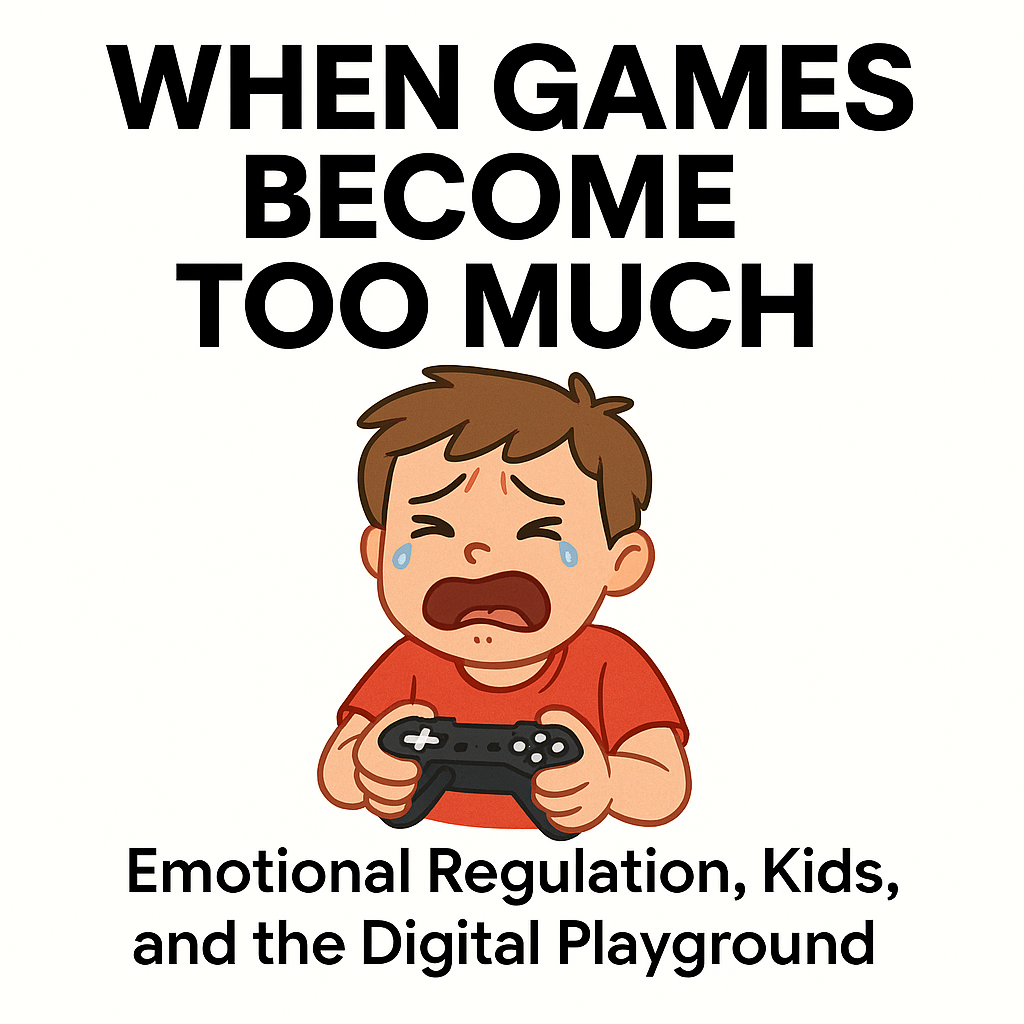
When Games Become Too Much: Why Emotional Regulation Matters for Young Gamers

This week I found myself dealing with a situation that, unfortunately, is becoming far too common in the world of children’s gaming. My son was playing Steal the Brain Rot on Roblox, a game literally built around the idea of taking items from each other. He stole a brain rot, exactly as the game intends, and his friend had a complete emotional meltdown. Not frustration. Not disappointment. A full‑scale breakdown.

It escalated so much that the friend’s dad actually phoned my son to tell him off and demand he give the item back.

And that’s where I draw a line.

When Adults Cross Boundaries

Let me be clear:
It is not appropriate for an adult to directly call another person’s child to tell them off.

If there’s an issue that genuinely needs addressing, the first point of contact should always be the child’s parent. That’s basic respect, and it models healthy conflict resolution. When adults bypass parents and confront children directly, it creates confusion, pressure, and unnecessary tension, especially when the issue is over a game designed around competition and stealing items.

Before escalating, it’s worth asking:

  • Is this truly serious?
  • Is this about safety, or just discomfort?
  • Is this an opportunity for the child to learn resilience?

Most of the time, it’s not worth turning a digital disagreement into real‑world drama.

Why Kids React So Intensely to Games

Children aren’t overreacting “for no reason.” Their brains are still developing the skills needed to manage big emotions. Games, especially fast‑paced online ones, can trigger intense feelings because:

  • Digital losses feel real to them
  • Their impulse control is still developing
  • They struggle to separate in‑game events from real‑life relationships
  • Social pressure in multiplayer games amplifies emotions
  • The pace of online play doesn’t give them time to regulate

So when something unexpected happens, like losing an item, being outplayed, or having something “stolen”, their emotional system can go into overdrive.

This isn’t bad behaviour. It’s a sign of where they are developmentally.

Games Aren’t the Problem, Emotional Regulation Is

Games are meant to be fun. They’re meant to challenge, entertain, and teach kids how to handle winning, losing, unpredictability, and other people not doing exactly what they want. These are healthy experiences.

But when a child becomes so overwhelmed by a digital moment that they can’t cope, to the point of distress, panic, or rage, the issue isn’t the game. It’s the emotional skills required to handle it.

Even the simplest games involve:

  • Losing
  • Competition
  • Setbacks
  • Unpredictable outcomes
  • Other players making their own choices

If a child can’t tolerate those things without spiralling, then they may not be emotionally ready for that game yet.

When Parents Step In, the Lesson Changes

What concerns me even more is when parents intervene to “fix” the game for their child. When adults demand items back, scold other children, or try to control the outcome, they unintentionally teach their child that:

  • Discomfort must be avoided at all costs
  • Losing is unacceptable
  • Emotional outbursts get results
  • Other people must change to keep them happy

Those lessons don’t stay in the game. They spill into friendships, school, and eventually adulthood.

Games can teach resilience, but only if we let them.

Teaching Kids How to Handle Conflict Online

Instead of stepping in to control outcomes, we can use these moments to teach children how to navigate conflict:

  • Taking a break when emotions run high
  • Using calm language to express frustration
  • Understanding that losing is part of play
  • Recognising when a game isn’t fun anymore
  • Knowing when to walk away from unhealthy dynamics

These skills matter far beyond gaming.

Parents Model Emotional Behaviour Too

Children learn how to react by watching us.

If adults explode over a game, demand items back, or lash out at other children, kids absorb that behaviour. They learn that:

  • Games are high‑stakes
  • Losing is catastrophic
  • Adults will fix everything for them
  • Emotional outbursts are justified

But when adults stay calm, set boundaries, and treat games as learning opportunities, children follow that lead.

Setting Boundaries Isn’t Punishment, It’s Parenting

I’ve had to make these decisions in my own home. I’ve seen my son have emotional breakdowns over certain games too. And when that happens, I don’t blame the game or the other players. I simply tell him he’s not ready for that particular game yet.

He can try again when he’s calmer, older, or better able to handle the emotional ups and downs that come with it.

I’ve also told him not to play certain games with certain friends, not because anyone is “bad,” but because the emotional dynamic between them isn’t healthy. If another child consistently has outbursts, or if the play always ends in tears, arguments, or stress, then it’s my responsibility to step in and protect my son’s emotional wellbeing.

Sometimes the healthiest boundary is simply:
“This game isn’t right for you two right now.”

And that’s okay.

If a Game Causes Distress, It’s a Sign, Not a Battle

Here’s the truth I’ve come to:
If a child is so emotionally overwhelmed by a game that it causes meltdowns, arguments, or distress, then they shouldn’t be playing that game yet.

Not as punishment. Not as judgement. Simply because their emotional development isn’t aligned with the emotional demands of that environment.

It’s our job as parents to help them build those skills gradually, not to bend the world around them so they never have to.

Games Should Be a Safe Space to Learn, Not a Source of Crisis

When handled well, games can teach patience, problem‑solving, teamwork, and emotional control. They can help kids learn to lose gracefully, try again, and understand that setbacks aren’t the end of the world.

But when a game becomes a source of panic or rage, it stops being a learning tool and starts being a trigger.

As parents, we need to recognise the difference.

Sometimes the best thing we can do is step back, set boundaries, and help our children develop the emotional resilience they need, so that when they do return to the game, they can actually enjoy it.

Signing Off

At the end of the day, games should bring joy, connection, and learning, not stress, conflict, or emotional overwhelm. As parents, we can’t control every moment our children experience, but we can guide them, support them, and set boundaries that help them grow into resilient, emotionally balanced young people. If we stay calm, stay involved, and stay aware of what our kids are experiencing online, we give them the tools they need to enjoy gaming in a healthy way.

Thanks for reading, and here’s to raising kids who can play, learn, lose, win, and grow with confidence

Until next time, stay sharp and keep gaming, Panda out.

Leave a comment »

Nintendo’s Patent Pushback

The Pokémon Company and Nintendo have never been shy about guarding their IP, but their latest legal manoeuvres against indie developer Pocket Pair are raising eyebrows across the gaming community, and not for the usual reasons.

At the centre of the storm is Palworld, the wildly popular “Pokémon with guns” survival game. Nintendo claims the game infringes on several core Pokémon mechanics, specifically patents related to creature-catching, combat interactions, and mount-switching behaviour. But rather than letting the suit play out as-is, Nintendo has taken the unusual step of rewording one of its active patents mid-case, prompting critics to call it a stretch, or worse, a strategic smokescreen.

Shifting Patents and Strange Moves

The revised patent now includes language like “even when,” which might sound harmless, but in legal circles, it’s seen as slippery phrasing. Florian Mueller, a respected IP specialist, described the wording as “extremely contorted,” suggesting the rewrite weakens the patent’s clarity. It seems designed to broaden the scope, possibly snagging more games and mechanics in the legal net.

It’s a rare move, and one that signals Nintendo may lack confidence in the original claim’s enforceability.

Pocket Pair’s Response and Tweaks

Pocket Pair isn’t exactly folding under pressure. They’ve already rolled out updates tweaking creature animations, removing gliding features, and altering the Pal Sphere system, all in an effort to distance Palworld from direct comparisons with Pokémon.

Their defence also points to design precedents from games like Titanfall 2, Rune Factory, and Monster Hunter Stories, arguing that these mechanics existed well before Nintendo’s patents were even filed.

What’s at Stake

Beyond Palworld and Pokémon, this case raises deeper concerns about how game mechanics are treated under intellectual property law. If broadly worded patents are used to gatekeep systems like mount-switching or monster catching, staples across gaming genres, then smaller studios may start avoiding innovation out of fear, even when the mechanics aren’t proprietary.

Legal overreach like this creates a chilling effect. It’s not just about protecting IP, it’s about deciding who gets to build on shared design foundations and who doesn’t.

Mechanics at Risk – Shared Ideas, Not Stolen Designs

To put things in perspective, here’s a breakdown of how common gameplay mechanics have been used across AAA titles and indie projects alike, often decades before Nintendo’s latest patent revisions:

MechanicAAA ExamplesIndie ExamplesFirst Appearance (Approx.)
Creature TamingPokémon, ARK: Survival EvolvedPalworld, Temtem1996 (Pokémon Red/Blue)
Mount SwitchingBreath of the Wild, World of WarcraftChocobo GP, Palworld1994 (Final Fantasy VI)
Inventory CraftingFallout 4, Skyrim, MinecraftValheim, Don’t Starve, Core Keeper2007 (Minecraft)
Ricochet ShootingTitanfall 2, Max PayneRoboCop: Rogue City2001 (Max Payne)
Companion UpgradesMass Effect, Dragon AgeInto the Breach, Wasteland 32006 (Mass Effect)
Environmental HealingBorderlands, FalloutPalworld, The Long Dark2008 (Fallout 3)
Turret HackingWatch Dogs, Deus Ex: Human RevolutionRoboCop: Rogue City, République2011 (Deus Ex: HR)
Safe CrackingThief, Fallout: New VegasRoboCop: Rogue City, The Escapists1998 (Thief: The Dark Project)

These mechanics aren’t owned, they’re iterated, evolved, and borrowed like ingredients in a shared design pantry. Claiming monopoly over them risks turning creativity into a courtroom formality.

Final Thoughts

Whether Nintendo’s approach is a defensive overreach or a justified reaction to imitation, one thing’s clear, this case could reshape how we define ownership in game mechanics. As for Pocket Pair, their willingness to adapt without folding completely sets a bold precedent. Indie devs, take notes.

It’s a crossroads moment for game design: protect innovation, or bury it under bureaucracy. Fans, critics, and developers alike should be paying close attention, because the outcome could impact how we play for years to come.

Until next time, stay sharp and keep gaming, Panda out.

Reference List

Legal Case and Patent Details

Gameplay Mechanics Precedents

Comments (1) »

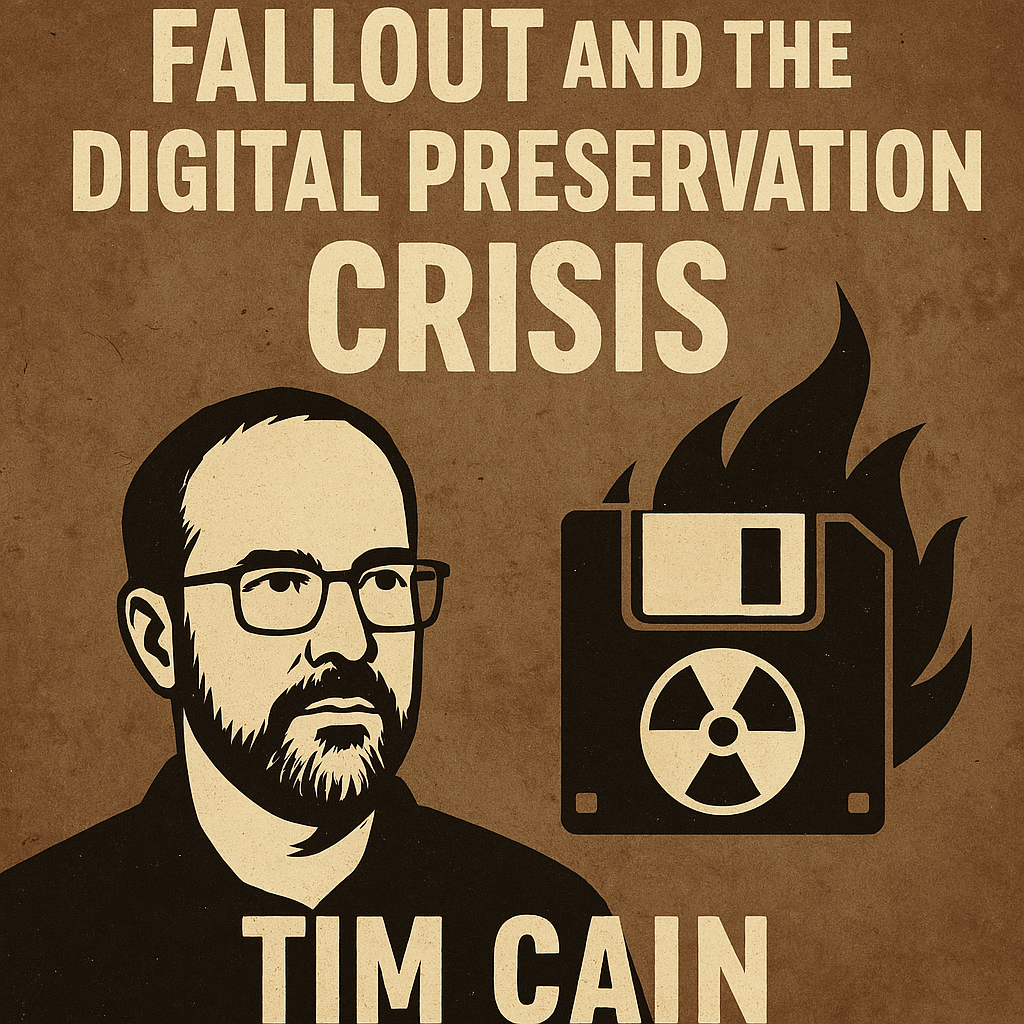
Fallout and the Digital Preservation Crisis: When Games Vanish into Legal Dust

In an era when video games are recognised as cultural touchstones, it’s deeply troubling to learn how fragile their legacy actually is. Case in point: Fallout, one of the most iconic RPGs of all time, nearly had its source material wiped from history… deliberately.

Tim Cain’s Revelation: A Fallout of Its Own

Tim Cain, co-creator of Fallout, recently dropped a bombshell: after leaving Interplay in the early 2000s, he was forced to destroy all of his Fallout source materials, including early code, design documents, and a version of the game built around the GURPS system. The directive came with legal threats, Interplay, like many studios then and now, treated any backup materials as proprietary property, even those created by the developers themselves.

The twist? Interplay later lost its own copy.

Let that sink in. A foundational piece of gaming history nearly vanished because of a draconian IP policy combined with poor archival practices. The original Fallout that could have served modders, historians, and indie devs as a wellspring of innovation was thrown out, not by accident, but by design.

“If you take the authority to keep these things and tell other people not to, then you also have to take the responsibility to keep them.” — Tim Cain

This Isn’t an Isolated Incident

Cain’s experience is a symptom of a much larger issue. Across the industry, especially in legacy Western studios, there’s a growing list of games whose assets have been lost, corrupted, or intentionally deleted:

  • GoldenEye 007, once thought to be irretrievable before a leaked build surfaced
  • StarCraft: Ghost, an entire game lost to the vault
  • P.T., deliberately pulled and now only accessible via modded systems

What ties these cases together is a lack of industry-wide standards for digital preservation. Games aren’t just executable files, they’re complex works of art with interconnected codebases, music, assets, and documentation. And yet, there’s no requirement for companies to maintain archives, much less release them for study or posterity.

This Is Why “Stop Killing Games” Matters

The Tim Cain revelation is exactly why campaigns like Stop Killing Games are gaining momentum. These advocacy movements are challenging an industry that too often prioritises control over conservation. They aim to:

  • Raise public awareness about delisted, removed, or inaccessible titles
  • Pressure publishers to preserve source code and assets
  • Advocate for the right to repair, mod, and maintain access to digital content

Because when companies delete history, communities become the last line of defence.

Final Thoughts

Video games are more than entertainment, they’re stories, innovations, and shared memories. When studios discard their own legacies, they’re not just erasing code; they’re erasing culture.

The Fallout incident should be a rallying cry. Whether you’re a player, developer, historian, or modder, preservation is a fight for creative continuity. We shouldn’t have to rely on leaks, luck, or legal grey areas to save our digital past. It’s time for the industry to stop treating its own history as expendable.

Until next time, stay sharp and keep gaming. Panda out.

References

Comments (1) »

Microsoft’s Xbox Studio Reshuffle: What’s Really at Stake?

Microsoft has initiated a sweeping reorganisation of its Xbox Game Studios, closing The Initiative and cancelling high-profile projects like Perfect Dark and Everwild. This strategic pivot, couched in corporate speak as “prioritising the strongest opportunities”, is more than just internal restructuring. It’s a glimpse into the fragility of creative ambition when it collides with commercial realities.

The Fallout: Cancelled Visions and Disbanded Teams

The shuttering of The Initiative marks a major deviation from the studio’s original purpose: delivering high-calibre, experimental AAA experiences. Despite being stacked with veteran talent from Crystal Dynamics and Santa Monica Studio, the Perfect Dark reboot never made it to release. Rare’s Everwild, a nature-themed title with striking artistic direction, was also abruptly scrapped.

This reshuffle has left countless developers out of work and long-nurtured projects erased. While Microsoft frames this as a necessary focus on efficiency, for many it feels like artistic erasure.

Cancelled Projects: What’s Been Lost

Microsoft’s restructuring has led to the cancellation of several high-profile and in-development projects, some years in the making. These aren’t just titles on a roadmap; they represent creative visions, studio legacies, and thousands of hours of work now consigned to history.

Confirmed Cancelled Projects

  • Perfect Dark (Reboot) – Once a flagship revival led by The Initiative, this project was scrapped alongside the studio’s closure. Despite a flashy trailer in 2024, reports suggest the footage may not have reflected actual gameplay.
  • Everwild – Rare’s ambitious, nature-themed IP was cancelled after a troubled development cycle and multiple reboots. Studio veteran Gregg Mayles departed following the decision.
  • Project Blackbird – An unannounced MMORPG from ZeniMax Online Studios, in development since 2018, was quietly cancelled amid broader cuts.
  • Romero Games’ FPS – A first-person shooter from John and Brenda Romero lost its funding after Microsoft, the unnamed publisher, withdrew support. The studio has since shut down.
  • Warcraft Rumble (Content Support) – While the mobile game remains online, Blizzard has ceased new content development, effectively sunsetting its future.

Additional Unannounced Projects

Multiple sources report that several other unannounced titles across Xbox Game Studios and partner developers were also cancelled. These include early-stage concepts and prototypes that may never be publicly disclosed, but whose loss still represents a blow to creative diversity within the Xbox ecosystem.

Strategic Shift or Financial Tightening?

Microsoft’s rationale centres on streamlining operations to maximise impact. But against the backdrop of a revenue-driven industry, where live service models dominate and risks are increasingly rare, the cancellations point to a deeper retreat from experimental, narrative-first design.

Rather than pushing boundaries, Xbox’s latest moves suggest a refocus on tried-and-tested formulas, safe franchises and scalable monetisation, where creativity often takes a backseat.

Developer Voices: Inside the Fallout

Developers haven’t held back. A Halo team member told Engadget, “I’m personally super pissed that Phil’s email to us bragged about how this was the most profitable year ever for Xbox in the same breath as pulling the lever.” That contrast between record profits and mass layoffs struck a chord across the community.

By 2022, over half of The Initiative’s staff had already departed, hinting at deeper internal struggles. Veteran Rare designer Gregg Mayles also reportedly left after Everwild’s cancellation, a symbolic loss for a studio once synonymous with bold British innovation.

Historical Context: Studios That Shaped Xbox’s Identity

  • Rare began in 1985 and was behind GoldenEye 007, Banjo-Kazooie, and Perfect Dark. After its acquisition by Microsoft in 2002, Rare transitioned from whimsical platformers to service-first titles like Sea of Thieves.
  • The Initiative was launched in 2018 with promises of autonomy and prestige. Despite its strong pedigree, management hurdles and lack of clarity around vision stifled its output. The studio closed in mid-2025, never shipping a single game.

Indie Resilience: A Counterpoint to Corporate Consolidation

Independent developers continue to flourish by leaning into authenticity. Celeste and Citizen Sleeper tackle themes like trauma, resistance, and mental health with sincere storytelling and gameplay innovation. Citizen Sleeper 2, for example, uses broken dice to metaphorically explore psychological healing.

Even Balatro, a quirky roguelike card game, earned praise for encouraging strategic adaptability, traits sorely needed in a creatively volatile industry.

The Human Cost: Thousands of Jobs on the Line

The scale of Microsoft’s restructuring goes beyond cancelled titles and closed studios, it’s a sweeping overhaul that could affect up to 2,000 jobs within its Xbox division alone. That figure represents approximately 10% of the company’s gaming workforce, hitting key teams across Rare, ZeniMax, and Turn 10. The Initiative has already shuttered, while projects like Perfect Dark, Everwild, and ZeniMax’s MMO codenamed Blackbird have been quietly scrapped.

These layoffs are part of a broader company-wide reduction estimated to impact around 9,000 employees globally, roughly 4% of Microsoft’s total workforce. The juxtaposition of these cuts with record profits has drawn sharp criticism internally, underscoring growing tension between financial performance and employee wellbeing.

Industry insiders warn that these reductions could lead to long-term creative stagnation. When experienced teams are dissolved and ambitious projects cancelled mid-development, the ripple effect is felt across future innovation and morale, especially among younger studios now hesitant to experiment or invest in bold ideas.

A Call to Action for Players and Creators

Players and creators must continue to champion diversity and boldness in gaming. This means holding studios accountable, supporting indie efforts, and demanding ethical practices in how games are made and marketed. Creative risk should be rewarded, not buried beneath restructuring memos and shareholder briefings.

Xbox may be refocusing, but the wider gaming community still has the power to steer the conversation back toward passion, artistry, and progress.

Final Thoughts

Microsoft’s studio reshuffle exposes a delicate balance between commerce and creativity. When visionary projects are cancelled, we lose more than games, we lose potential futures for the medium.

Yet, this moment also reinforces the strength of independent voices. From small studios to solo devs, resilience shines through artfully crafted experiences that resist compromise. The role of the player isn’t passive, we are curators, critics, and supporters of what gaming could be when it is led by imagination, not margin.

Until next time, stay sharp and keep gaming. Panda out.

References

Comments (1) »