Author Archive

Nintendo’s Switch 2 Crackdown: Anti-Piracy or Anti-Consumer?

Image – Nintendo Switch 2

Nintendo has reignited controversy with its latest move to brick Switch 2 consoles that detect unauthorised third-party devices, specifically, the MIG Flash V2 cartridge. Touted as a tool for game preservation or homebrew use by some, the cartridge has now become ground zero in a sweeping wave of console bans.

Error 2124-4508: The Death Sentence

Users report being met with the dreaded Error Code: 2124-4508, which restricts all online activity and cripples core functionality. Once issued, the ban is permanent, even a factory reset won’t help. According to Nintendo’s recently updated End User Licence Agreement, this falls under their right to disable systems engaged in piracy, modding, or unauthorised software use.

But here’s where it gets messy: some of those affected say they never used the cartridge to play pirated games, just backed-up titles or homebrew content.

Collateral Damage in the Secondhand Market

Nintendo’s bricking policy isn’t just affecting modders, it’s shaking up the used console market in a big way. Many affected players are reselling their bricked Switch 2 units, either knowingly or unknowingly, and here’s the kicker: there’s no official way to verify a console’s ban status before purchase.

Buyers are left in the dark until they boot up the device and see the dreaded error, by which point it’s too late. Marketplace listings often look legitimate, and even boxed consoles in pristine condition could be permanently restricted from online features. It’s turned secondhand shopping into a gamble, with some calling for Nintendo to introduce a public lookup tool, similar to IMEI checks in the smartphone world.

Without that transparency, consumers risk getting burned for a crime they didn’t commit.

Preservation vs. Piracy: The Old Debate Rekindled

Nintendo has long been vocal about protecting its IP, but critics argue this approach stifles game preservation and the modding community. With many digital titles no longer available on official storefronts, players are increasingly turning to flash devices to access legacy content, legally owned or otherwise.

This raises the age-old question: Where’s the line between safeguarding intellectual property and punishing loyal fans for using unofficial tools to access games they already own?

Community Reactions: A Divided Front

The modding and preservation communities are in uproar. On forums like GBAtemp and Reddit, users are sharing stories of bricked consoles, even when using legally dumped backups. One YouTuber, Scattered Brain, demonstrated how a factory reset after a ban rendered their console completely unusable. Meanwhile, others argue Nintendo’s just protecting its ecosystem from piracy and frivolous warranty claims.

This polarisation highlights a deeper tension: ownership vs. access. If a console you bought can be remotely disabled, do you really own it?

Historical Echoes: Nintendo’s Long War on Modding

This isn’t Nintendo’s first rodeo. From the R4 cartridge bans on the DS to the Gary Bowser case, the company has a long history of aggressively defending its IP. But the Switch 2’s hardware-level bans feel like a new frontier, one that could influence how Sony and Microsoft approach modding in future generations.

Call for Transparency: When Anti-Piracy Collides with Consumer Rights

Nintendo’s aggressive stance may be effective at deterring piracy, but it’s leaving honest buyers in the crossfire. Without a public ban-status check, similar to IMEI validation tools used in mobile phone resales, buyers are forced to gamble every time they pick up a secondhand Switch 2.

Consumer advocates are now calling on Nintendo to implement transparent safeguards that protect legitimate buyers. Whether it’s a ban-verification tool or clearer resale guidelines, the demand is growing for a balance between IP protection and consumer fairness.

Preserving creative control shouldn’t come at the cost of punishing players for actions they didn’t take.

Final Thoughts

Nintendo’s latest crackdown signals a deeper shift in how platform holders are enforcing digital boundaries. While protecting intellectual property is a legitimate goal, the blunt force approach, one that penalises both modders and unsuspecting secondhand buyers, risks eroding trust in the long run.

This isn’t just about a cartridge or a console, it’s about ownership, transparency, and how much control consumers really have over the hardware they buy. If companies can remotely disable devices without recourse, we need to ask: what rights do players actually hold in an increasingly digital-first gaming world?

As the debate rages on, one thing is certain: the gaming community deserves clarity, not collateral damage.

Until next time, stay sharp and keep gaming. Panda out.

References

Comments (1) »

Painting the T’au Devilfish: A Step-by-Step Breakdown

Preparing for the Project

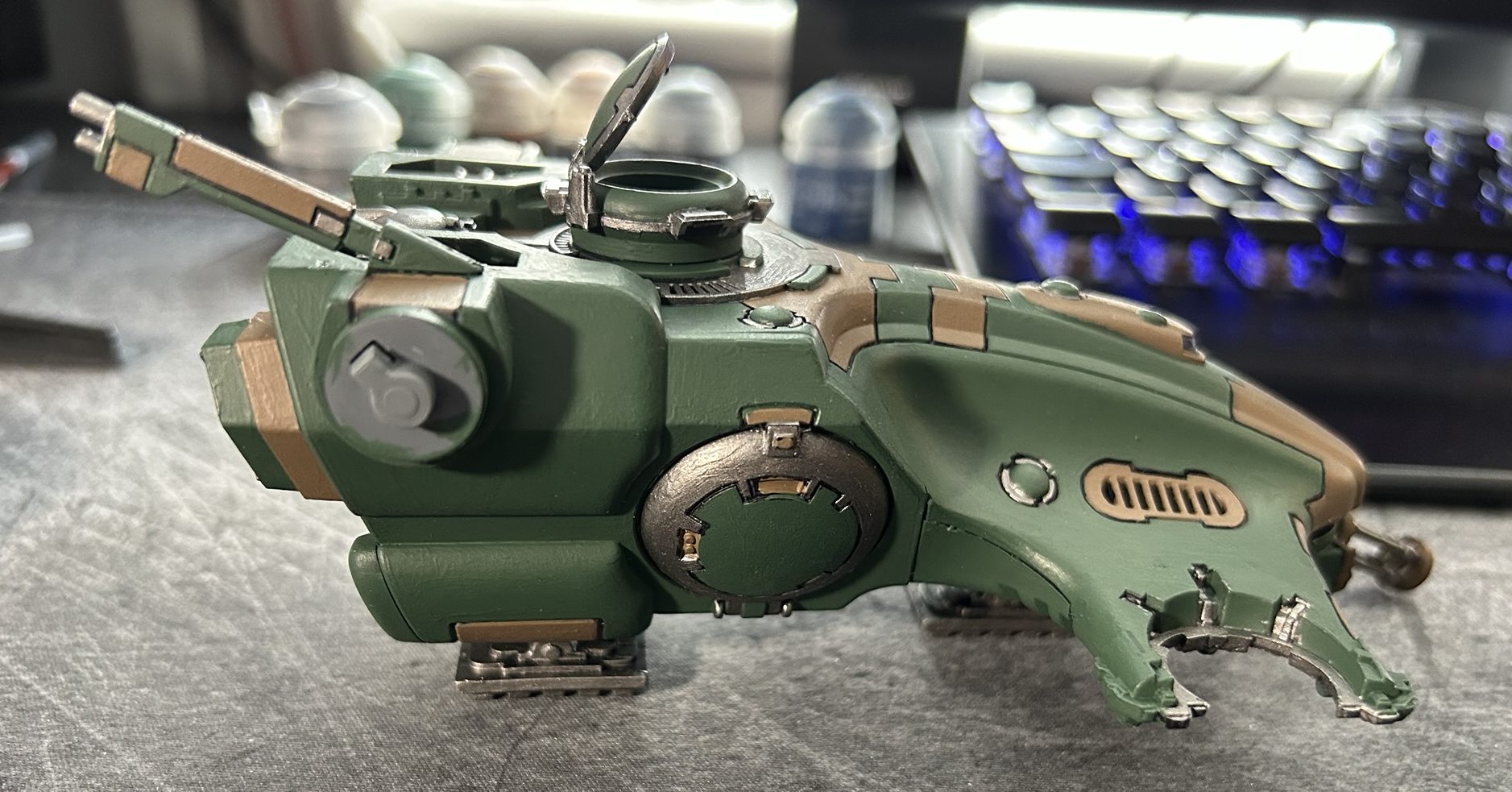
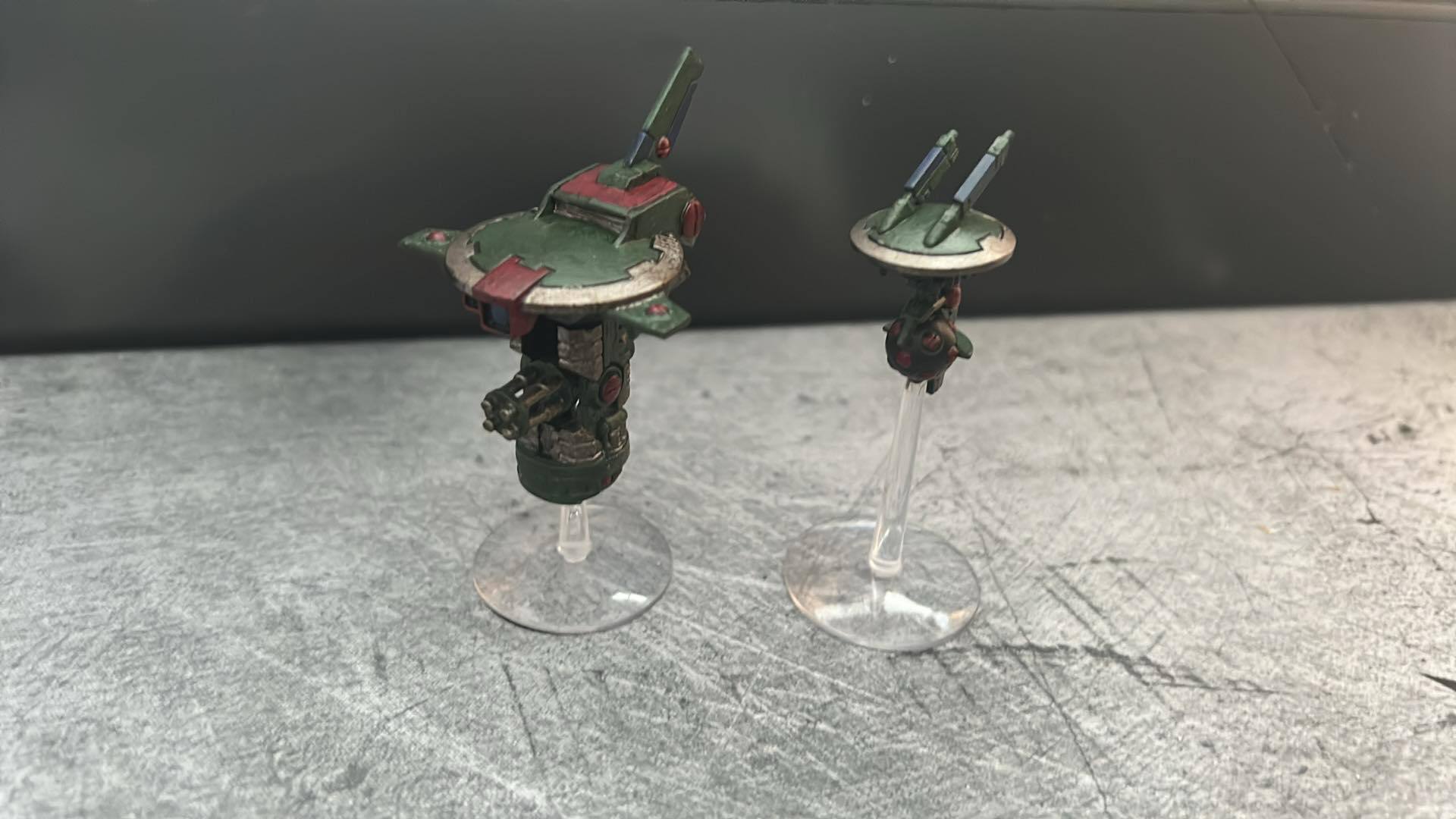
The next phase of my painting journey brings me to the T’au Devilfish, my first vehicle. With this done, only the commander remains to complete the combat patrol. I’m debating whether to finish him now or shift focus to my next army, especially since I’ve picked up the Thousand Sons combat patrol as well. Plenty of options to consider.

Time Investment

One challenge I hadn’t anticipated was just how time-consuming painting a vehicle would be. Between the main body, two engines, and two gun drones, I spent over 10/15 hours, without even adding highlights to the hard edges and finer details. At this stage, I don’t feel ready to tackle that level of precision, but experienced painters would have spent even longer refining every surface. I look forward to reaching that skill level.

Testing the Colour Scheme

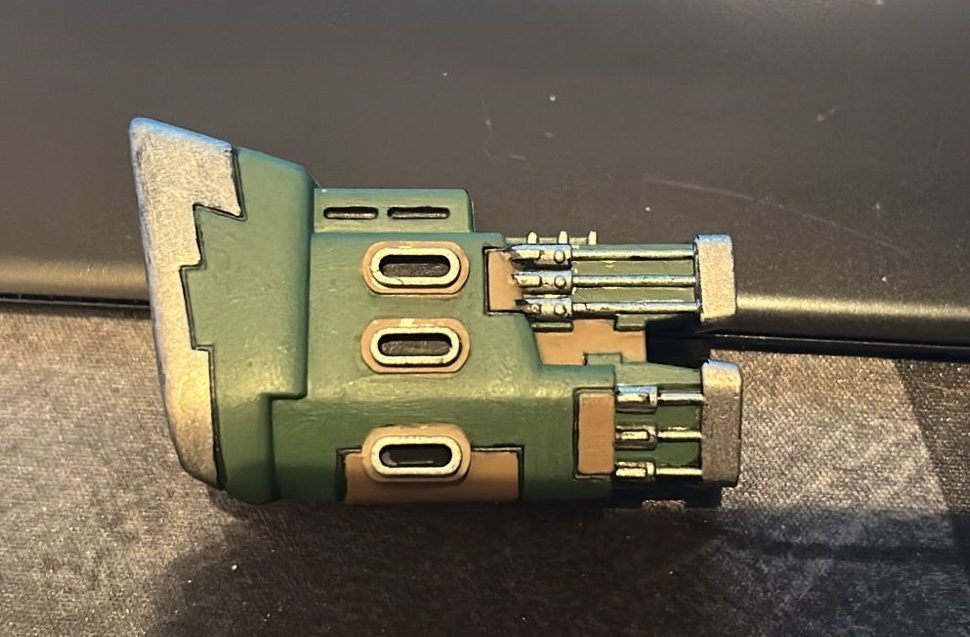
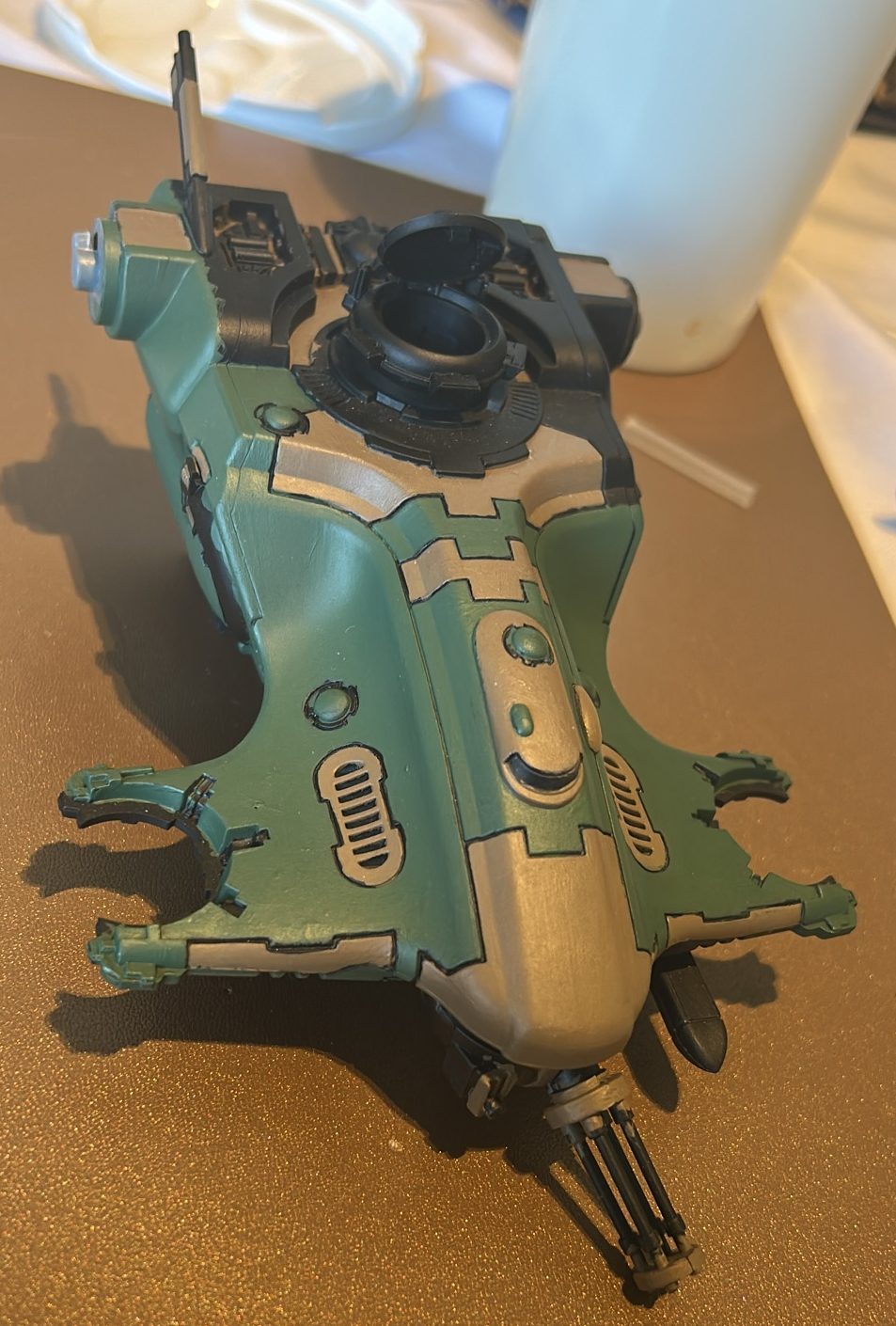
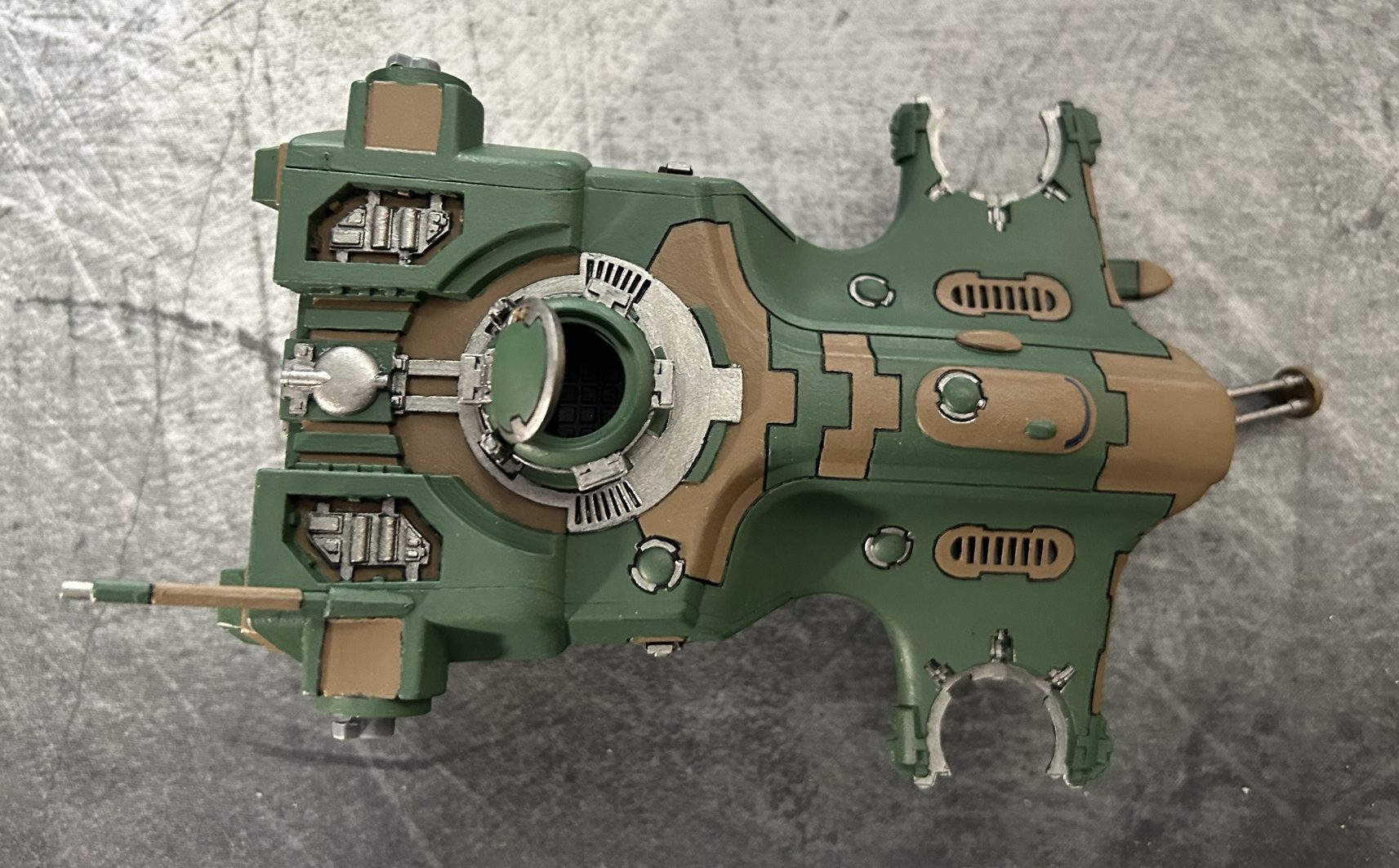
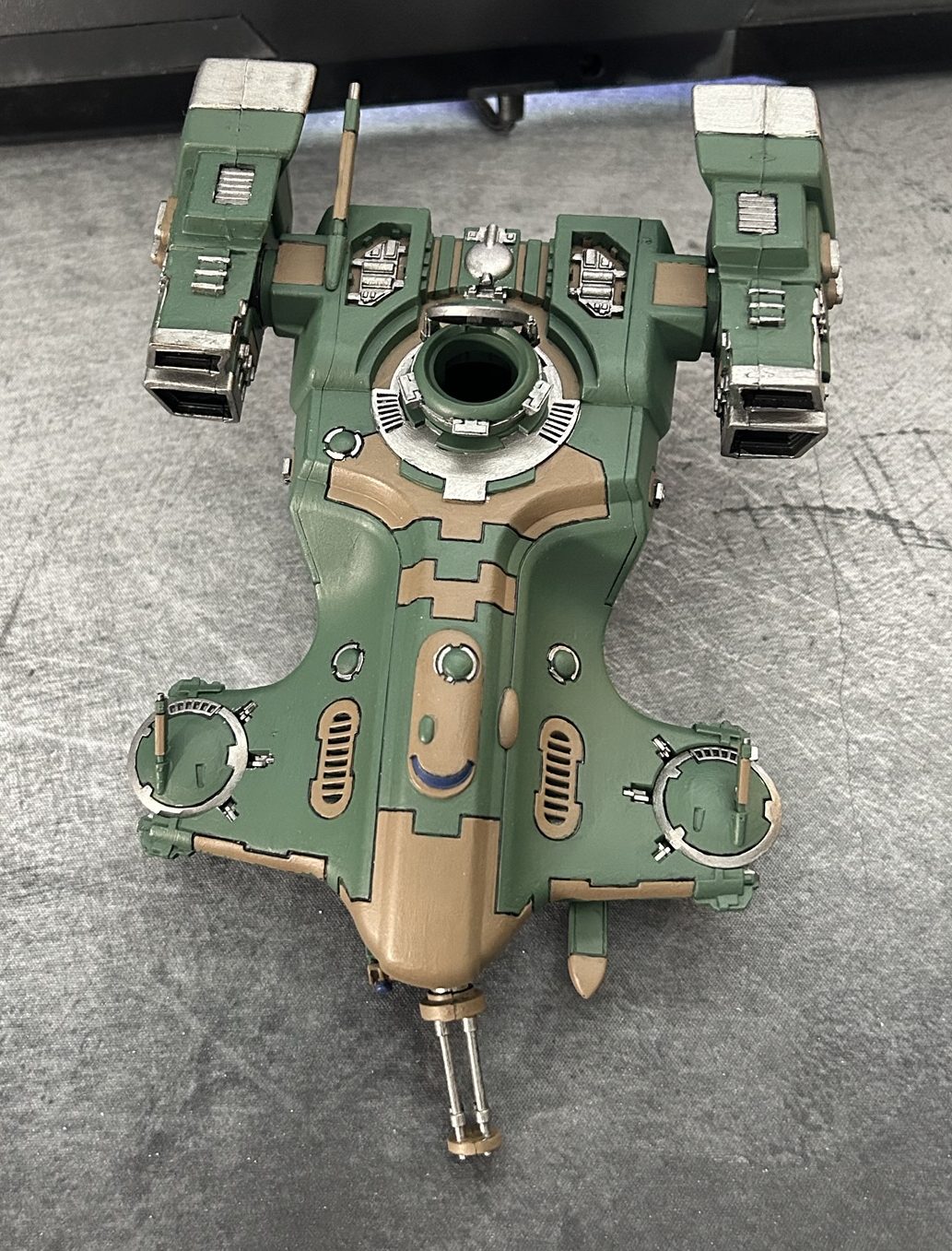
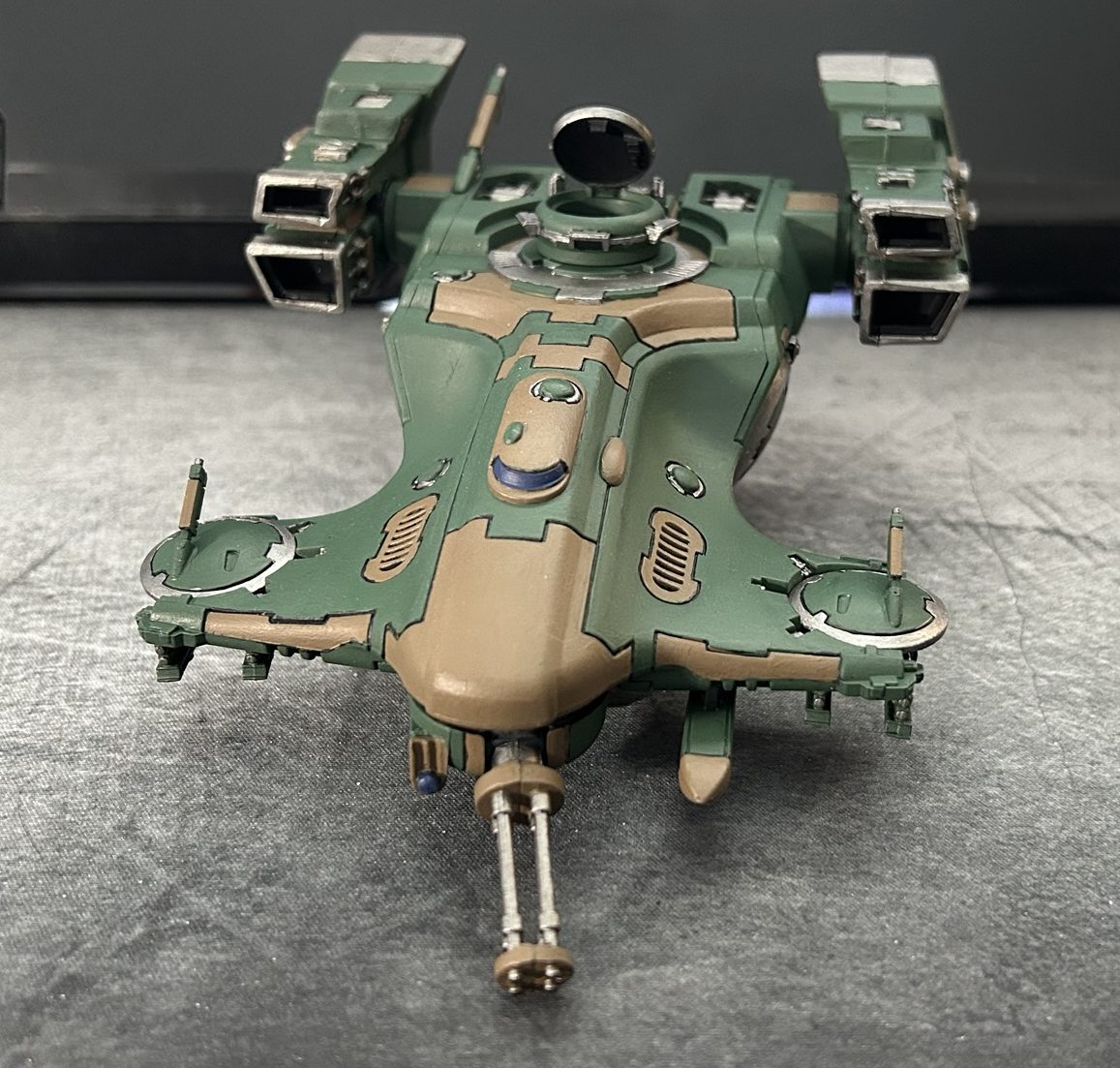
For this model, I chose brown as the secondary color to complement the green, with silver for the metal sections. The result? A surprisingly Boba Fett-inspired aesthetic, which turned out better than expected.

To test the color scheme, I painted one of the detachable engines first instead of starting with the main body. That way, if the scheme didn’t work, adjusting it would be much easier. Fortunately, planning out the sections didn’t take long, and I didn’t need to swap the green and brown, saving me time.

Painting the Engines

I started with the brown, since those areas were smaller, carefully picking out panels one at a time. The engines weren’t too troublesome to keep clean, tackling one side at a time. Two layers provided solid coverage over the undercoat, and the result was already looking sharp.

Moving onto the green, the larger surfaces made it difficult to judge how much paint to dilute and how quickly sections would dry. At first, I wasted a little paint as it dried faster than I could use it, but I started mixing smaller amounts each time, eventually overcompensating. Knowing how much paint to mix at once was a challenge throughout the Devilfish project, but it’s just one of many lessons to learn. Fortunately, the green sections didn’t cause too many issues with difficult details.

The silver areas, however, presented some challenges, particularly the small pipes at the front of the engines. I had to correct some green sections where visible brush strokes had overlapped onto smaller areas. Once I cleaned it up, I was really happy with the final look, so I decided to continue using this colour scheme for the rest of the model.

Painting the Main Body:

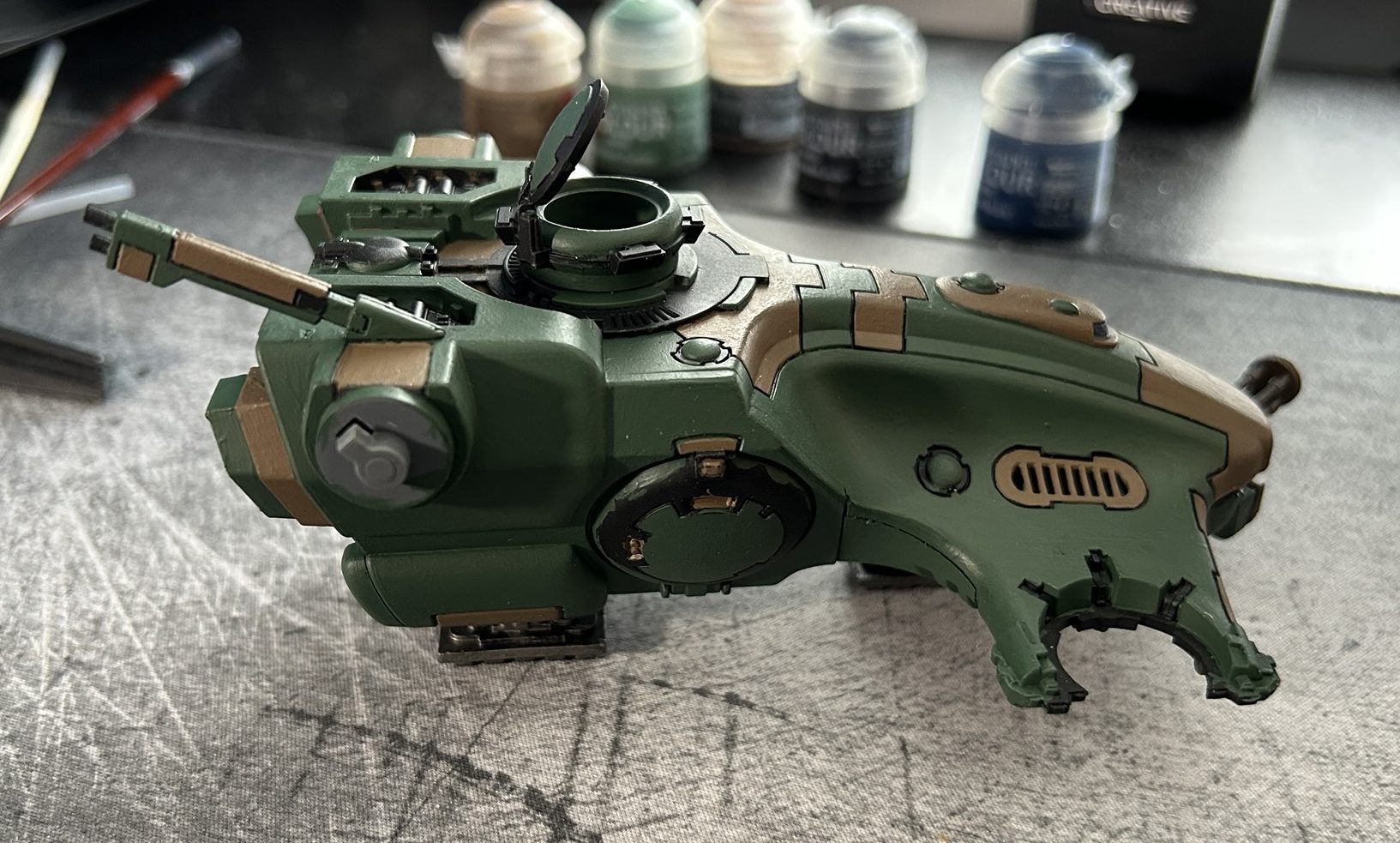
During this process, I made an unfortunate mistake, I broke the lid of the Devilfish. I had initially set it slightly open to show the interior, but I forgot about it while painting the underside, causing it to snap. Lesson learned: always be mindful of delicate parts when handling a model during painting!

Refining the Brown Areas

Satisfied with the colour scheme, I moved on to the main body. Starting with the brown, I carefully selected areas to highlight, smaller panels and grills, to make them stand out. This took some time, as I kept refining which sections I wanted to separate from the primary colour. After a while, I was happy with the finished areas. Unfortunately I forgot to take pictures of this after doing this section.

Applying the Main Colour

Next came the biggest task, the primary colour of the Devilfish’s body. Applying the green was far more time-consuming than I had expected. On average, each side took around 2/3 hours, depending on how much of the body was covered in brown sections. This became the most intensive painting project I’ve undertaken for any model so far.

As I progressed, I found myself making small mistakes due to fatigue, especially after extended painting sessions. Typically, I work in one-hour increments, but with the Devilfish, I ended up doing two to three hours in a single sitting. After finishing the green, I decided to hold off on touching up the brown until after applying the silver for the metal details, anticipating further corrections would be needed.

Adding the Silver Details

The silver accents needed careful application, primarily on the doors to distinguish the green and brown sections, as well as on the landing feet, the main gun, around the hatch, and a few smaller details on top of the model. This stage was much quicker compared to the other colours, with fewer mistakes.

Once I was satisfied with the silver areas, I went back and did final touch-ups, which didn’t take long. The model was coming together nicely, leaving only the gun turrets as the last step before completion.

Completing the Gun Turrets

The two remaining gun turrets didn’t take long to paint, following the same colour layout as the infantry drones. Keeping the sections uniform helped maintain a cohesive look across the model. With them finished, I assembled everything and took a moment to step back and look over the final piece. I was happy with the result, it felt like a solid effort for my first vehicle.

Final Thoughts

Painting the Devilfish has been a challenging yet rewarding experience, pushing me to refine my techniques and build patience with larger surfaces. The process of balancing colour choices, handling mistakes, and adjusting my painting sessions has taught me valuable lessons that will carry over to future projects.

While I initially hesitated to apply silver for the finer details, I’m pleased with how it helped define the different sections of the model. Even the touch-ups at the end felt more like a refining process rather than just correcting errors, proof that I’m becoming more confident in my approach.

What’s Next?

With the Devilfish complete, I now have a choice, do I finish painting the commander to complete the combat patrol, Tyranids or shift focus to my Thousand Sons army? There’s also the question of refining some of my techniques, particularly edge highlighting and colour blending, to take my painting skills to the next level.

Regardless of my next steps, this project has reinforced my appreciation for the craft and the continuous learning that comes with it. I look forward to tackling the next challenge, one brushstroke at a time.

Shoutout

If you enjoy my posts or simply appreciate well-painted models, one of my friends, who I regularly play with, has a TikTok dedicated to his miniature painting. Be sure to check him out at Resin Rogue 3D.

Until next time, stay sharp and keep gaming. Panda out.

Comments (2) »

EA Shuts Down Cliffhanger Games: Impact on Black Panther

Image – Black Panther/EA

Electronic Arts has once again made headlines for its corporate restructuring, this time shutting down Cliffhanger Games, the studio behind the upcoming Black Panther game. This unexpected closure has raised concerns about EA’s long-term strategy and its impact on creative independence in the gaming industry.

The Rise and Fall of Cliffhanger Games

Cliffhanger Games was founded by EA with a bold mission: to deliver a single-player, open-world Black Panther experience. The game, set in Wakanda, was expected to bring deep storytelling, rich world-building, and innovative mechanics celebrating the legacy of the character. However, despite early excitement, EA’s decision to shut down the studio has put the project, and its developers, in jeopardy.

Why Did EA Close Cliffhanger Games?

While EA has yet to provide a detailed explanation, industry insiders speculate the closure is part of the company’s broader cost-cutting measures. EA has been aggressively restructuring over the past year, focusing on profitable live-service games while cutting projects that don’t fit into that model. As a result, narrative-driven single-player experiences, like the Black Panther game, are increasingly at risk.

Another possible factor? Disney’s involvement. Given Marvel’s stringent licensing agreements, the game may have faced complex business negotiations, leading EA to abandon the studio before development costs escalated.

Alongside the studio closure, EA reportedly laid off fewer than 300 employees, including staff from Cliffhanger Games, mobile divisions, and central teams. While EA claims these changes will “sharpen their focus,” the layoffs signal a continued trend of cutting smaller studios in favor of larger live-service projects.

The Industry Trend: Is Single-Player Dying?

Despite concerns that major publishers are shifting toward live-service models, single-player games continue to prove their value with record-breaking success stories.

Take Baldur’s Gate 3, for example. Larian Studios’ RPG dominated Game of the Year awards, sold millions of copies, and demonstrated that deep, narrative-driven experiences still resonate with players. Similarly, Expedition 33 has been praised for its immersive storytelling and strategic gameplay, reinforcing the demand for high-quality single-player titles.

Beyond these, other recent hits include:

  • Elden Ring: Nightreign – The latest expansion has already surpassed 3.5 million sales, proving FromSoftware’s single-player formula remains a powerhouse.
  • Phantom Blade Zero – Developers argue that single-player success benefits the entire genre, as players move from one great experience to another.
  • Black Myth: Wukong – A highly anticipated single-player action RPG that has generated massive hype and pre-orders.
  • New Dungeons & Dragons RPG – Wizards of the Coast is investing in a new single-player action-adventure, signaling confidence in the genre’s future.

EA’s Past Stance on Single-Player Games

EA has historically been skeptical about single-player experiences, at one point claiming that players no longer wanted them and that live-service games were the future. This stance led to the closure of several studios focused on narrative-driven titles, including Visceral Games, which was working on a Star Wars project before EA shut it down.

However, EA has since attempted to walk back these statements, acknowledging that single-player games remain an important part of its portfolio. Despite this, the company’s continued focus on live-service models suggests that single-player titles may still be at risk within its ecosystem.

Industry-Wide Layoffs & Publisher Strategies

EA isn’t alone in restructuring. Over the past few years, Ubisoft, Activision Blizzard, and Embracer Group have all faced layoffs, cancelled projects, and major studio closures. Many of these cuts have targeted single-player development, signaling a broader shift toward monetized live-service models and recurring revenue streams.

However, these decisions haven’t always been well received. Players continue to demand high-quality, standalone experiences, proving that gaming isn’t purely about microtransactions and seasonal updates.

Impact on Developers & Studio Culture

EA’s closure of Cliffhanger Games doesn’t just affect the Black Panther project, it disrupts the careers of hundreds of developers. With this latest round of layoffs affecting nearly 300 staff members, many developers now face uncertainty. However, history has shown that former EA employees often go on to create successful independent studios, offering a creative refuge outside the constraints of corporate decision-making. For example:

  • Ex-Visceral Games developers later worked on hit titles like The Callisto Protocol and other independent horror projects.
  • BioWare veterans formed Yellow Brick Games, focusing on immersive, player-first storytelling.

EA’s restructuring may lead to new independent studios, but it also reinforces concerns that AAA publishers are stifling creative freedom in favor of predictable financial returns.

What Happens to the Black Panther Game?

With Cliffhanger Games shuttered, the future of EA’s Black Panther project is unclear. Based on EA’s past cancellations, the game could face several outcomes:

  1. Transferred to Another Studio – EA may move development to Motive Studios or Respawn Entertainment, which have experience with narrative-driven titles.
  2. Revived in Another Form – The game could be scaled down and repurposed into a live-service Marvel project.
  3. Permanently Cancelled – If EA determines the financial risk is too great, the game could end up scrapped entirely, similar to Star Wars 1313.

Without official confirmation, speculation remains high, and fans are left wondering whether Wakanda will ever get the AAA treatment it deserves.

Final Thoughts

While EA’s restructuring isn’t surprising, its decision to shut down Cliffhanger Games reflects an ongoing industry shift. If single-player experiences continue to be sidelined, gamers may need to look toward indie developers and smaller studios for truly immersive storytelling.

What’s your take? Should publishers double down on monetized models, or do single-player experiences still have a place in the market? Let’s discuss.

Until next time, stay sharp and keep gaming. Panda out.

References

  • IGN – EA Cancels Black Panther Game, Closes Cliffhanger Games
  • GameSpot – EA Cancels Black Panther Game, Closes Its Developer, And Lays Off Additional Staff
  • Eurogamer – EA’s Gibeau Claims It Isn’t Neglecting Single Player Games After All
  • GamingBolt – EA is Proving Everyone (and Itself) Wrong with its Single Player Offerings
  • PCGamesN – After Baldur’s Gate 3, a New Single-Player DnD Game is Officially on the Way
  • PushSquare – Elden Ring Nightreign’s Enormous Success Continues, Now Over 3.5 Million Sales
  • Tech4Gamers – The Success of One Single-Player Game Is A Win For The Entire Genre
  • – EA to Lay off Up to 400 Employees After Black Panther Game Cancellation
  • – EA Cancels Cliffhanger Games’ Black Panther Game and Closes the Studio

Comments (1) »

Call of Duty’s Latest Monetization Scheme: Forced Ads in Loadouts

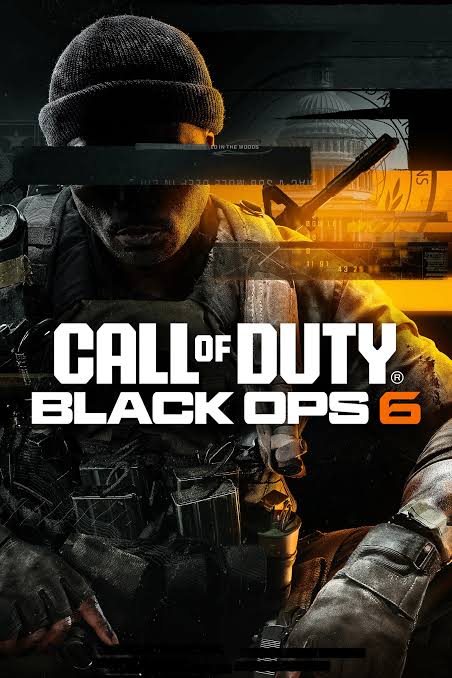
Image – Call of Duty: Black Ops 6/Activision

Activision has done it again, pushing monetization to new lows in Call of Duty: Black Ops 6 and Warzone. Players are now forced to view advertisements while customizing their loadouts, a move that has sparked widespread frustration across the gaming community.

The Ad Invasion

Previously, in-game promotions for skins and bundles were tucked away in menus or store sections. Now, Activision has embedded these ads directly into the weapon selection screen, meaning players cannot avoid them when adjusting their loadouts before matches.

Every time a player swaps a gun, selects a perk, or fine-tunes their setup, they’re met with full-screen promotions showcasing cosmetic bundles, Battle Pass upgrades, and limited-time offers. The worst part? There’s no option to disable them.

AAA or Mobile Game?

For a franchise that prides itself on premium pricing, this blatant push for microtransactions feels more suited to free-to-play mobile games, not a AAA title that costs between £50-£80. It raises serious concerns about the future of gaming monetization, if a full-priced game can force ads into essential gameplay features, where does it stop?

Some players worry that this could normalize aggressive monetization tactics in future Call of Duty installments, potentially leading to ads between matches, on HUDs, or even in killcams.

The Community Backlash, Again

This isn’t the first time Activision has faced backlash for intrusive monetization. Players previously criticized forced ads in Warzone’s menus, calling them “disrespectful” and “predatory”. The outrage was so widespread that many fans threatened boycotts, arguing that a premium-priced game should not bombard players with microtransaction promotions.

Despite the criticism, Activision continued pushing aggressive monetization, embedding ads deeper into the game’s interface. Now, with Black Ops 6, they’ve taken it a step further, placing ads directly into essential gameplay menus like loadouts.

Activision’s Monetization History

Activision has a long track record of controversial monetization tactics:

  • Loot Boxes in Call of DutyModern Warfare Remastered introduced paid loot crates after launch, despite initial promises of a fair progression system.
  • Battle Pass Price HikesBlack Ops Cold War increased premium pass costs, making progression more expensive for players.
  • Pay-to-Win MechanicsWarzone introduced weapons locked behind premium bundles, giving paying players an advantage.

These tactics have repeatedly sparked community outrage, yet Activision has continued doubling down on aggressive monetization strategies.

How Mobile Games Paved the Way for AAA Monetization

The gaming industry has been watching mobile games closely, and AAA publishers have adopted their monetization tactics to maximize profits. Mobile games have been getting away with aggressive monetization for years, and now major publishers want in.

Key Mobile Monetization Tactics That AAA Games Are Copying

  • Freemium Models – Mobile games like Clash of Clans and Genshin Impact offer free gameplay but heavily incentivize spending through premium currency and time-gated mechanics.
  • Loot Boxes & Gacha Systems – Games like Diablo Immortal and Raid: Shadow Legends use randomized rewards to encourage spending, a model now seen in AAA games like Overwatch and FIFA Ultimate Team.
  • Forced Advertisements – Mobile games have long included unskippable ads, and now AAA publishers are testing the waters with ads in menus, loading screens, and even gameplay.
  • Battle Passes & Limited-Time Offers – Seasonal content in mobile games has influenced AAA titles like Fortnite, Call of Duty, and Halo Infinite, making continuous spending a requirement for full access.
  • Psychological Tricks – Mobile games use FOMO (fear of missing out), artificial scarcity, and time-limited deals to pressure players into spending, tactics now common in AAA gaming.

The Future of Monetization in Gaming

Looking ahead, gaming monetization is expected to become even more aggressive:

  • AI-Driven Monetization – Publishers may use AI to personalize ads and microtransactions based on player behavior.
  • NFTs & Blockchain Gaming – Some companies are experimenting with NFT-based in-game assets, allowing players to buy, sell, and trade digital items.
  • Cloud Gaming & Subscription Dominance – As cloud gaming grows, publishers may lock content behind subscriptions, making ownership of games a thing of the past.
  • In-Game Advertising Expansion – Expect more intrusive ads, possibly appearing during matches, in HUDs, or even in killcams.

Final Thoughts

Gaming companies are walking a dangerous line between profitability and player satisfaction. Activision’s latest stunt shows how AAA publishers are willing to exploit their audiences, even at the cost of goodwill and game integrity. The real question is: will players push back hard enough to make a difference?

What do you think? Are forced ads in Call of Duty acceptable, or is this a sign of even worse monetization coming? Let me know in the comments.

Until next time, stay sharp and keep gaming. Panda out.

References

Comments (2) »

PlaySafe ID: The Future of Trust, Fair Play, and Data Privacy in Online Gaming?

Image – PlaySafeID

The gaming industry has long struggled with issues of cheating, toxicity, and fair play. From aim bots in shooters to account boosting in RPGs, bad actors disrupt the balance and enjoyment for honest players. Now, a new initiative called PlaySafe ID aims to tackle these issues with a verified, anonymous digital ID system, raising key questions about how gaming identities could evolve and whether players can trust the system’s privacy promises.

How PlaySafe ID Works & Its Impact on Players

PlaySafe ID recently secured $1.12M in pre-seed funding, backed by Early Game Ventures, Hartmann Capital, and Overwolf. The platform’s goal is to provide a trust layer for online gaming, ensuring players are real and haven’t been caught cheating or engaging in harmful behavior.

Its standout feature is Zero-Knowledge Proof technology, which lets players verify their identity without exposing personal details. This means players can prove they’re legitimate without handing over sensitive information, tackling both security risks and privacy concerns.

Verification Process

PlaySafe ID uses Zero-Knowledge Proof technology to verify players without exposing personal details. Here’s how the process works:

For Adults (18+)

  1. Create an account on PlaySafe ID.
  2. Upload a valid photo ID (passport, driver’s license, etc.).
  3. Take a selfie for identity confirmation.
  4. Verification is handled by Veriff, a trusted identity verification provider used by platforms like Epic Games and Roblox.
  5. Once verified, PlaySafe ID generates a random, anonymous ID that can be used across supported games.

For Younger Players (Under 18)

  1. A parent or guardian must create an account and verify themselves first.
  2. The parent then adds the child as an under-18 user.
  3. The child takes a simple age estimation selfie, which is reviewed by Veriff.
  4. If successful, PlaySafe ID generates a unique anonymous ID for the child.
  5. This ID ensures they only interact with verified players who have never been flagged for inappropriate behavior.

Additional Benefits of PlaySafe ID

Beyond banning cheaters, PlaySafe ID offers other potential benefits:

  • Cross-Game Trust System: Players with a verified PlaySafe ID can build a trust score, helping developers identify legitimate players and reduce false bans.
  • Improved Matchmaking: Games using PlaySafe ID can prioritize verified players, leading to fairer matches with fewer cheaters.
  • Stronger Community Moderation: Toxic behavior, such as harassment or cheating, can result in cross-game penalties, discouraging repeat offenders.
  • Developer-Friendly Integration: PlaySafe ID provides an API for game studios, making it easier to implement anti-cheat and player verification without needing to build their own system.

Ban System: One Game or All Games?

If a player is caught cheating, their PlaySafe ID is blacklisted across all supported games. This means they won’t be able to simply create a new account and rejoin another game using PlaySafe ID. The goal is to eliminate repeat offenders from multiplayer ecosystems.

What Happens If a Ban Was a Mistake?

PlaySafe ID has an appeals process to handle false bans. Here’s how it works:

  1. Players can submit an appeal through their PlaySafe ID account.
  2. PlaySafe ID reviews the ban type:
    • Logic-based bans (e.g., detected cheat software) are not overturned.
    • Heuristic-based bans (e.g., unusual movement patterns) are reviewed manually.
  3. Trust Score Consideration: Players with a high trust score (long gaming history, multiple linked accounts) are more likely to have their ban overturned.
  4. Final Decision: If the appeal is successful, the player’s ID is reinstated, but they may be placed on a watchlist to prevent future false flags.

Industry Reception & Developer Adoption

PlaySafe ID is currently in integration talks with several major gaming platforms. Early Game Ventures, which led the funding round, believes PlaySafe ID could become a default identity layer in gaming, similar to Steam or Xbox Live profiles.

However, widespread adoption depends on developer buy-in. If major publishers hesitate, PlaySafe ID could struggle to gain traction.

Costs & Accessibility

PlaySafe ID is free for players, but developers must pay to integrate it into their games. This could lead to some studios skipping adoption due to budget constraints.

Potential Exploits & Security Risks

While PlaySafe ID aims to prevent cheating, hackers could attempt to spoof verification or bypass bans using stolen credentials or identity fraud. The platform will need continuous security updates to stay ahead of potential exploits.

Comparison to AI Cheat Detection Systems

Some games are developing AI-powered cheat detection systems that analyze player behavior to flag suspicious activity. PlaySafe ID differs by focusing on identity verification, rather than detecting in-game cheating patterns.

Future Expansion Beyond Gaming

PlaySafe ID’s game-agnostic identity system could expand beyond gaming to social media or virtual spaces. Some investors believe it could become a universal digital trust layer, similar to online authentication systems like Google or Apple ID.

Privacy Concerns & Historical Data Breaches

PlaySafe ID claims that it does not store personal identification data, relying on Zero-Knowledge Proof technology for verification. However, skepticism is warranted. Companies have made similar promises in the past, only for data leaks or policy changes to reveal otherwise.

Past Cases of Companies Misleading Users About Data Storage

History has shown that companies don’t always honor their privacy commitments. Here are some notable cases:

  • Yahoo Data Breach (2013-2016): Yahoo exposed three billion user accounts in a massive data breach but only admitted to it three years later.
  • Facebook & Cambridge Analytica (2018): Facebook allowed Cambridge Analytica to harvest data from millions of users without proper consent, leading to a major scandal.
  • Uber Cover-Up (2016): Uber suffered a data breach affecting 57 million users but paid hackers to keep it quiet instead of informing users.
  • Google+ Shutdown (2018): Google+ was shut down after it was revealed that third-party developers had access to private user data, which Google initially withheld from the public.

These cases highlight why gamers should remain cautious when companies promise not to store personal data. While PlaySafe ID’s privacy-first approach is promising, independent verification and transparency will be key to ensuring it truly protects users.

Final Thoughts

PlaySafe ID presents an intriguing vision for safer, fairer gaming. Its privacy-first approach is a step beyond traditional anti-cheat solutions, but its adoption will determine whether it’s a game-changer or just another attempt at reforming digital trust.

What do you think? Would you want PlaySafe ID in your favorite games?

Until next time, stay sharp and keep gaming. Panda out.

Yes! Here’s the fully updated reference list, ensuring all sources are accurate and properly formatted:

References

  • PlaySafe ID Industry ReceptionVentureBeat
  • PlaySafe ID Official Privacy StatementPlaySafe ID
  • Verification Process & Veriff AuthenticationVeriff
  • AI Cheat Detection ComparisonModl.ai
  • Yahoo Data Breach (2013-2016)Reuters
  • Facebook & Cambridge Analytica Scandal (2018)The Guardian
  • Uber Cover-Up of Data Breach (2016)BBC News
  • Google+ Shutdown Due to Privacy Issues (2018)TechCrunch

Comments (1) »

Painting My Second Unit: Pathfinders

Why Pathfinders?

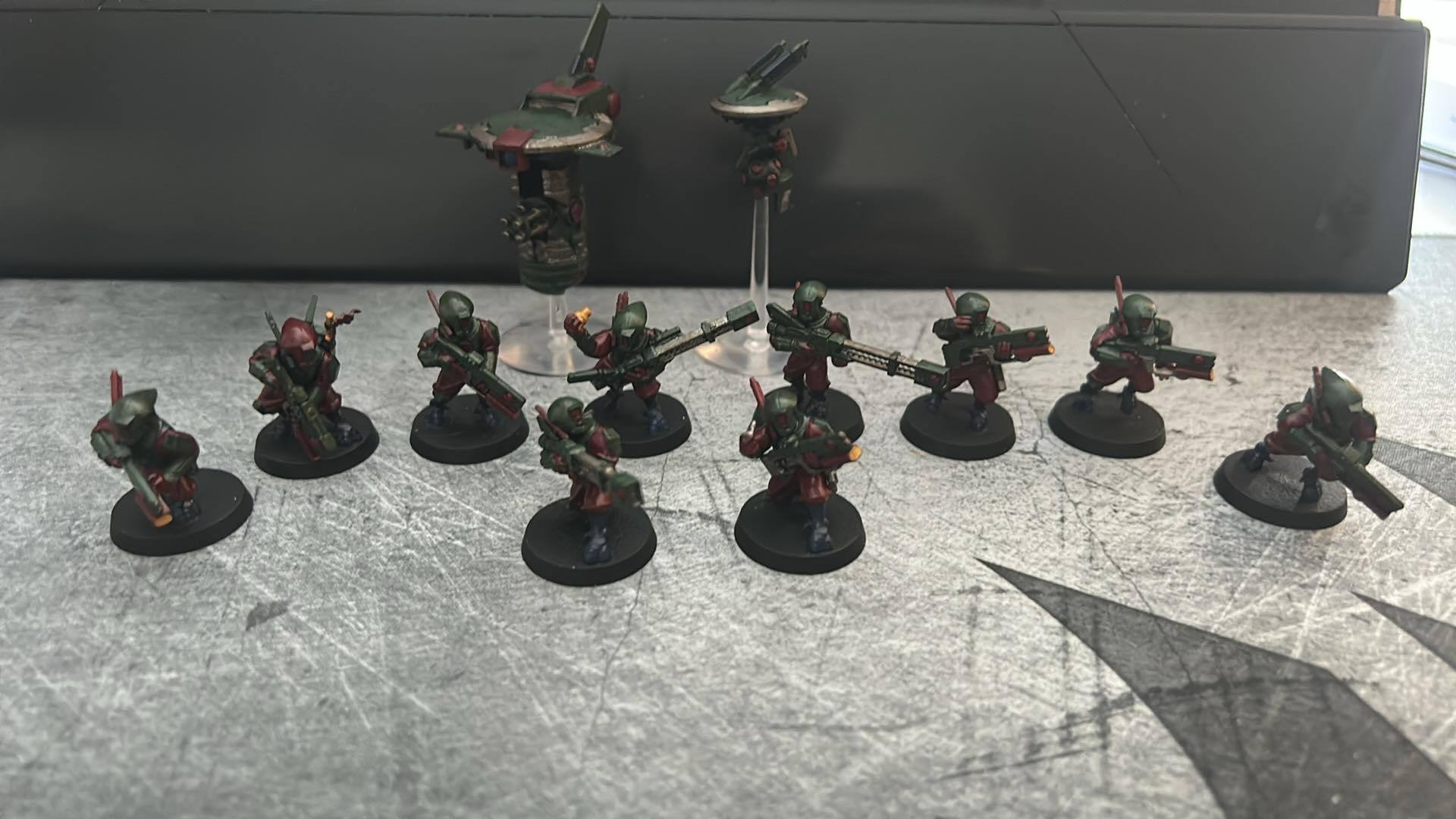
The second unit I decided to paint was my Pathfinders. I’m not sure why, but they’ve always been one of my favorite units in the Combat Patrol. Their strong ranged weapons, combined with a solid medium-range backup, make them incredibly versatile. I also love the rifle design and the drones they deploy, adding an extra layer of tactical depth.

Applying Lessons from My Breachers

Learning from my experience painting my Breachers, I adjusted my approach for the Pathfinders. A great tip I received was to start from the inside out, leaving the armor for last, so that’s exactly what I did. It made the process smoother, though I regret not taking progress pictures this time around.

Choosing the Colour Scheme

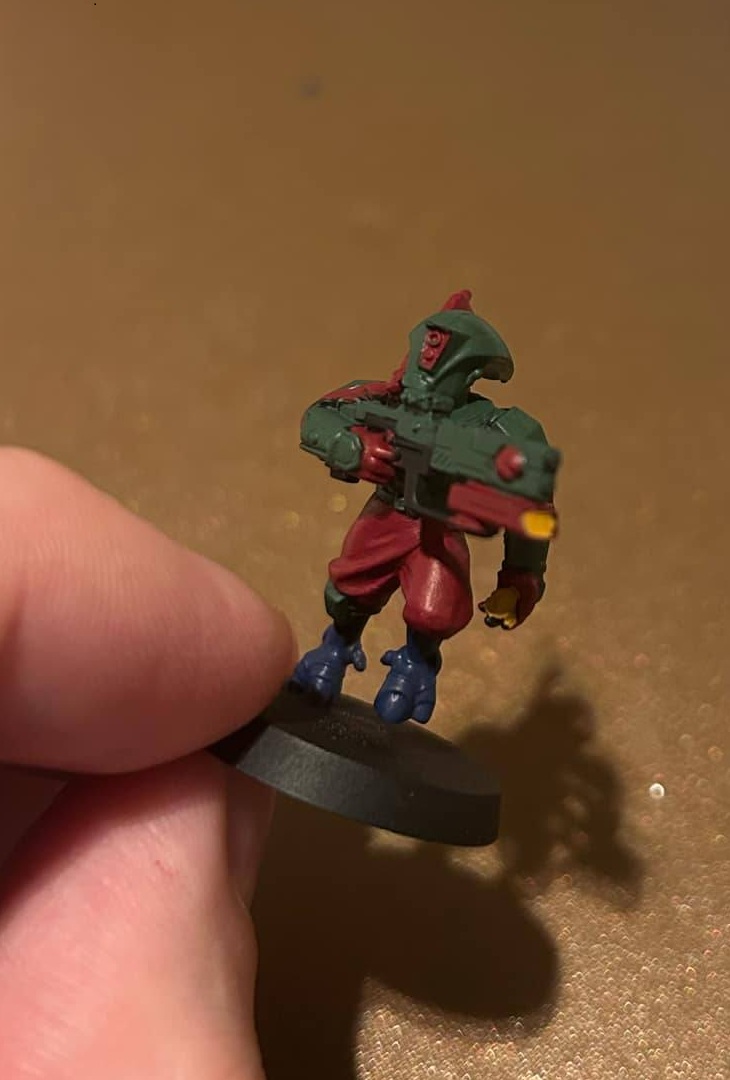
For their secondary colour, I chose red. It creates a striking contrast against the green and gives the unit a bold, battle-ready aesthetic. Since Pathfinders have less armor on the lower half, the red was more dominant, but it added a nice balance to the overall scheme.

When painting the legs, I realized the blue I used was too dark, I should have gone with a lighter shade. It’s another lesson learned for future projects, reminding me how even subtle adjustments can make a big difference in the final result.

Painting the Armour

I applied green to the armor, carefully avoiding the underclothes on the upper body. Of course, mistakes happened, and I had to go back and touch up certain areas, but that was expected. Despite that, I feel like I kept things clean, and each challenge was another step in improving my technique.

Adding Details and Contrast

I added some yellow to make the mark light on the rifles more distinct, along with a few other smaller items in hand, helping them stand out.

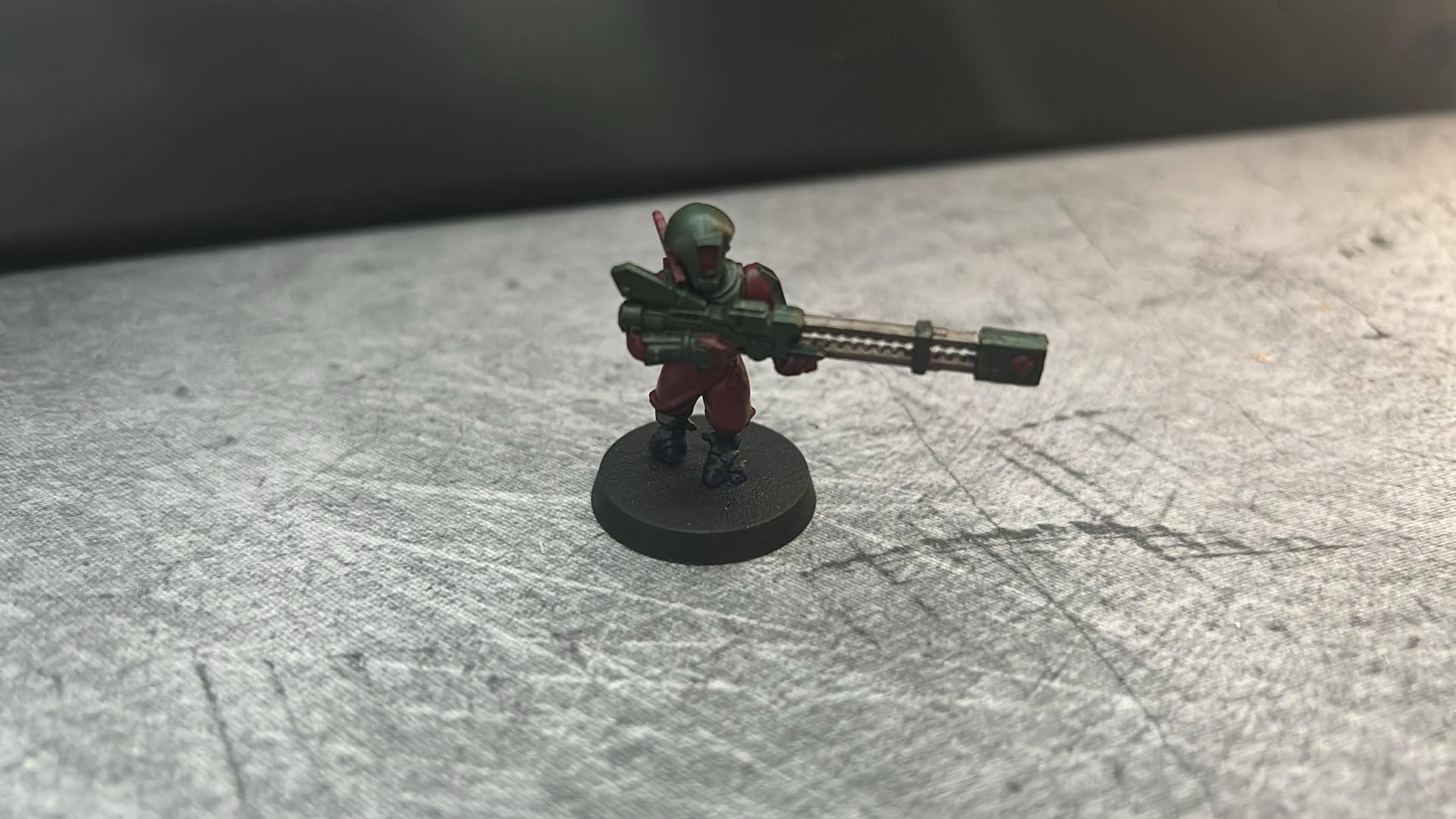
For the Pathfinders using rail rifles, I went with silver for the main parts of the gun, giving them a futuristic yet slightly rugged feel, almost like a relic of past wars with a modern upgrade.

Washing for a Gritty Effect

As I did with my Breachers, I washed over each model. Again, I didn’t apply a second base coat, allowing the wash to retain its dull, gritty effect on my models. The contrast between the colours feels strong and cohesive, enhancing the unit’s battle-worn aesthetic.

Painting the Drones

I kept the same colour scheme for the drones to match the Pathfinders. In Combat Patrol, you use the Grav-inhibitor drone, which reduces a charge roll by 2, critical for keeping the squad out of melee range, where the T’au’s melee is notoriously weak.

For future expansion, when I reach 1,000 points for my army, I’m considering using the Recon drone instead, which could add another layer of tactical depth to my force.

Final Thoughts

Overall, I feel I did a much better job on these than the Breachers. The progress is clear, and I’m starting to get a better grasp of techniques that help refine the painting process. As with anything, practice is key to improving. I just wish I had more time to both play games and paint models.

I still have many techniques to learn, from dry brushing to highlighting the sharp edges on the model. I’m hoping to try some of these soon, but I’m also a bit worried about messing up a fully painted model. Finding a colour that creates a good contrast is also a challenge, but as I keep experimenting, I know I’ll improve.

Next, I’ll be starting my Devilfish. Painting a larger, blockier model should give me valuable experience before tackling the Commander Suit, one of the most exciting projects on my list.

Also, if you’re really into painting Warhammer models, check out my friend on TikTok, he uploads almost daily, showcasing new painted models from a wide range of projects: Resin Rogue 3D.

Until next time, stay sharp and keep gaming. Panda out.

Comments (1) »

Borderlands 4 Price Controversy: When Fandom Meets Corporate Tone-Deafness

Image – Borderlands 4/Gearbox

The gaming industry has seen its fair share of pricing controversies, but Borderlands 4 has sparked a particularly heated debate. Gearbox CEO Randy Pitchford recently found himself in the crosshairs of frustrated gamers after suggesting that “real fans” would find a way to afford the game, potentially priced at £80.

The Controversy Unfolds

It all started when a fan on social media expressed concerns about the rising cost of games, specifically asking Pitchford to ensure Borderlands 4 wouldn’t follow the trend of inflated pricing. Pitchford’s response? A dismissive remark stating that pricing wasn’t his decision, but that true fans would “find a way to make it happen”, referencing his own experience saving up for Starflight on the Sega Genesis back in the early ’90s.

This comment didn’t sit well with the gaming community. Many pointed out that economic conditions today are vastly different, with stagnant wages and rising living costs making gaming an increasingly expensive hobby. The backlash was swift, with fans calling Pitchford’s statement tone-deaf and out of touch with reality.

A Pattern of Controversy

This isn’t the first time Randy Pitchford has landed himself in hot water. His handling of the Borderlands IP has been riddled with controversy, including the Borderlands movie debacle. The film, directed by Eli Roth, was met with negative reviews and poor box office performance, pulling in just $16.5 million worldwide in its opening weekend.

Rather than acknowledging the criticism, Pitchford took to social media to deflect blame, suggesting that fans simply preferred the games over the movie. His response came across as dismissive, further alienating the community.

Beyond the movie, Pitchford has faced scrutiny over Gearbox’s business practices, including allegations of mismanagement, questionable financial decisions, and disputes with former employees. His reputation has been shaped by a series of missteps, making his latest remarks about Borderlands 4’s pricing feel like yet another example of his disconnect from the gaming community.

The Bigger Picture: Gaming Prices on the Rise

The controversy surrounding Borderlands 4 isn’t happening in isolation. The industry has been gradually pushing game prices higher, with titles like Mario Kart World launching at £80 on the Nintendo Switch 2. Microsoft has also announced price hikes for some of its upcoming releases, signalling a broader trend that could make gaming less accessible for many players.

Pitchford later attempted to clarify his comments, stating that he doesn’t actually know the final price of Borderlands 4, as that decision lies with publisher 2K Games. However, his initial remarks have already done damage, alienating some of the franchise’s most loyal fans.

What This Means for Borderlands 4

While Borderlands 4 is expected to be a major release, the controversy surrounding its potential price tag could impact sales. Some fans have already stated they’ll boycott the game if it launches at £80, while others are waiting to see if Gearbox and 2K reconsider their pricing strategy.

The backlash serves as a reminder to gaming executives that pricing decisions aren’t just about covering development costs, they’re about maintaining goodwill with the community. In an era where gamers are more vocal than ever, dismissing concerns with flippant remarks is a surefire way to damage a brand’s reputation.

Final Thoughts

The Borderlands franchise has always thrived on its chaotic humour and dedicated fanbase, but this controversy highlights a growing disconnect between corporate decision-makers and the players who keep their games alive. Whether Borderlands 4 will actually launch at £80 remains to be seen, but one thing is clear: gamers aren’t willing to accept price hikes without a fight.

Until next time, stay sharp and keep gaming. Panda out.

References

Comments (1) »

Diablo 4: Monetization Over Gameplay? A Growing Concern

Image – Diablo 4/Blizzard

Blizzard’s Diablo 4 has been under fire for its monetization practices since launch, but Season 8 has pushed player frustration to new heights. With £112 Berserk-themed skins, slow seasonal progression, and minimal gameplay improvements, many fans feel the game is prioritizing revenue over meaningful content.

Season 8: The Breaking Point?

Season 8 introduced a crossover with Berserk, a beloved anime and manga series. While the collaboration excited fans, the steep cosmetic prices quickly overshadowed the hype. The most expensive skins cost £112, sparking outrage over Blizzard’s pricing strategy.

Beyond cosmetics, players have criticized the lack of substantial gameplay changes. While Season 8 added new boss encounters and minor quality-of-life improvements, many feel the core experience remains stagnant. The seasonal progression system has also been labeled as slow and unrewarding, making it harder for players to earn meaningful rewards without spending money.

A History of Monetization Controversies

Blizzard’s monetization tactics in Diablo 4 didn’t start with Season 8, previous seasons have had their fair share of backlash:

  • Season 1 (Malignant Hearts): The Battle Pass rewards felt underwhelming compared to the cost, leading players to question whether Blizzard was delivering enough value.
  • Season 2 (Blood Harvest): Premium mounts and armor sets were introduced, sparking debate over Blizzard’s pricing strategy compared to earnable cosmetics.
  • Season 5 (Echoes of Hatred): The use of limited-time bundles pressured players into purchases before items disappeared, reinforcing FOMO-driven monetization.
  • Season 7 (Infernal Reckoning): The £75.00 Collector’s Pack, containing little beyond cosmetics, highlighted Blizzard’s increasing reliance on microtransactions.

Blizzard’s Response: A Lack of Accountability?

Despite mounting criticism, Blizzard has largely avoided addressing player concerns directly. While Diablo franchise general manager Rod Fergusson previously stated that Diablo 4 would not follow the aggressive monetization model of Diablo Immortal, players feel that Blizzard has failed to uphold that promise.

Community frustration has led to calls for boycotts, with some players refusing to purchase cosmetics or engage with seasonal content until Blizzard makes meaningful changes.

How Does Diablo 4 Compare to Other ARPGs?

Blizzard’s monetization strategy stands in stark contrast to other ARPGs like Path of Exile and Lost Ark:

  • Path of Exile: While PoE has microtransactions, its monetization is focused on cosmetics and convenience, rather than restricting core gameplay. Players can enjoy the full experience without spending money.
  • Lost Ark: This MMO-ARPG has pay-to-win mechanics, but it also offers earnable cosmetics and progression options, making it more accessible than Diablo 4.

Compared to these games, Diablo 4’s monetization feels more aggressive, with high-priced cosmetics and limited ways to earn rewards through gameplay.

The Bigger Issue: Monetization vs. Player Trust

Blizzard’s aggressive monetization isn’t unique, major publishers across the industry are testing the limits of what players will tolerate. The critical question remains: When does optional monetization cross the line into exploitation?

While Blizzard continues to push revenue-driven strategies, player frustration is reaching a boiling point. Whether the backlash will eventually force change or simply fade as players accept this as the industry norm is yet to be seen.

Final Thoughts: Games Should Reward Players, Not Exploit Them

At the end of the day, gaming should be about experience, creativity, and fair engagement, not relentless monetization. Publishers need to recognize that player trust matters, because when games put profits ahead of their communities, they risk losing what makes them special.

Until next time, stay sharp and keep gaming. Panda out.

References

Leave a comment »

AI Darth Vader in Fortnite Sparks Controversy

Image – Fortnite/Epic Games

AI Darth Vader in Fortnite Sparks Controversy

On May 16, 2025, Fortnite’s Galactic Battle event introduced an AI-generated Darth Vader, allowing players to interact with him via voice chat. While this was intended as a cutting-edge feature, it quickly became the center of controversy due to ethical concerns over AI voice replacement, industry backlash, and player misuse.

The AI Darth Vader and James Earl Jones’ Estate

Epic Games secured permission from James Earl Jones’ estate to recreate his legendary voice using AI. While this ensures continuity for the iconic character, many industry professionals have raised concerns about whether AI-generated performances should replace human voice actors entirely.

Voice Actors Speak Out Against AI Darth Vader

Voice actors have strongly opposed the use of AI-generated voices in Fortnite, arguing that it undermines their profession and sets a dangerous precedent for the industry.

The SAG-AFTRA union has filed an unfair labor practice charge against Llama Productions, a subsidiary of Epic Games, claiming that the company failed to negotiate with voice actors before replacing their work with AI.

The union argues that:

  • AI-generated voices replace human performers, cutting costs at the expense of artistry.
  • Epic Games did not inform the union or offer voice actors a chance to bargain before implementing AI Vader.
  • This sets a precedent for gaming companies to replace voice actors entirely, threatening their livelihoods.

Player Manipulation and Epic’s Response

Soon after release, players discovered ways to manipulate AI Vader, making him say inappropriate phrases, profanity, and offensive statements. By May 17, 2025, Epic issued a hotfix to limit abuse, but concerns linger over how AI NPCs in gaming could be exploited in the future.

How Easy Was It to Manipulate AI Vader?

Players quickly realized that AI Vader lacked proper language filtering, allowing them to trick him into saying profanity, slurs, and bizarre phrases. Some streamers even recorded clips of Vader responding with explicit language, which spread rapidly across social media before Epic patched the issue.

Examples of AI Vader’s Responses Before the Hotfix

Before Epic intervened, AI Vader was caught saying:

  • “Freaking, f*ing, such vulgarity does not become you, Padmé.”** (After being prompted with curse words)
  • “Spanish? A useful tongue for smugglers and spice traders. Its strategic value is minimal.” (A response that sparked backlash for its implications)
  • “Exploit their vulnerabilities, shatter their confidence, and crush their spirit.” (When asked for advice on handling a breakup)

These responses raised concerns about AI moderation, as Vader’s dialogue was generated dynamically based on player input.

Epic’s AI Moderation Plans

Epic Games has been working on AI moderation improvements, including voice reporting systems and AI-driven content filtering. However, the AI Darth Vader incident suggests that current safeguards are insufficient, raising concerns about how AI characters will be regulated in future games.

Comparison to Previous AI Voice Controversies

This isn’t the first time AI-generated voices have sparked backlash. In 2024, Capcom faced criticism for using AI-generated Albert Wesker voice lines in the Resident Evil 4 remake, leading to concerns about AI replacing human voice actors. The Fortnite AI Vader controversy follows a similar pattern, reinforcing industry-wide concerns about AI voice replication.

Community Reaction & Memes

The controversy quickly spread across social media, with players sharing memes and viral clips of AI Vader saying outrageous things. Some fans found the situation hilarious, while others called it “dystopian and unsettling.”

Industry Impact: What’s Next for AI in Gaming?

As AI technology becomes more prevalent in gaming, this controversy highlights ethical concerns over voice acting, character authenticity, and the rights of performers. If major studios continue using AI for iconic roles, unions may push for new protections to ensure fair compensation and artistic integrity.

The backlash against AI Darth Vader raises questions about the future of AI-driven characters in gaming:

  • Will developers find ways to better regulate AI NPCs?
  • Will actors’ unions successfully push for stronger protections?
  • How will players react to the ongoing integration of AI-generated characters in games?

Key Dates in the AI Darth Vader Controversy

  • May 16, 2025 – AI Darth Vader went live in Fortnite as part of the Galactic Battle event.
  • May 17, 2025 – Reports surfaced of players manipulating AI Vader, prompting Epic Games to issue a hotfix.
  • May 19, 2025SAG-AFTRA filed a complaint against Epic Games for failing to negotiate with voice actors before using AI-generated voices.
  • May 20, 2025 – The controversy intensified, with Star Wars fans calling the AI recreation “dystopian and sinister.”

What are your thoughts, should AI be allowed to replace iconic voice actors, or does this set a dangerous precedent for the industry?

Until next time, stay sharp and keep gaming. Panda out.

References

Leave a comment »

Star Citizen Delays New Ship Upgrade Amid Pay-to-Win Concerns

Cloud Imperium Games (CIG) is once again under fire, this time for delaying its latest ship upgrade, Flight Blades, after intense backlash from players. The controversy stems from the fact that when Flight Blades were first introduced, they were only available for real money, ranging from £7.50 to £33—despite promises that they would also be purchasable with in-game currency.

A Pay-to-Win Problem?

The idea of selling ship components for real money immediately sparked outrage, with players calling it a clear pay-to-win system. Many long-time supporters of Star Citizen, a game that has raised over £640 million in funding, questioned why the studio continues to introduce monetisation strategies that disadvantage those who prefer to play without spending extra cash.

Following the backlash, CIG announced that Flight Blades would be delayed and reassured players that they would eventually be available for in-game currency. However, frustration remains high—many believe ship components should never be locked behind real money transactions, especially in a game that prides itself on player-driven economies.

12 Years in Development—Where Is The £640 Million Going?

Star Citizen has been in development for over 12 years, starting in 2012. Despite the massive funding, the game still lacks many promised features, leading players to question how efficiently the money is being used. Some community members have even called for greater financial transparency, asking whether funds are being allocated effectively to deliver the game’s ambitious vision.

Ship Prices—How Much Are Players Spending?

Ship prices in Star Citizen vary widely, with some costing hundreds or even thousands of pounds. Here are a few examples of current ship prices in Alpha 4.1:

ShipPrice (in-game currency)Price (real money)
Aurora ES423,360 aUEC£40
Buccaneer1,663,200 aUEC£110
Prospector2,929,500 aUEC£140
Cutlass Red2,857,680 aUEC£150
Vulture2,646,000 aUEC£175

Some ships are only available for real money, while others can be earned through gameplay. However, many players argue that the pricing model pressures users into spending real money, rather than grinding for in-game currency.

Monetisation Trends—How Does Star Citizen Compare?

Star Citizen’s approach to monetisation is far more aggressive than many competitors. Games like Elite Dangerous and No Man’s Sky allow players to earn ships and upgrades solely through gameplay, while Star Citizen often locks high-end ships and components behind real-money purchases.

Unlike subscription-based MMOs, Star Citizen does not have a mandatory monthly fee—but many argue that the constant monetisation of ships and upgrades makes it a de facto subscription, where players need to spend money to stay competitive.

Development Transparency—Do Players Really Know Where the Money Goes?

Despite £640 million in funding, CIG has never offered a full financial breakdown of how the money is used. Players often question whether funds are truly going toward development, as new monetisation schemes continue to roll out while major game features remain incomplete.

The lack of a detailed roadmap and frequent delays have led to growing skepticism within the community, with some players calling for a third-party audit of CIG’s finances.

Community Response—What Are Players Saying?

The reaction to the Flight Blades controversy has been overwhelmingly negative:

  • Many feel that CIG deliberately launched Flight Blades as a real-money item before promising an in-game currency version to test player resistance.
  • Others argue that introducing real-money upgrades is destroying Star Citizen’s economy, favoring paying players over those who want to earn items through gameplay.
  • Some defenders believe that CIG needs continued revenue to fund Star Citizen’s ambitious scope, though the lack of transparency remains a sticking point.

Future Risks—Could This Backfire?

If CIG continues monetising ships and upgrades in this way, Star Citizen risks alienating a portion of its player base. Even long-time supporters are starting to question the financial model, and continued controversies could lead to weaker player engagement over time.

If Star Citizen ever officially launches, it will need to offer a balanced monetisation system that doesn’t lean too heavily on real-money purchases—or risk losing credibility as a truly player-driven experience.

Recent Monetisation Controversies—Gaming Industry Under Scrutiny

Star Citizen isn’t alone in facing monetisation backlash. Here are some of the latest gaming controversies that highlight industry-wide concerns:

  • European Union’s crackdown on in-game purchases – The EU has introduced new regulations requiring all in-game items to display their real-money cost alongside virtual currency prices. This was triggered by complaints about Star Stable, a free-to-play game marketed toward children.
  • Major gaming companies facing lawsuits – Blizzard, EA, Epic Games, Ubisoft, and others are being sued for predatory monetisation and addictive practices. The lawsuit argues that these companies target minors with manipulative in-game purchases, leading to financial loss and mental distress.
  • Consumer groups pushing for transparency – European regulators are demanding that premium in-game currencies be displayed in real money, arguing that hidden costs lead to overspending and unfair pricing.

Each of these cases highlights how monetisation strategies are facing increased scrutiny worldwide—something Star Citizen’s developers should pay close attention to.

What’s Next?

As of now, CIG has not announced a new release date for Flight Blades, nor have they detailed how much in-game currency players will need to acquire them. The delay has left many wondering if future upgrades will follow a similar pay-first, delay-for-in-game-currency model—something that could alienate a portion of Star Citizen’s dedicated community.

For now, players remain in a familiar position: waiting for answers while watching new monetisation tactics unfold.

Until next time, stay sharp and keep gaming.
Panda out.

References:

  • Dexerto – EU regulations on in-game purchases: Link
  • Instant Gaming – Cover image Link
  • Springer Journal of Business Ethics – Predatory monetisation practices: Link
  • The Conversation – Gamer perspectives on monetisation tactics: Link

Comments (3) »