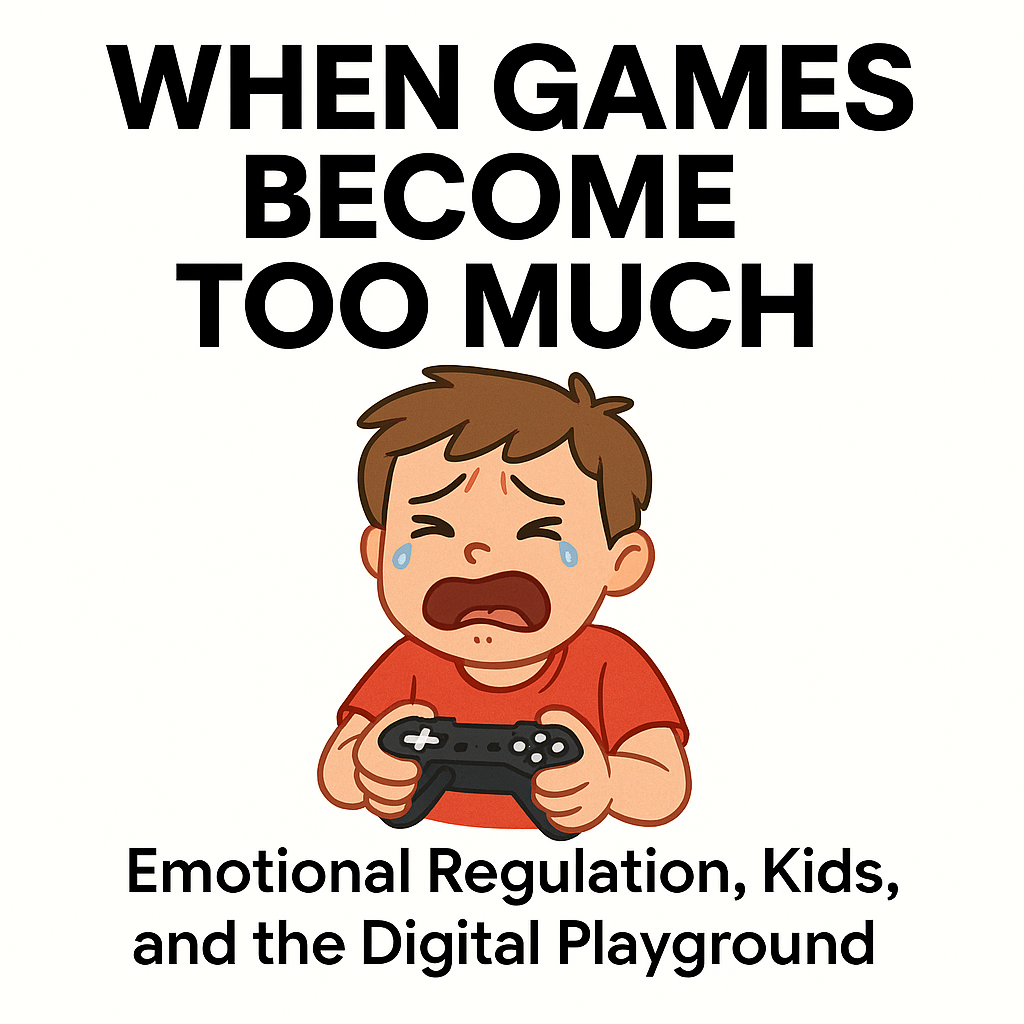
This week I found myself dealing with a situation that, unfortunately, is becoming far too common in the world of children’s gaming. My son was playing Steal the Brain Rot on Roblox, a game literally built around the idea of taking items from each other. He stole a brain rot, exactly as the game intends, and his friend had a complete emotional meltdown. Not frustration. Not disappointment. A full‑scale breakdown.
It escalated so much that the friend’s dad actually phoned my son to tell him off and demand he give the item back.
And that’s where I draw a line.
When Adults Cross Boundaries
Let me be clear:
It is not appropriate for an adult to directly call another person’s child to tell them off.
If there’s an issue that genuinely needs addressing, the first point of contact should always be the child’s parent. That’s basic respect, and it models healthy conflict resolution. When adults bypass parents and confront children directly, it creates confusion, pressure, and unnecessary tension, especially when the issue is over a game designed around competition and stealing items.
Before escalating, it’s worth asking:
- Is this truly serious?
- Is this about safety, or just discomfort?
- Is this an opportunity for the child to learn resilience?
Most of the time, it’s not worth turning a digital disagreement into real‑world drama.
Why Kids React So Intensely to Games
Children aren’t overreacting “for no reason.” Their brains are still developing the skills needed to manage big emotions. Games, especially fast‑paced online ones, can trigger intense feelings because:
- Digital losses feel real to them
- Their impulse control is still developing
- They struggle to separate in‑game events from real‑life relationships
- Social pressure in multiplayer games amplifies emotions
- The pace of online play doesn’t give them time to regulate
So when something unexpected happens, like losing an item, being outplayed, or having something “stolen”, their emotional system can go into overdrive.
This isn’t bad behaviour. It’s a sign of where they are developmentally.
Games Aren’t the Problem, Emotional Regulation Is
Games are meant to be fun. They’re meant to challenge, entertain, and teach kids how to handle winning, losing, unpredictability, and other people not doing exactly what they want. These are healthy experiences.
But when a child becomes so overwhelmed by a digital moment that they can’t cope, to the point of distress, panic, or rage, the issue isn’t the game. It’s the emotional skills required to handle it.
Even the simplest games involve:
- Losing
- Competition
- Setbacks
- Unpredictable outcomes
- Other players making their own choices
If a child can’t tolerate those things without spiralling, then they may not be emotionally ready for that game yet.
When Parents Step In, the Lesson Changes
What concerns me even more is when parents intervene to “fix” the game for their child. When adults demand items back, scold other children, or try to control the outcome, they unintentionally teach their child that:
- Discomfort must be avoided at all costs
- Losing is unacceptable
- Emotional outbursts get results
- Other people must change to keep them happy
Those lessons don’t stay in the game. They spill into friendships, school, and eventually adulthood.
Games can teach resilience, but only if we let them.
Teaching Kids How to Handle Conflict Online
Instead of stepping in to control outcomes, we can use these moments to teach children how to navigate conflict:
- Taking a break when emotions run high
- Using calm language to express frustration
- Understanding that losing is part of play
- Recognising when a game isn’t fun anymore
- Knowing when to walk away from unhealthy dynamics
These skills matter far beyond gaming.
Parents Model Emotional Behaviour Too
Children learn how to react by watching us.
If adults explode over a game, demand items back, or lash out at other children, kids absorb that behaviour. They learn that:
- Games are high‑stakes
- Losing is catastrophic
- Adults will fix everything for them
- Emotional outbursts are justified
But when adults stay calm, set boundaries, and treat games as learning opportunities, children follow that lead.
Setting Boundaries Isn’t Punishment, It’s Parenting
I’ve had to make these decisions in my own home. I’ve seen my son have emotional breakdowns over certain games too. And when that happens, I don’t blame the game or the other players. I simply tell him he’s not ready for that particular game yet.
He can try again when he’s calmer, older, or better able to handle the emotional ups and downs that come with it.
I’ve also told him not to play certain games with certain friends, not because anyone is “bad,” but because the emotional dynamic between them isn’t healthy. If another child consistently has outbursts, or if the play always ends in tears, arguments, or stress, then it’s my responsibility to step in and protect my son’s emotional wellbeing.
Sometimes the healthiest boundary is simply:
“This game isn’t right for you two right now.”
And that’s okay.
If a Game Causes Distress, It’s a Sign, Not a Battle
Here’s the truth I’ve come to:
If a child is so emotionally overwhelmed by a game that it causes meltdowns, arguments, or distress, then they shouldn’t be playing that game yet.
Not as punishment. Not as judgement. Simply because their emotional development isn’t aligned with the emotional demands of that environment.
It’s our job as parents to help them build those skills gradually, not to bend the world around them so they never have to.
Games Should Be a Safe Space to Learn, Not a Source of Crisis
When handled well, games can teach patience, problem‑solving, teamwork, and emotional control. They can help kids learn to lose gracefully, try again, and understand that setbacks aren’t the end of the world.
But when a game becomes a source of panic or rage, it stops being a learning tool and starts being a trigger.
As parents, we need to recognise the difference.
Sometimes the best thing we can do is step back, set boundaries, and help our children develop the emotional resilience they need, so that when they do return to the game, they can actually enjoy it.
Signing Off
At the end of the day, games should bring joy, connection, and learning, not stress, conflict, or emotional overwhelm. As parents, we can’t control every moment our children experience, but we can guide them, support them, and set boundaries that help them grow into resilient, emotionally balanced young people. If we stay calm, stay involved, and stay aware of what our kids are experiencing online, we give them the tools they need to enjoy gaming in a healthy way.
Thanks for reading, and here’s to raising kids who can play, learn, lose, win, and grow with confidence
Until next time, stay sharp and keep gaming, Panda out.
