Archive for Industry Talk

Bungie’s Latest Plagiarism Scandal with Marathon

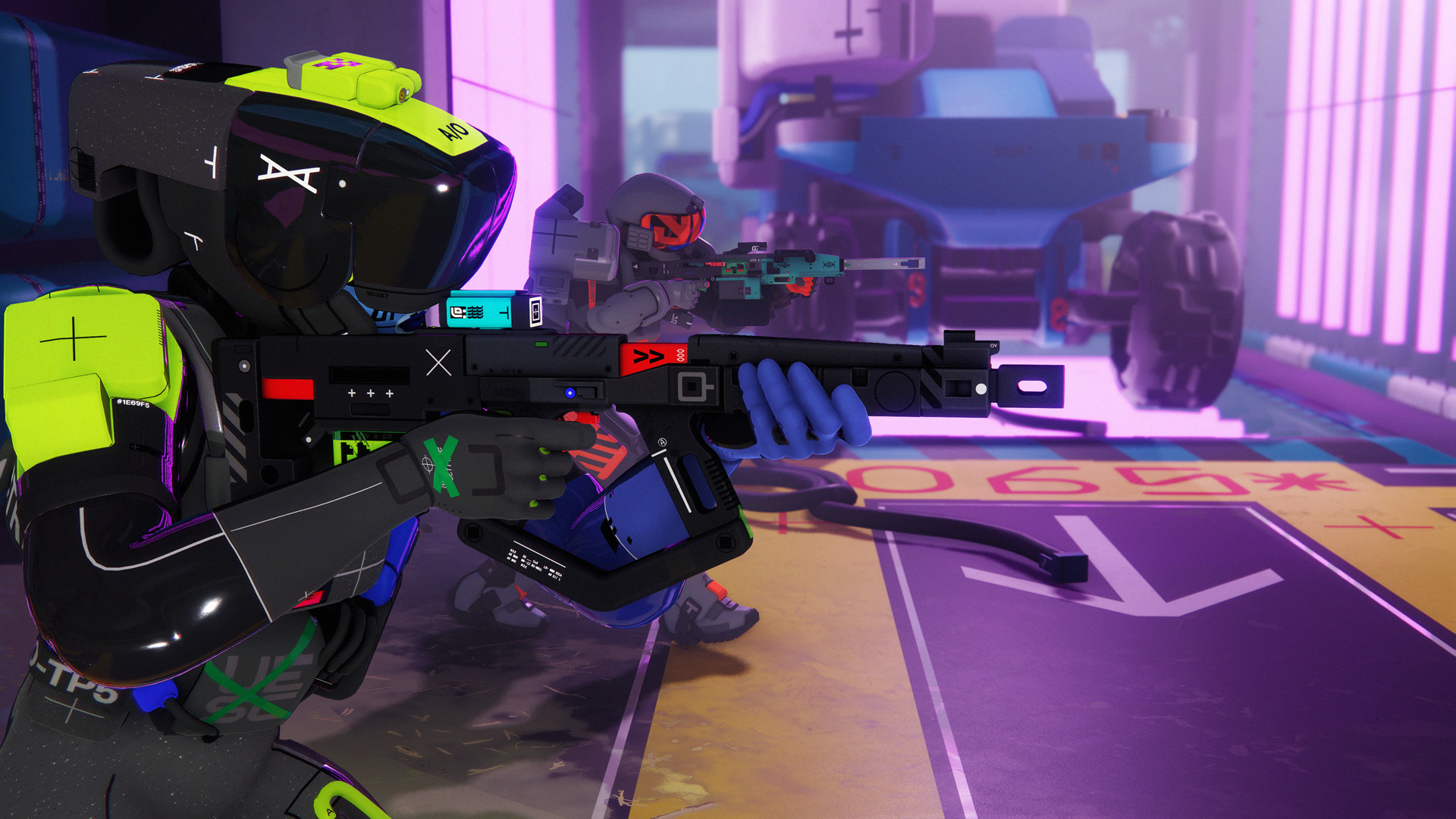
Image – Bungie

Bungie’s reputation for innovation has taken another hit with allegations of plagiarism surrounding its upcoming extraction shooter, Marathon. Independent artist Fern Hook (4nt1r34l) has claimed that Bungie used her designs without permission, igniting widespread criticism from the gaming community.

The Marathon Controversy

Recent comparisons between Marathon concept art and Hook’s original work have surfaced online, showing striking similarities. Hook, a well-respected independent artist, took to X to express her frustration, stating:

“The Marathon alpha released recently, and its environments are covered with assets lifted from poster designs I made in 2017. Bungie is of course not obligated to hire me when making a game that draws overwhelmingly from the same design language I have refined for the last decade, but clearly my work was good enough to pillage for ideas and plaster all over their game without pay or attribution.”
— Fern Hook (Source on X)

Known for her distinctive sci‑fi aesthetic, melding intricate geometric designs with bold colours, Fern Hook’s portfolio showcases years of meticulous work and a unique visual identity that many now see reflected in Marathon.

Bungie has responded with a short statement denying any wrongdoing:

“We immediately investigated a concern regarding unauthorized use of artist decals in Marathon and confirmed that a former Bungie artist included these in a texture sheet that was ultimately used in-game. This issue was unknown by our existing art team, and we are still reviewing how this oversight occurred. We take matters like this very seriously. We have reached out to @4nt1r34l to discuss this issue and are committed to do right by the artist. As a matter of policy, we do not use the work of artists without their permission.”
— Bungie (Source on X)

Bungie’s History of Plagiarism

Unfortunately, this isn’t the first time Bungie has faced accusations of plagiarism. Over the years, similar concerns have arisen about elements in their games, including:

  • Destiny’s Iconography and Armor Designs: Several pieces of Destiny’s armor and symbols have been compared to existing works from lesser-known creators. While some cases were dismissed as mere homage, others sparked deeper concerns over artistic integrity. For instance, Bungie is currently facing a lawsuit over alleged plagiarism in Destiny 2’s Red War campaign.
  • Halo’s Covenant Design: Certain alien designs in Halo bear strong similarities to works from sci‑fi illustrators who were never credited.
  • Weapon Models and Art Assets: Some of Bungie’s weapons and in‑game assets resemble near‑identical concepts from other games, suggesting this isn’t merely an isolated incident but part of a broader trend. Additional issues surrounding Destiny 2 content vaulting, which complicates Bungie’s defense against plagiarism claims.

Community Response and Industry Impact

The gaming community has voiced strong opinions on the matter, with many calling for Bungie to both credit and compensate Fern Hook for the use of her work. Developers and artists across the industry have rallied behind her, urging Bungie to take meaningful action.

Multiple discussions online have highlighted this controversy as a symptom of a broader issue: large studios often disregard the contributions of independent artists. This situation has reignited calls for stronger protections and accountability regarding intellectual property in the gaming industry.

Fern Hook later followed up on her initial post, expressing her gratitude for the overwhelming support:

“I never expected this level of response. Seeing fellow artists and gamers call this out means the world to me. I just want proper credit, and for people to understand how often this happens in the industry.”
— Fern Hook (Source on X)

As Marathon moves toward release, the gaming community remains vigilant, ensuring that Bungie is held accountable for any further missteps.

The Impact on Independent Creators

Beyond the immediate controversy, the broader implications of plagiarism are deeply damaging to independent artists. For many creators, their work isn’t just a form of expression, it’s also their livelihood. When large studios appropriate designs without proper credit or compensation, these artists lose potential income and opportunities to secure commissions or future partnerships. This financial loss can force talented individuals to struggle for recognition in an already competitive field.

Plagiarism also stifles creativity. Independent artists invest countless hours refining their unique visual styles and building their portfolios. When a major studio borrows heavily from their work without acknowledgment, it sends a discouraging message: original ideas can be exploited without consequence. This not only undermines the artist’s effort but can also deter them, and others, from taking creative risks, potentially leading to a homogenized industry where innovation is sacrificed for familiarity.

Moreover, such incidents erode trust within the creative community. When independent artists see their work repurposed without proper credit, it creates a barrier between emerging talent and established industry giants. This disconnect hinders collaborative progress and fosters an environment where creators feel undervalued and unsupported. Ultimately, for the gaming industry to truly flourish, major players must adopt ethical practices that honor and protect the contributions of every creative voice.

Corporate Vigilance and Ethical Practices

In addition to the damaging effects on independent creators, large companies bear a responsibility to uphold a culture of originality and ethical creativity. To prevent incidents of plagiarism, studios should implement strict internal review protocols. This means establishing multi-level approval processes and dedicated creative oversight teams to ensure that every piece of art or design is thoroughly vetted before inclusion in any project.

Legal checks and comprehensive training on intellectual property rights should also be standard practice. By instituting rigorous internal audits and ensuring that every external work is properly licensed and credited, companies can avoid missteps that lead to accusations, or instances, of plagiarism.

Beyond internal measures, proactive engagement with the creative community is essential. Open dialogue, transparent collaboration, and even direct partnerships with independent artists can help large studios build mutual trust. When companies value and protect the contributions of smaller creators, they not only safeguard themselves against potential legal and public relations issues, but also foster a richer and more innovative creative ecosystem.

Ultimately, embracing these ethical practices can transform a reactive approach to plagiarism into a proactive commitment to originality and respect for all artists, a move that benefits the industry as a whole.

Until next time, stay sharp and keep gaming.

Panda out.

References:

Image – Bungie – https://www.marathonthegame.com/announcement

Comments (2) »

Steam Hack Scare: What Really Happened?

This week, the gaming community was shaken by reports of a massive Steam data breach, allegedly affecting 89 million accounts. The claim, originating from a LinkedIn post, suggested that user data, including phone numbers and two-factor authentication (2FA) codes, was being sold on the dark web for a mere $5,000. Naturally, panic ensued.

Was Steam Actually Hacked?

Despite the alarming headlines, Valve has officially denied any breach of Steam’s systems. According to their investigation, the leaked data consists of old SMS messages containing one-time passcodes, which are only valid for 15 minutes. These codes were not linked to Steam accounts, passwords, payment details, or any other sensitive information. In short, while some data surfaced online, it does not pose a direct security threat to Steam users.

Where Did the Leak Come From?

While Steam itself remains uncompromised, the source of the leaked SMS data is still unclear. Some speculate that a third-party service handling Steam’s authentication messages may have been targeted. Companies like Twilio, which provide SMS-based authentication services, were initially suspected, but Twilio has denied any involvement. Valve continues to investigate how this data ended up online.

What Should Steam Users Do?

Even though this incident does not require immediate action, it serves as a reminder to strengthen account security. Here are some steps you can take:

  • Enable Steam Guard Mobile Authenticator instead of relying on SMS-based 2FA.
  • Check your authorized devices to ensure no unauthorized logins.
  • Use a strong, unique password and consider a password manager for added security.

Final Thoughts

While the Steam hack scare turned out to be a false alarm, it highlights the importance of cybersecurity in gaming. With millions of accounts at stake, staying vigilant and proactive about security is always a good idea.

Until next time, stay sharp and keep gaming.

Panda out.

Sources:

Comments (1) »

Nintendo’s EULA Update: The Power to Brick Your Console?

Nintendo has long been known for its strict stance on piracy and modding, but its latest update to the End User Licence Agreement (EULA) has taken things to a new level. The company now explicitly states that it can render a console permanently unusable if it detects unauthorised modifications or piracy.

What’s Changed?

The updated EULA introduces language that allows Nintendo to disable a device entirely if it determines that a user has violated its terms. This applies to both the current Nintendo Switch and the upcoming Switch 2. Previously, Nintendo would ban hacked consoles from online services, but this new policy suggests that even offline use could be affected.

The agreement states that Nintendo can take action against users who:

  • Install or use unauthorised copies of games.
  • Modify, adapt, or reverse-engineer Nintendo software.
  • Bypass security protections using third-party hardware or software.

Regional Differences in Enforcement

Interestingly, the enforcement of this policy varies by region. In the United States, Nintendo has the legal framework to completely disable a console if it detects piracy or unauthorised modifications. However, in Europe, consumer protection laws prevent Nintendo from bricking a device entirely. Instead, the company can only restrict access to pirated software but cannot render the hardware unusable.

This difference highlights how companies must navigate varying legal landscapes when implementing strict anti-piracy measures. While American users face the risk of losing their consoles entirely, European users have more legal protections against such extreme actions.

The Impact on Emulators

Nintendo’s updated EULA also takes aim at emulators installed on its consoles. The new agreement explicitly prohibits users from bypassing, modifying, decrypting, or tampering with Nintendo’s software protections, which includes running third-party emulators. This means that if a user installs an emulator on their Switch or Switch 2, Nintendo could detect it and brick the console entirely.

Historically, Nintendo has aggressively pursued legal action against emulator developers, such as the shutdown of the Yuzu and Ryujinx emulators. With this new policy, the company is extending its crackdown beyond legal threats and directly targeting users who attempt to run emulated games on their hardware.

The Risks for Gamers

For those who enjoy modding their consoles for homebrew applications or custom firmware, this update is a major concern. While piracy is a clear violation of Nintendo’s policies, legitimate modding, such as installing custom themes or improving performance, could also put users at risk. The fact that Nintendo can brick a console without prior notice raises questions about consumer rights and whether such measures are justified.

Final Thoughts

Nintendo’s updated EULA is a stark reminder of how much control companies can exert over the hardware we purchase. While protecting intellectual property is important, the ability to permanently disable a device feels like an extreme measure. Whether Nintendo will actively enforce this policy remains to be seen, but for now, modders, homebrew enthusiasts, and emulator users should tread carefully.

Till next time, Panda out.

References:

Comments (2) »

Nintendo’s Aggressive Anti-Consumer Practices Continue

Nintendo and its legal team are at it again! Their increasingly anti-competitive behaviour is becoming a defining trait of the company.

Let’s start from the beginning. Nintendo has a clear disdain for competition. When faced with a superior product, do they innovate, push boundaries, and strive to prove their dominance? Do they take inspiration from their rivals and come back with something groundbreaking? No. Instead, they opt for lawsuits, wielding their legal power to drive competitors into bankruptcy.

Over the past 30 years, Pokémon has barely evolved as a franchise. Major innovations? Let’s count them: transitioning to 3D, adding online raids, making the world semi-open. Oh, and removing gym battles and the Elite Four, although, let’s be honest, that last one was a huge step back.

The Pokémon Company has run out of ideas. Fans who grew up with the series are now in their 30s and 40s, and many, like myself, are looking for something more mature and darker. Enter Palworld, which immediately grabbed attention when labeled as “Pokémon with guns.” But Palworld wasn’t just a clone, it integrated survival mechanics, making it particularly appealing to older Pokémon fans. Nintendo, predictably, wasn’t happy.

Many Nintendo supporters jumped on the claim that Palworld copied Pokémon designs. While some similarities exist, let’s not pretend Pokémon itself hasn’t borrowed elements from other franchises (Dragon Quest monsters, anyone?). Yet, Nintendo’s lawsuit wasn’t about creature designs; it targeted Palworld’s use of a sphere-shaped object to release creatures, something Nintendo promptly patented before taking Pocketpair to court in 2024.

Industry Impact: The Dangerous Precedent Nintendo Is Setting

Nintendo’s aggressive legal tactics don’t just affect Pocketpair, they threaten the entire gaming industry. Game mechanics have traditionally been considered shared concepts, evolving over time through innovation and iteration. If companies begin patenting core gameplay elements, it could stifle creativity and prevent new studios from experimenting with mechanics that have long been standard.

For indie developers, this is especially concerning. Many small studios rely on refining existing mechanics to create unique gameplay experiences. If a large company can monopolize mechanics like throwing a sphere to summon creatures or using an animal to glide, it limits future developers’ ability to build upon those ideas.

Worse, this could lead to an era where major publishers aggressively patent common mechanics, not just to protect innovations, but to actively block competitors. Imagine if FromSoftware patented stamina-based combat or Epic Games patented third-person shooting mechanics. The ability to create new games would be severely restricted.

This isn’t just about Nintendo, it’s about setting a precedent that could be exploited by other companies down the line. If this practice continues, the gaming industry could become less about innovation and more about legal battles over who owns fundamental gameplay ideas.

Hall-Effect Sticks: The Solution Nintendo Ignored

Nintendo’s latest End User License Agreement (EULA) update is a major red flag. Not only is it aggressively anti-consumer, but it raises concerns about the upcoming Switch 2’s Joy-Cons.

Hidden within the updated terms is a provision barring users from joining class-action lawsuits. Instead, players must contact customer service for individual issue resolution. There is an opt-out option, but it requires sending a physical letter to Nintendo of America, including all usernames, email addresses, and full names, within just 30 days of agreeing to the terms. This stealthy addition is designed to fly under the radar because, let’s face it, very few people actually read EULAs. These documents are deliberately bloated with complex legal jargon to deter scrutiny.

One of the biggest lawsuits Nintendo previously faced involved Joy-Con stick drift, which affected roughly 40% of Switch owners. It cost them a fortune to fix defective controllers. Now, with the Switch 2 on the horizon, Nintendo has made yet another questionable decision: they have refused to use Hall-effect sticks—a proven technology that eliminates stick drift.

Hall-effect sticks work differently from traditional potentiometer-based analog sticks. Instead of relying on physical contact between internal components, leading to inevitable wear and tear, Hall-effect sensors use magnets to register movement, significantly reducing drift issues over time. Many modern controllers and third-party manufacturers are switching to this technology for durability, but Nintendo has doubled down on the outdated, failure-prone design.

Why? Likely because they can continue selling replacement Joy-Cons when inevitable drift occurs. It’s a calculated move that prioritizes profit over player experience. Combined with their updated EULA, it suggests Nintendo is preparing for inevitable backlash rather than addressing the problem at its core.

Historical Context: Nintendo’s Pattern of Anti-Competitive Behavior

Nintendo has a long history of legal aggression against anything it perceives as a threat. This isn’t a new phenomenon, it’s just becoming more blatant.

Some examples:

  • Fan Games & ROM Sites – Nintendo has aggressively shut down fan projects like Pokémon Uranium and AM2R (Another Metroid 2 Remake), even when they were passion-driven, non-commercial releases. They also wiped out emulator sites, claiming copyright infringement, even for titles no longer being sold.
  • Joy-Con Stick Drift Lawsuit – Instead of immediately addressing the hardware defect, Nintendo waited until legal action forced them to offer free repairs.
  • The Smash Bros. Community Ban – Nintendo has historically shut down grassroots tournaments, even those that promoted its games and built community engagement.
  • Nintendo vs. Yuzu Emulator – In 2024, Nintendo sued Yuzu, a Switch emulator, despite the fact that emulation itself is legal. Their goal wasn’t to target piracy, it was to prevent competition.

It’s clear that Nintendo doesn’t just protect its IP, it aggressively suppresses anything that could challenge its dominance. With these latest patents, they are taking that suppression to a new level, actively restricting the development of new gameplay mechanics.

A Brand to Avoid

Between the Switch 2 price hike and Nintendo’s mounting anti-consumer antics, I see no reason to support them. Unless someone steps up and forces change, they’ll continue using lawsuits to bulldoze competition. Nintendo has always been a wolf in sheep’s clothing, and whenever they feel threatened, they unleash their legal team until they get their way.

Unfortunately, unless laws change, we’ll keep seeing these tactics. Here’s hoping for a shift in the industry.

Till next time,
Panda out.

Comments (1) »

Gaming Is in Trouble, And It’s Time to Talk About It!

Remember when buying a new game felt exciting? When studios actually cared about delivering unforgettable experiences rather than chasing trends? Those days feel further and further away.

It has been years since I last reviewed anything, not because I haven’t been playing games, but because I never thought about doing one. However, given the way the industry has been heading, I felt it was time to speak up.

I’ll be sharing my thoughts on games I am playing, have played, or will play. But for now, this post is going to be a rant, because there’s a lot to unpack, and each topic could easily warrant its own discussion.

Gaming’s Decline: Where Did It Go Wrong?

The gaming industry is in massive decline, and there are several reasons for it:

  • Inflated budgets – Games now demand massive financial investments, with productions sometimes exceeding blockbuster movie budgets. Grand Theft Auto VI, for instance, is rumored to have cost over $1 billion to develop.
  • Corporate greed – Many studios prioritize profit over player experience. Nintendo has increased game and console prices for the upcoming Switch 2, further pushing its premium pricing strategy. Meanwhile, companies like EA and Ubisoft aggressively push microtransactions into their games, turning titles like FIFA (now EA Sports FC) and Madden into pay-to-win experiences.
  • Mass layoffs – 2024 and 2025 have seen thousands of job losses across the industry, with major companies like Epic Games, Microsoft (Activision Blizzard), and EA cutting huge portions of their workforce.
  • Oversaturated markets – The sheer number of games being released, especially low-effort live service titles, makes it harder for quality projects to shine.
  • Live service failures – The industry has chased live-service games aggressively, but many have flopped. Look at Concord, another live-service shooter struggling to differentiate itself in an overcrowded market. Ubisoft’s XDefiant, another multiplayer attempt, has also faced hurdles in gaining traction.

But in my eyes, the biggest issue is that developers are failing to give players what they truly want, a good game.

Gaming is meant to be an escape from reality. When we boot up a game, we want to enjoy ourselves, whether that’s through epic stories, lovable characters, stunning environments (not just graphical fidelity), or engaging gameplay that keeps us coming back.

Yet, for some reason, many companies, particularly AAA studios, struggle to deliver this. While we largely understand why it’s happening, this post isn’t about discussing the politics behind it.

AAA vs. Smaller Studios: The Shift in Power

Recently, a friend and I discussed the last new release we bought on launch day. My last buy was Baldur’s Gate 3, a game that quickly became one of my all-time favorites. I’ve poured almost 200 hours into it, which is rare for a game these days. Before BG3, I can’t even remember the last game I paid for on release.

More often than not, I find myself playing through my backlog instead of purchasing anything new. Honestly, if I didn’t have Game Pass, I wouldn’t be playing new games at all until their prices dropped.

This trend highlights a major industry shift, non-AAA studios understand gamers better than the big corporations.

Many smaller teams are moving away from the outdated “what companies think we want” approach, instead focusing on what developers themselves know we want. When a game is made by gamers for gamers, the passion behind it is clear.

For example:

  • Indie Success Stories – Games like Hollow Knight, Hades, and Dave the Diver have delivered incredible experiences despite smaller budgets.
  • AA Games Thriving – Titles like Hellblade: Senua’s Sacrifice and Lies of P prove that mid-tier studios can craft stunning, innovative games without bloated development cycles.
  • AAA Failures vs. Indie Wins – Ubisoft’s troubled releases keep falling well short of the mark, while Larian Studios’ Baldur’s Gate 3 was a massive success, proving that passion-driven development wins over corporate formulaic releases.

These studios are proving to the so-called industry leaders how it should be done, and big publishers aren’t happy about it. It’s hurting them badly. Just look at Ubisoft and EA’s declining stock performance for proof.

The Future of Gaming: What Needs to Change?

We need a shift, a move away from the annual garbage that AAA studios keep shoving down our throats. Gamers are sick of it, and now we’re finally seeing that reflected in player spending and reception.

Just look at Call of Duty and FIFA (now EA Sports FC), both franchises that churn out yearly releases with minimal innovation, yet expect players to shell out full price every time.

The backlash against unfinished launches is growing, too. Cyberpunk 2077‘s disastrous first year proved that rushing a game to market can destroy its reputation, forcing CD Projekt Red to spend years fixing what should have been right from the start.

As the classic saying goes: Don’t bite the hand that feeds you, because if you do, we’ll go support someone else. Unfortunately for some companies, they’ve already bitten off the entire hand, leaving nothing left to sustain them.

Final Thoughts: Hope in the Chaos

The gaming industry is at a crossroads. The cracks in AAA dominance are showing, and gamers are no longer willing to accept recycled, soulless releases. We want passion. We want creativity. We want games made for players, not for profit alone.

As big studios scramble to maintain control, smaller teams are stepping up, proving that when developers listen to their audience, greatness happens.

My heart goes out to those affected by industry layoffs, and unfortunately, I see more on the horizon. But from the ashes of corporate restructuring, I also predict a new wave of independent studios rising to fill the void.

The future of gaming isn’t in the hands of executives, it’s in ours.

Let’s support the developers who still believe in the magic of gaming. Because if we do, the industry might just turn itself around.

But until next time, Panda out.

Leave a comment »